
After-School Physical Activities for Kids in La Porte
The most energetic activity isn’t always the best fit for your child. A sport, dance class, or martial arts program is more likely to become a rewarding routine when it suits their interests, confidence, and after-school energy. Comparing physical activities for kids after school La Porte families can consider means looking beyond activity names: think about what children do in each setting and how it fits your family’s week.
It’s understandable to want your child moving, learning, and enjoying their time after school without pushing them into an activity they don’t like. A well-matched routine can give children a chance to practise skills at a comfortable pace while adding structured enrichment to the afternoon.
This guide compares common choices, from team sports and dance to martial arts, so you can consider the kind of movement and learning each involves. You’ll also find practical ways to match an activity to your child’s interests and energy, plan around the rest of the day, and decide whether Bushi Ban’s after-school martial arts and fitness program is a fit for your family in La Porte, Pasadena, or Deer Park.
Table of Contents
Why Physical Activities After School Matter for La Porte Kids
The school day asks children to listen, concentrate, and follow routines. After dismissal, some are ready to run and play; others need a snack and a quieter transition first. A well-chosen activity can add a welcome rhythm to the afternoon without making every day feel like another demanding assignment.
La Porte families can choose among different kinds of movement, from organized instruction to informal outdoor play. The goal isn’t to keep a child busy at all costs. It’s to find an enjoyable way to move, practise skills, and add structure while leaving room for rest, homework, and family time. The same considerations apply to families in nearby Pasadena and Deer Park.
Age-appropriate physical activity means movement suited to a child’s developmental stage, abilities, and comfort, rather than expecting every child to participate in the same way. Physical activity can include play, sport, and other movement; this overview of physical activity offers background on the topic. For an individual child, enjoyment and a manageable level of challenge matter too.
What can an active after-school routine offer?
An activity creates a regular opportunity to move after hours in the classroom. Depending on the format, a child might practise balance and coordination in a movement class, learn a sequence in martial arts, or work on passing and teamwork in a sport. Repeating skills helps children become familiar with an activity and notice their own progress, without needing to compare themselves with others.
Structure can help children know what to expect. A guided class gives them an activity to focus on, while free play offers more room to choose what to do. Neither format is right for every child. To learn more about how movement and coordination connect, explore this kids’ fitness and coordination guide.
How La Porte families can think about fit
Start with your child’s preferences. Do they enjoy practising independently, or get energy from being part of a group? Would they rather move indoors with clear instruction or spend time outdoors? These questions can narrow the choices without assuming one activity is best for every family in La Porte, Pasadena, or Deer Park. A child who feels unsure about competition, for example, may prefer an activity centered on practising personal skills.
Then consider the whole afternoon. A child who’s tired after school may do better with a manageable activity than a packed routine, while another may welcome a chance to move. Think through travel, meals, homework, and time to unwind alongside the activity itself. If the routine regularly feels rushed, adjust the frequency or format so movement remains a positive part of family life.
5 Types of Physical Activities La Porte Kids Can Try After School
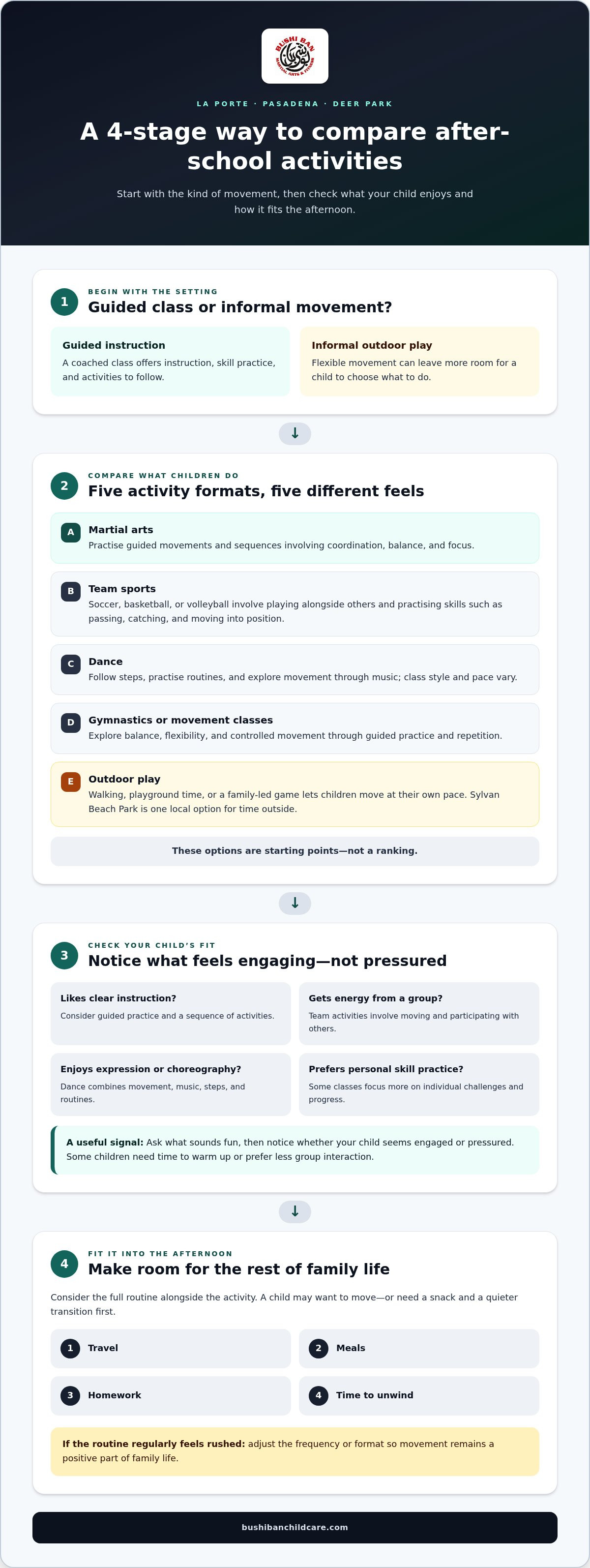
Children can move in many ways after school, and each activity has a different feel. Some offer coached practice and a predictable routine; others leave more room for free play. These five formats can help families compare what children might do and which setting may suit their child.
Structured classes: martial arts, team sports, dance, and gymnastics
Coached classes typically give children instruction, skill practice, and a sequence of activities to follow. Some focus on personal progress, while others emphasize taking part with a group. Consider how your child feels about instruction, repetition, and learning alongside peers.
Martial arts: Students practise guided movements and sequences that call for coordination, balance, and focus. Bushi Ban’s after-school martial arts and fitness program combines training with structured enrichment for families in the La Porte area, including those in Pasadena and Deer Park.
Team sports: Activities such as soccer, basketball, or volleyball involve movement alongside other players. Children may practise passing, catching, or moving into position while learning how to participate as a team.
Dance: Children follow steps, practise routines, and explore movement through music. Dance can appeal to kids who enjoy expression and choreography, with the style and pace varying by class.
Gymnastics or movement classes: These classes may involve balance, flexibility, and controlled movement in a guided setting. The format can suit children who like individual challenges and building familiarity through repetition.
Outdoor play and informal movement
Not every active afternoon needs a class. Walking together, playground play, or a family-led game can offer flexible movement without centering the day on formal instruction. Families can use outdoor spaces such as Sylvan Beach Park for time outside and active play.
Outdoor play: Children can move at their own pace through games, active exploration, or playground activity, with a parent choosing what fits the day.
These categories are starting points, not a ranking. A child may enjoy learning a clear sequence in martial arts or dance, while another would rather chase a ball with teammates or invent a game outdoors. Some children like trying new movements with a coach; others need time to warm up or prefer less group interaction. Ask what sounds fun, then notice whether your child seems engaged or pressured.
If a guided class feels like a good fit, explore Bushi Ban’s after-school martial arts and fitness program as a structured choice among the physical activities for kids after school La Porte families can consider.
How to Compare After-School Activities for Your Child
Comparing options gets easier when you look beyond the activity name. Consider what your child will do, how much guidance they’ll receive, and whether the social setting feels comfortable. The best match depends on age, previous experience, confidence, and genuine interest. Use the comparison below to start weighing physical activities for kids after school in La Porte, Pasadena, and Deer Park.
Structured classes provide planned instruction and opportunities to practise specific skills. Informal play is more flexible and lets children choose how they move.
Match the activity to your child’s interests and comfort
Notice what your child gravitates toward: practising a skill until it feels familiar, joining a team game, learning a sequence, or exploring freely. A beginner doesn’t need to arrive confident or polished. Welcoming instruction and gradual skill development can make it easier to participate at a comfortable pace. For more context on martial arts practice and focus and discipline, see this parent’s guide to martial arts focus and discipline.
Age and experience can affect what feels manageable. A younger child may prefer shorter, varied activities, while an older child might enjoy working toward a more complex routine or sport skill. These are possibilities, not rules. Ask what your child is curious to try, and listen for excitement, hesitation, or a lack of interest.
Compare structure, setting, and family routine
Consider whether a scheduled class or flexible outdoor movement fits the shape of your week. A class offers a set activity to follow, while a walk or family-led game can shift with your child’s energy and the day’s demands. Neither approach is automatically better. Think about travel, the transition from school, and whether the routine feels realistic to repeat.
A child who enjoys clear instructions may appreciate a coached format, while one who needs to decompress first may be more comfortable with unstructured play. Factor in time for homework, meals, and rest before deciding how often activity fits. A choice that works for both child and family is easier to sustain than a plan that feels rushed from the start.
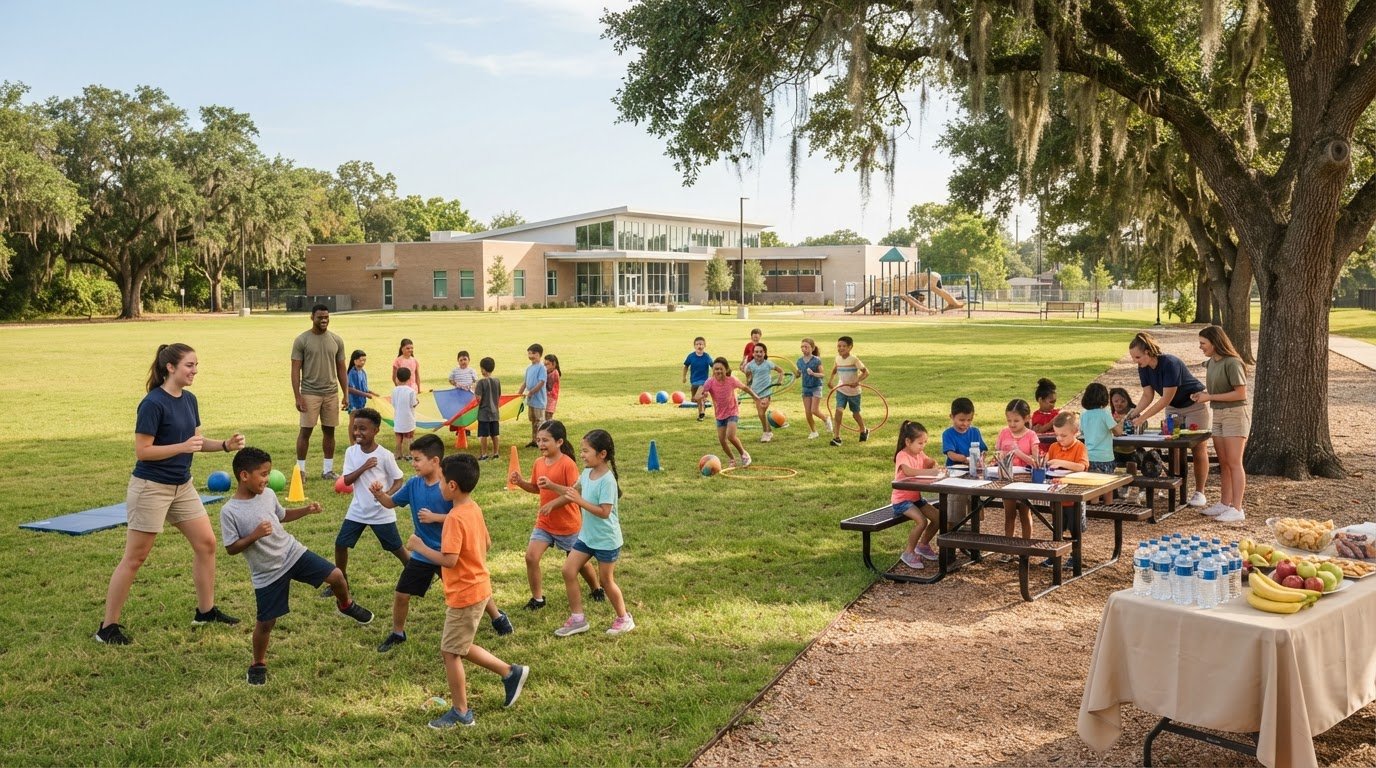
Manageable After-School Activity Routine in La Porte
A good plan should work beyond the first enthusiastic week. Before choosing among physical activities for kids after school, La Porte families can look at the afternoon as a whole: their child’s energy, travel time, homework, meals, and time to unwind. A routine that leaves breathing room is easier to sustain than one that turns every afternoon into a race.
Start with the child’s preferences
Begin with a conversation, not a commitment. Ask which movements your child already enjoys, what they’d like to try, and how they feel about learning with a group or following an instructor’s guidance. Their answers can help distinguish genuine curiosity from pressure to join a friend or choose an activity because it seems impressive.
Discuss interests. Invite your child to name a game, sport, movement, or skill they’d enjoy exploring. Ask what sounds fun about it and whether they’d prefer to practise individually, move with a group, or make up their own games.
Choose a format. Use those preferences to narrow the choices. A child drawn to learning sequences may like a coached class, while one who enjoys shared play may prefer a team setting. If structured instruction feels unfamiliar, explain that a first class is a chance to learn, not a test of ability.
Try a manageable routine. Start with an amount of activity that fits your family’s actual week, rather than assuming more is better. Map the afternoon from the school transition through travel, activity, homework, dinner, and downtime. Leave room for changes in energy from one day to the next.
Review how it feels. After a short trial period, talk about what your child enjoyed, what felt difficult, and whether the routine left enough time to recharge. Use that feedback to continue, adjust the format, or rethink the plan. Participation and enjoyment are meaningful signs of fit; performance isn’t the only measure of a worthwhile activity.
Build a routine that leaves room to recharge
In La Porte, Pasadena, and Deer Park, travel and family logistics are part of the decision, not an afterthought. Consider how an activity fits around your household’s usual school-day transitions and whether getting there and back feels practical. Some afternoons may call for a snack and quiet time before movement; others may be easier to plan differently. Keep the routine flexible enough to respond to homework, family plans, and your child’s changing energy.
A brief trial gives everyone a chance to notice the real experience before treating an activity as a long-term commitment. If a structured martial arts option fits your child’s interests, explore Bushi Ban’s after-school martial arts program as a way to add guided movement and enrichment to the afternoon.
Explore Bushi Ban Martial Arts and Fitness in La Porte
Families comparing physical activities for kids after school in La Porte have options with different kinds of movement and structure. Bushi Ban Child Care serves families in La Porte, Pasadena, and Deer Park with an after-school martial arts and fitness program. It combines martial arts training with structured enrichment as part of a child’s afternoon.
Martial arts may appeal to a child who likes learning a sequence, practising a movement, and building familiarity through repetition. It’s different from a team sport or free play: the emphasis is on guided skill practice rather than competing for a ball or deciding what game to play. Children take part in movement and skill practice in a class setting.
What makes martial arts a distinct activity format?
In a martial arts class, instruction gives children a framework for practising movements and developing skills step by step. The experience combines active participation with focused learning. Bushi Ban Child Care classes are tailored to different age groups and skill levels, so students can learn at an appropriate pace.
The after-school program is an enrichment option, not all-day child care. That distinction can help parents decide whether a structured activity fits the part of the day they’re planning for. Families whose students are ready for more responsibility can also explore the Student Leadership Program, where students develop teaching and activity-leading skills. The program offers opportunities to practise leadership, public speaking, and mentorship.
A simple next step for La Porte parents
Think about what your child enjoys: learning new movements, following clear instruction, or practising skills over time. Then consider the practical side, including how a structured class fits alongside homework, meals, travel, and time to recharge. If martial arts sounds appealing, explore the program as a way to decide whether this format suits your child and family routine.
Families planning for school breaks may also be weighing options beyond the usual after-school routine. Bushi Ban Child Care offers seasonal and holiday camps with structured activities during school breaks. This 2026 holiday camps guide can help parents think through what matters when considering a camp.
If you’d like to learn more about this structured after-school option, explore the Bushi Ban Child Care after-school program and consider how martial arts and fitness align with your child’s interests.
Choose a Next Step That Feels Right for Your Child
The strongest routine is one your child can approach with curiosity and continue enjoying as the school year moves along. As you weigh physical activities for kids after school in La Porte, let your child’s response guide the next step. Encouragement can help them try something new, while space to share honest feedback keeps their preferences part of the decision.
If structured movement seems promising, Bushi Ban’s after-school martial arts and fitness program offers classes tailored to different age groups and skill levels. Students can also develop teaching and activity-leading skills through the Student Leadership Program. These programs give families a clear starting point for considering whether martial arts suits their child’s interests and family routine.
Explore Bushi Ban’s after-school martial arts program and take a thoughtful first step toward an active, enriching afternoon. The right fit can begin with a simple conversation and grow at your child’s pace.
Frequently Asked Questions
How much physical activity do children need each day?
Children ages 6 to 17 should get at least 60 minutes of moderate-to-vigorous physical activity each day, according to the CDC. For preschoolers ages 3 to 5, the CDC recommends being physically active throughout the day. Activity can happen in different portions, not just one long session. Active play, walking, sports, and classes can all contribute, depending on a child’s age and abilities.
Can a child try martial arts after school with no prior experience?
Yes. A child can start martial arts without previous training. Bushi Ban’s classes are designed for different age groups and skill levels, so previous experience isn’t a prerequisite. Help a beginner feel ready by talking about what they’re curious or nervous about and framing the first lessons as a chance to learn, not a test of ability.
Is martial arts a good physical activity for shy children?
It can be a comfortable option for some shy children, though every child responds differently. A class offers a clear activity to focus on, which may feel easier than unstructured socializing for a child who prefers knowing what comes next. Pay attention to whether your child seems curious, settled, or overwhelmed after participating. Their comfort is useful guidance, and there’s no need to rush confidence.
What should my child wear to an after-school physical activity?
For most movement-based activities, choose clothes that let your child bend, stretch, and move without slipping or getting in the way. Pack a water bottle and any activity-specific items needed for the class. Clothing expectations differ by activity: dance, outdoor play, and martial arts may each call for different items. Follow the instructions for the activity your child is attending.
Are after-school physical activities suitable for children with different skill levels?
Yes, activity formats can suit a range of experience, but the pace and support matter. Bushi Ban’s martial arts classes are tailored to different ages and skill levels. For families in La Porte, Pasadena, and Deer Park, consider whether an activity gives your child room to learn at a comfortable pace. For a beginner, participation and willingness to try are useful early signs of fit.
Does Bushi Ban provide all-day child care in La Porte?
No. Bushi Ban focuses on after-school martial arts and fitness programming with structured enrichment, rather than all-day child care. Families in La Porte can consider it as an after-school option while planning separately for the rest of the day. Its focus is martial arts and enrichment, not a full-day child care arrangement.
Are there active programs for children during school breaks?
Yes. Bushi Ban offers seasonal and holiday camps with structured activities during school breaks. These provide an option beyond a recurring after-school routine when school is not in session. For families in La Porte, Pasadena, and Deer Park, camp planning can start with identifying the break dates and considering what kind of active structure suits the child and family schedule.

Comments