
Beginner karate for kids Deer Park: What to expect in class
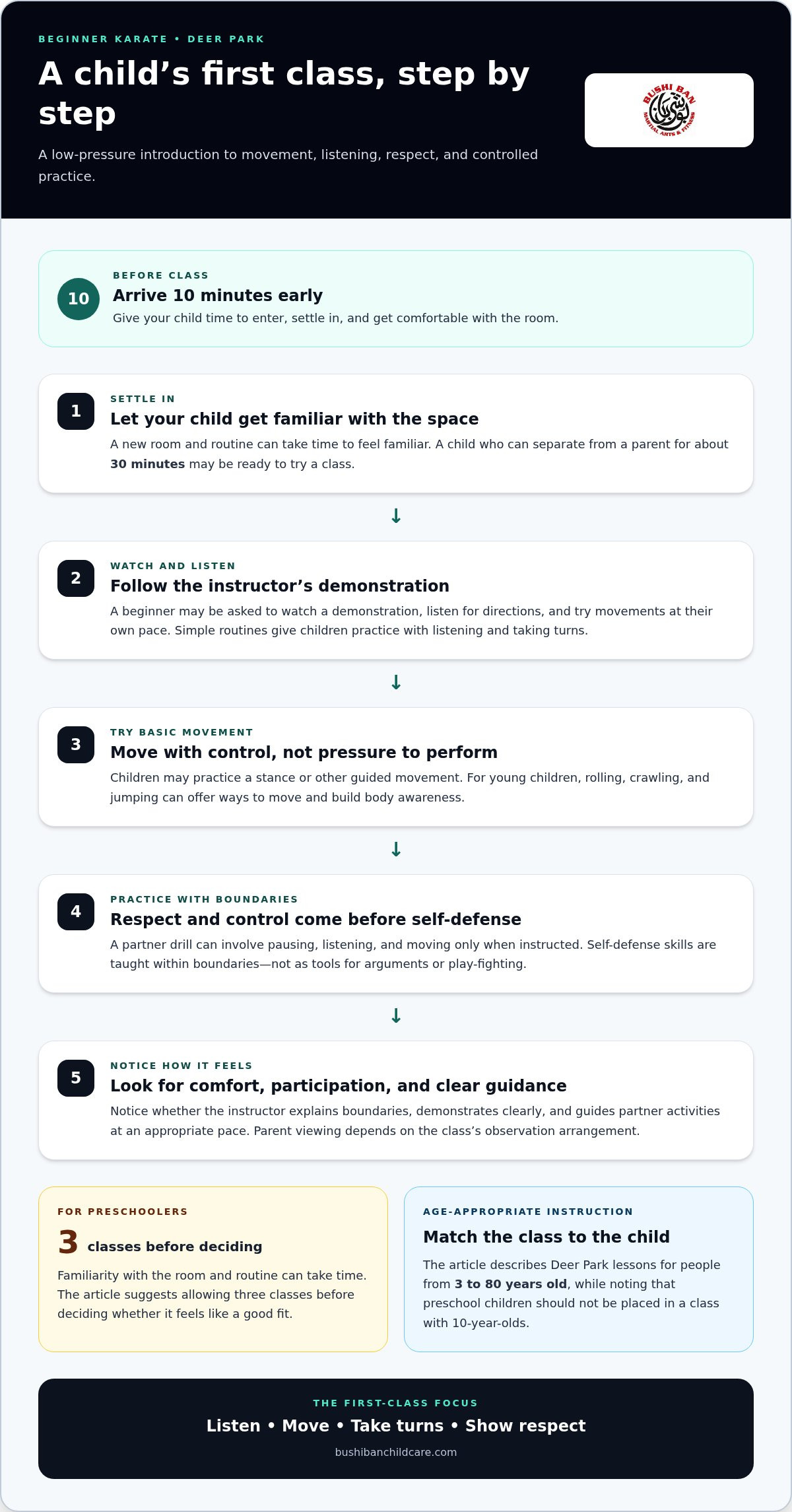
For beginner karate for kids in Deer Park, expect an instructor-led class that introduces movement, fitness, respect, and encouragement. Deer Park martial arts instructors emphasize resolving conflicts before using self-defense. Whether you can watch depends on the class’s parent-viewing arrangement, and arriving 10 minutes early gives your child time to settle in.
It’s natural to want to know how your child will be welcomed and what a class will feel like before they join in. A supportive introduction can help a beginner get comfortable listening, moving, and learning with others, without pressure to master everything at once.
This guide explains what children may practice, what to wear, and what to expect from a first class, including observing. You’ll also find signs to help you decide whether the class feels like a positive next step for your child.
Table of Contents
1. Will martial arts make my child aggressive?
Karate practice doesn’t have to encourage aggression. Deer Park martial arts instruction emphasizes resolving conflicts before using self-defense, along with mutual respect, support, and encouragement. Clear class routines help children practice that distinction. For example, a partner drill can teach a child to pause, listen, and move only when instructed. Self-defense skills are taught within boundaries, not as tools for arguments or play-fighting.
When comparing reviews and ratings of kids’ karate schools in Deer Park, look for repeated, detailed comments. Focus on examples of beginner instruction, teacher communication, and how children are treated. Compare reviews that describe similar age groups and class levels. A star rating alone can’t show whether a class’s teaching style suits your child.
Local schools may teach karate alongside other martial arts styles, but the specific styles vary. Ask what a children’s beginner class practices and how lessons introduce each style. This helps you compare class focus without assuming every school follows the same curriculum.
A first class is an opportunity to see how your child responds to instruction. Arrive 10 minutes early, giving them time to enter and settle. Tell them to watch the demonstration, listen for directions, and try movements at their own pace. For preschoolers, allow three classes before deciding whether martial arts feels like a good fit. Familiarity with the room and class routine can take time.
Readiness depends on participation, not previous athletic experience. A child who can separate from a parent for about 30 minutes may be ready to try martial arts. Young children may use 30 minutes of rolling, crawling, and jumping to move and practice body awareness. Deer Park martial arts lessons are described as suitable for people from three to eighty years old. Still, preschool children should not be placed in a class with 10 year olds. Age-appropriate instruction matters.
Karate can combine physical fitness with self-defense practice. Notice whether lessons emphasize control and respect alongside movement. Jiu-jitsu is another martial arts style that involves grappling. For young children, consider how instruction is guided, how partners are matched, and whether activities suit beginners. Clear explanations and controlled practice can help you decide whether that style interests your child.
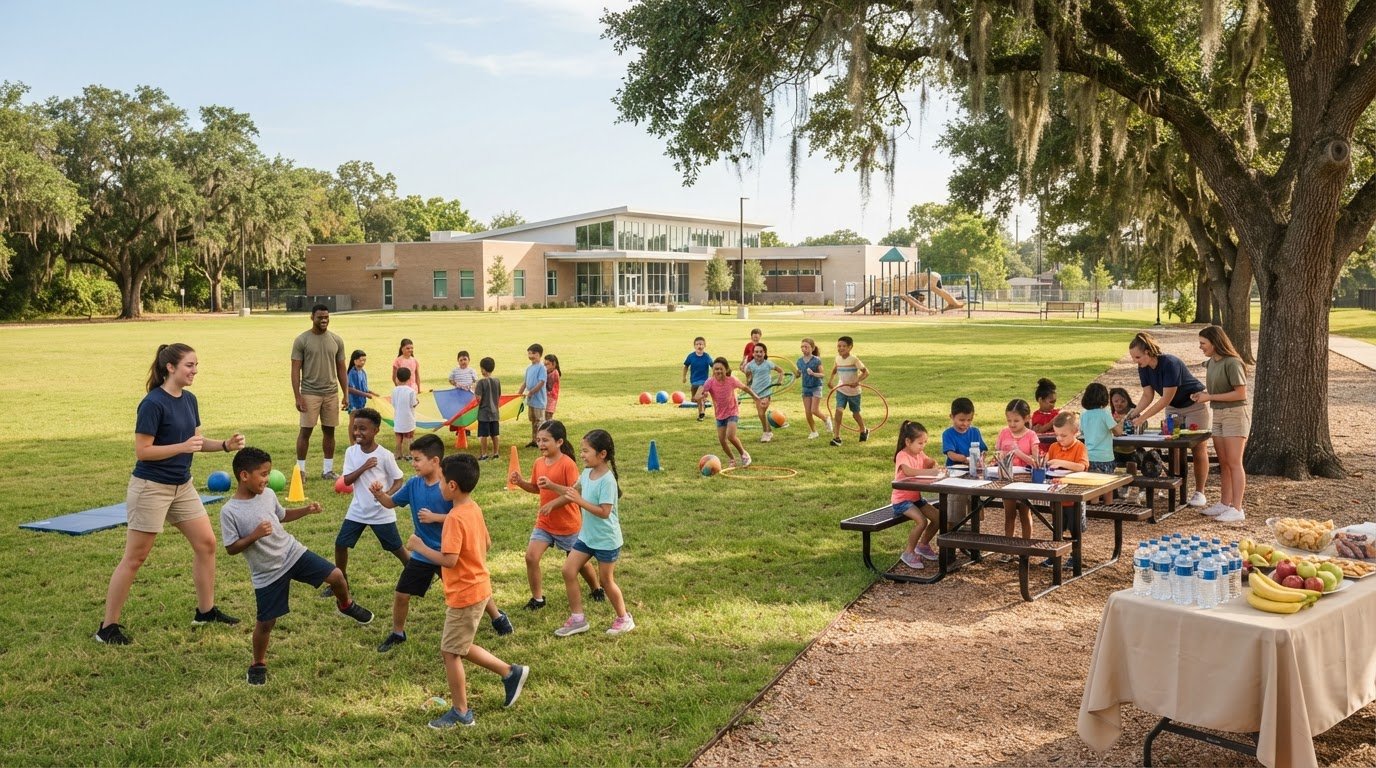
Children can also encounter karate through interactive demonstrations and opportunities to try basic moves at family events. A beginner might copy a stance, follow a simple cue, or try a basic movement with guidance. Treat this as a low-pressure introduction. Notice whether your child seems curious, follows directions, and feels comfortable joining in. These observations can help you decide what kind of class experience to explore next.
2. Benefits parents may notice at home
Classroom habits can carry over into ordinary family routines. A child practicing listening may respond more readily when asked to put shoes away. A student working on patience might wait while a sibling finishes speaking. These are small, observable moments, not proof that every lesson changes behavior. Notice specific actions over time, such as following a familiar direction or pausing before interrupting.
Deer Park martial arts lessons emphasize mutual respect, support, and encouragement among learners. Families training together can reinforce these values at home. For example, a parent can model respectful attention by listening while a child explains a new movement. Praise effort and respectful behavior rather than expecting flawless performance.
Physical practice gives children a structured way to move. At home, notice whether your child enjoys demonstrating a stance, practicing balance, or repeating a movement they remember. Keep practice simple and supervised, with enough room to move safely. Avoid turning the living room into a sparring area. Partnered contact belongs in class with instructor guidance.
Parents can support progress without becoming a second instructor. After class, ask one concrete question, such as, “Which activity did you enjoy?” Then give your child time to answer. If they show you a move, let them explain it before offering feedback. A calm routine, such as setting out class clothes the night before, can also help a child take responsibility for getting ready.
For safety, observe whether the instructor explains boundaries, demonstrates movements clearly, and guides partner activities at an appropriate pace. Look for a clean, uncluttered practice area. You can also ask how the instructor teaches children, pairs beginners, and responds if a child feels uncomfortable. Clear answers and visible supervision help you understand how the class is managed.
At home, reinforce the same boundaries: stop when asked, avoid practicing techniques on siblings, and tell an adult about discomfort. If your child is excited after class, channel that energy into a safe solo demonstration, such as a stance or controlled step. Don’t ask them to repeat partner drills without supervision.
Track progress with brief, specific observations rather than broad judgments. For example, note when your child remembers to wait their turn during a family game or listens through a complete instruction. These everyday examples help you discuss development with your child and instructor. To explore a consistent setting for martial arts practice, visit children’s martial arts learning.
3. Listening, body control, turn-taking, confidence, and respect
A beginner class gives children repeated opportunities to listen and respond. An instructor may call out a direction, demonstrate a stance, then invite students to copy it. Children practice watching, waiting for the cue, and adjusting when instructions change. For example, a student may pause after a movement and reset their feet. This makes listening visible through actions, not just words.
Body control develops through deliberate movement, not speed alone. A child might raise their arms into a guard, then lower them carefully when asked. They can practice stopping in place, keeping their balance, and leaving space between classmates. These moments help children notice where their bodies are and how their movements affect others. Parents can watch for careful starts and stops during simple drills.
Turn-taking happens in partner activities, line formations, and shared practice spaces. A child may wait while a classmate demonstrates, then take their turn when invited. They learn that participation means both taking action and giving others room. At home, a board game offers a familiar way to notice this skill: does your child wait, follow the sequence, and accept another player’s turn?
Confidence often grows through manageable steps. A beginner might first copy a movement, then remember its order, and later demonstrate it for the group. Each attempt gives the child a chance to experience progress without needing to be the fastest student. Notice whether they volunteer, try again after a mistake, or ask for help. These examples show participation and persistence more clearly than a belt or rank alone.
Respect is practiced in the details of class interaction. Children can greet the instructor, listen while a classmate speaks, and follow directions about shared equipment. In a partner drill, respect means using controlled movement and stopping when instructed. Deer Park martial arts lessons emphasize mutual respect, support, and encouragement among learners. Parents can notice whether classmates encourage one another after a missed step or a hesitant attempt.
To understand what your child is learning, observe a class with a few specific questions in mind. Does the instructor explain and demonstrate before asking children to move? Do students have clear turns, and can they pause when prompted? Does the class give beginners room to try at their own pace? These observations help you discuss a specific moment afterward, such as a movement your child practiced or a classmate they supported.
Children show these skills in different ways. One may listen closely but need time before demonstrating; another may participate readily while still practicing patience. Use a specific example rather than comparing siblings or classmates. You might say, “You waited until the instructor finished before starting.” This feedback recognizes the action, reinforces respectful participation, and gives your child a clear behavior to repeat in class.
4. Parent observation and clothing for class
Watching a class can help you understand its pace and teaching style. If parents may observe, choose a spot that keeps the practice area clear. Notice how the instructor gives directions, demonstrates movements, and organizes student turns. For example, see whether beginners have time to copy a stance before the group moves on. Focus on the class rather than calling out instructions. For families exploring beginner karate for kids in Deer Park, a first visit can make the setting more familiar.
Observation works best when your child can engage independently. A quiet seat near the viewing area can reassure a hesitant beginner without drawing them away from the instructor. If your child looks toward you, offer a calm smile, then let the teacher guide the activity. After class, ask about one specific moment, such as a movement they enjoyed or found challenging.
Use your first visit to notice how the room is arranged. Look for a clear practice space, a defined place for waiting students, and enough room for children to move without crowding. Watch how the instructor responds when a student needs help or loses focus. These details show how the class handles transitions, movement, and individual attention.
For a first lesson, choose comfortable clothes that allow easy movement. A T-shirt and athletic pants or shorts give a child room to stretch, step, and bend. Avoid loose strings or dangling accessories that could distract during movement. Tie back long hair and remove jewelry before practice. Follow any clothing directions for the class.
Pack a small bag with a water bottle and a change of clothes if your child is coming from school. Labeling the bottle and clothing helps prevent mix-ups in a busy group. Keep the bag outside the practice area unless the instructor directs otherwise. Before class, check that shoes can be removed easily if students practice barefoot.
Parents can make arrival smoother with a simple routine: change, store belongings, and listen for the instructor’s welcome. Explain that your child can watch a demonstration before trying a new movement. If they feel unsure, they can pause and follow the instructor’s next direction. This gives a beginner a clear plan without expecting immediate confidence.
During observation, note whether instructions are clear and students have room to practice. For example, the instructor might pause a drill, demonstrate the movement again, and restart when children are ready. Moments like these show how learning unfolds. If you’re considering beginner karate for kids in Deer Park, notice whether the class environment helps your child feel ready to participate. Afterward, ask what they noticed instead of judging the visit by one successful or difficult attempt.
5. What are the schedules and class times for kids' beginner karate in Deer Park?
Class schedules differ, so the right time depends on the published timetable and your family’s routine. Compare class days with school dismissal, travel time, and dinner. For example, a class that begins soon after pickup may call for a quick snack and prepared clothes. An evening option may fit better if your child needs time to unwind first.
Look beyond the start time. Consider the full trip: leaving school, reaching the training location, changing clothes, and getting home afterward. The calendar entry only tells you when class begins. Your realistic schedule also includes traffic, parking, and the transition between activities. Map out those steps before choosing a regular class day.
For a young beginner, energy and attention matter as much as convenience. Compare class timing with your child’s usual meals, rest, and most settled part of the day. If your child is often tired after school, an immediate class may feel demanding. If waiting until evening leads to restlessness, an earlier option may support better participation.
Ask how the timetable groups beginners and how the class length fits your child’s age. A child’s ability to follow instructions, stay engaged, and take breaks can shape the best fit. Preschool children, for example, may need a different pace from older school-age students. Use the first class to notice whether the timing supports focus and comfort.
Before settling into a routine, compare the weekly calendar with family responsibilities. Mark school events, homework, meals, and other regular activities. Then choose a class time that leaves room for preparation and a calm trip home. If two days seem equally practical, consider which avoids the busiest transition in your household.
Arriving 10 minutes early is recommended for a child’s first martial arts class. Build that arrival time into the trip, rather than planning to walk in at the scheduled start. The extra time can help your child enter the room, store belongings, and settle before instruction begins. It also gives you a moment to observe the check-in routine.
Use a simple trial plan: select a practical class time, prepare clothing beforehand, and observe your child’s energy afterward. For preschoolers, allow three classes before deciding whether the activity suits them. A routine that supports attendance and a positive transition is more useful than an ideal time that repeatedly conflicts with family life. Explore children’s martial arts class options as you plan a schedule that works for your household.
Schedules vary by school, so check each school’s published timetable for beginner class days and start times. Choose a time that fits your child’s routine and allows you to arrive 10 minutes early for the first class.
Bushi Ban Child Care: After-School Martial Arts Program
Bushi Ban Child Care offers an After-School Martial Arts Program for families seeking a structured activity after school. Its Martial Arts & Fitness Classes combine movement practice with opportunities to build discipline and physical fitness. Families can also explore Seasonal and Holiday Camps for martial arts activities during school breaks.
The Student Leadership Program offers another path for students interested in developing teaching and activity-leading skills. Consider these options when your child is ready to continue practicing beyond an introductory class or wants a consistent after-school activity. The right fit depends on your child’s interests and your family’s routine.
Contact Bushi Ban Child Care to learn more about its children’s martial arts programs.
Take the Next Step at Your Child’s Pace
Choosing beginner karate for kids in Deer Park can be the start of a meaningful routine, not a demand for instant confidence or perfect technique. Let your child’s curiosity guide the next step. After an introductory class, talk together about what felt enjoyable, what felt challenging, and whether they’d like to continue.
If you’re looking for an ongoing activity, Bushi Ban Child Care offers an After-School Martial Arts Program and Martial Arts & Fitness Classes. Seasonal and Holiday Camps also provide a martial arts option during school breaks. Consider which format best fits your child’s interests and your family’s schedule.
Every beginner deserves room to learn through practice, encouragement, and steady effort. Contact Bushi Ban Child Care today to explore a suitable next step for your child.
Frequently Asked Questions
Can I watch my child's class?
Parent observation depends on the class setup and viewing arrangement. If observation is available, stay in the designated area and let the instructor lead the session. A quiet presence can help your child feel supported while giving them space to participate independently. Notice how directions are explained and beginners join activities, then discuss what your child enjoyed afterward.
Will martial arts make my child aggressive?
Martial arts instruction in Deer Park emphasizes resolving conflicts before using self-defense. Lessons also highlight mutual respect, support, and encouragement among students. These values distinguish controlled practice from aggressive behavior. At home, reinforce the difference by praising restraint, respectful words, and following instructions. For example, remind your child that techniques learned in class are for supervised practice, not play with siblings.
What beginner karate classes for kids are available in Deer Park?
Children’s options include karate and other martial arts styles, while class activities and teaching approaches vary. Bushi Ban Child Care offers an After-School Martial Arts Program and Martial Arts & Fitness Classes for children, with structured martial arts and fitness activities. Compare the class focus with your child’s interests, such as learning movement, self-defense skills, or building fitness through practice.
Which Deer Park karate schools offer classes for young beginners?
Bushi Ban Child Care is a local option for families seeking children’s martial arts programming in Deer Park. Its offerings include an After-School Martial Arts Program and Martial Arts & Fitness Classes. For a young beginner, consider how the class introduces new movements and supports participation at different skill levels. The goal is to find an environment where your child can learn progressively and feel included.
What ages can children start karate in Deer Park?
Deer Park martial arts lessons are described as suitable for people from three to eighty years old. For a young child, readiness also matters: being able to separate from a parent for about 30 minutes can indicate they’re ready to try a class. Consider whether your child can follow a group direction, stay with an activity, and communicate when they need help.
Do Deer Park karate schools offer a free trial class or introductory program?
Free trials and introductory programs depend on each school’s enrollment format. Treat the terms separately: “free” describes cost, while “introductory” describes the class experience. An introductory session can help a child see how instruction works and try beginner activities. Before attending, understand what the session includes and whether it involves participating, observing, or both.
What should a child bring or wear to a first karate class?
Choose comfortable clothes that let your child move freely, such as a T-shirt with athletic pants or shorts. A labeled water bottle and a small bag for personal belongings can make arrival easier. Tie back long hair and remove jewelry before class. Unless the class gives different clothing directions, keep the first-day outfit simple so your child can focus on listening and participating.

Comments