
How to Keep Kids Active After School in La Porte
What if a more active afternoon didn’t require adding another complicated commitment to your family’s schedule? If you’re wondering how to keep kids active after school La Porte, you’re not alone. After a full school day, it’s easy for children to settle into screens or remain seated while homework and family plans fill the evening.
Movement doesn’t have to feel like one more task. A walk, a backyard game, or an activity your child genuinely enjoys can make active time a natural part of an ordinary afternoon. The key is to find a repeatable mix of movement, choice, and structure that works for your child and your household.
This guide shares practical ways to fit activity around homework and family routines, let your child help choose what to try, and decide whether a structured program could be a good fit. For families in La Porte, Pasadena, and Deer Park looking for guided movement, Bushi Ban Child Care's after-school program combines martial arts training and fitness, with daily classes designed to build confidence and physical strength. Whether you start with simple activities at home or explore structured enrichment, aim for a routine your child can look forward to.
Key Takeaways
Learn how to keep kids active after school La Porte by choosing movement that fits your child’s energy and your family’s afternoon.
Use a simple after-school sequence to make room for activity while keeping homework and evening plans in view.
Compare active play, family walks, home movement games, and organized classes by flexibility, social interaction, and planning needs.
Notice whether an activity feels enjoyable and manageable for your child, then adapt it to their age and needs.
Consider structured martial arts and fitness enrichment as one option for guided movement after school.
Table of Contents
Why keeping kids active after school matters in La Porte
A school day often asks children to sit, listen, and focus for long stretches. By dismissal, they may be ready to run, stretch, or play, while parents are balancing work, homework, meals, and family plans. The solution doesn’t have to be an elaborate activity or a tightly packed schedule. A few thoughtful opportunities to move can make activity feel like a natural part of the afternoon.
An active after-school routine is a flexible part of the afternoon that gives a child age-appropriate opportunities to move through play, walking, family activities, or organized classes. It might include a short burst of movement rather than one long session, and it should suit the child’s interests, energy, and abilities. For families exploring how to keep kids active after school La Porte, this leaves room for real life: one afternoon might suit outdoor play, while another calls for a simple indoor game.
What counts as after-school physical activity?
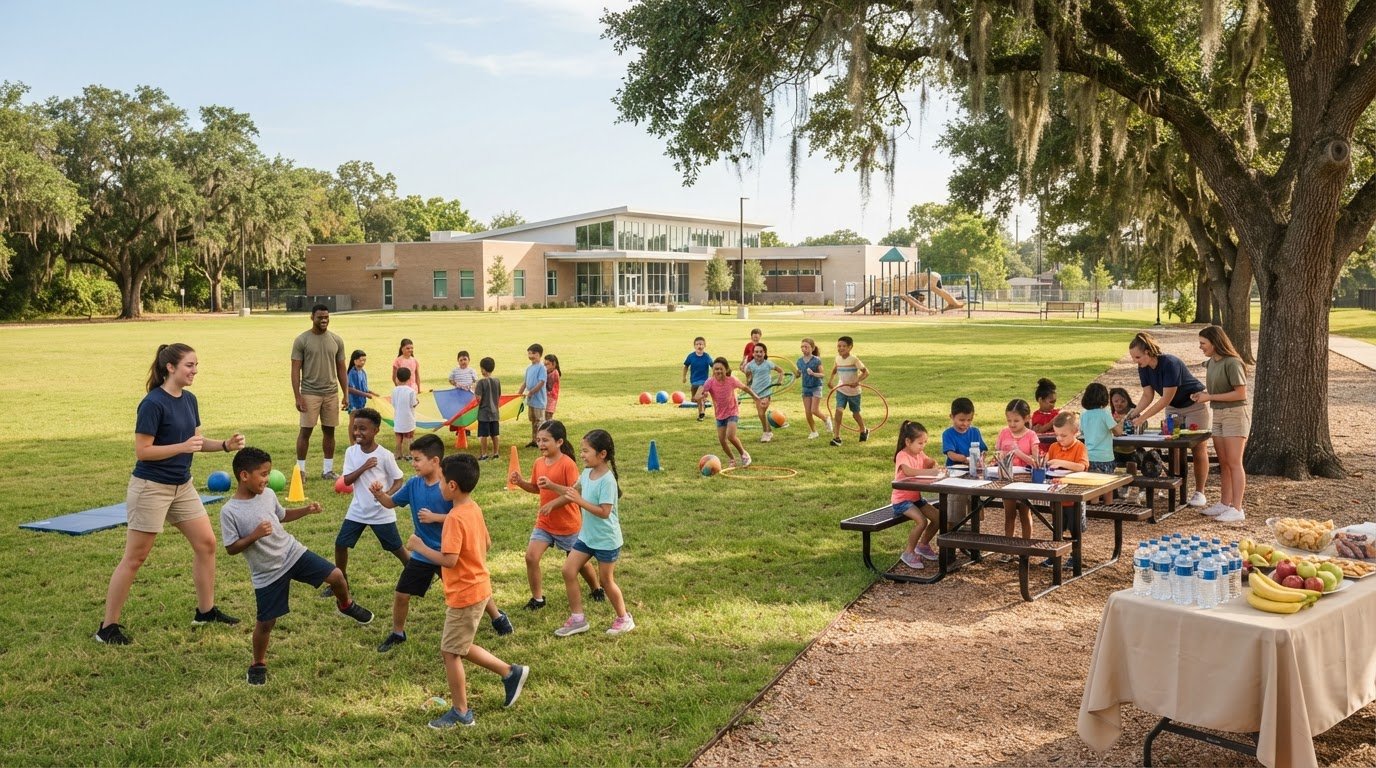
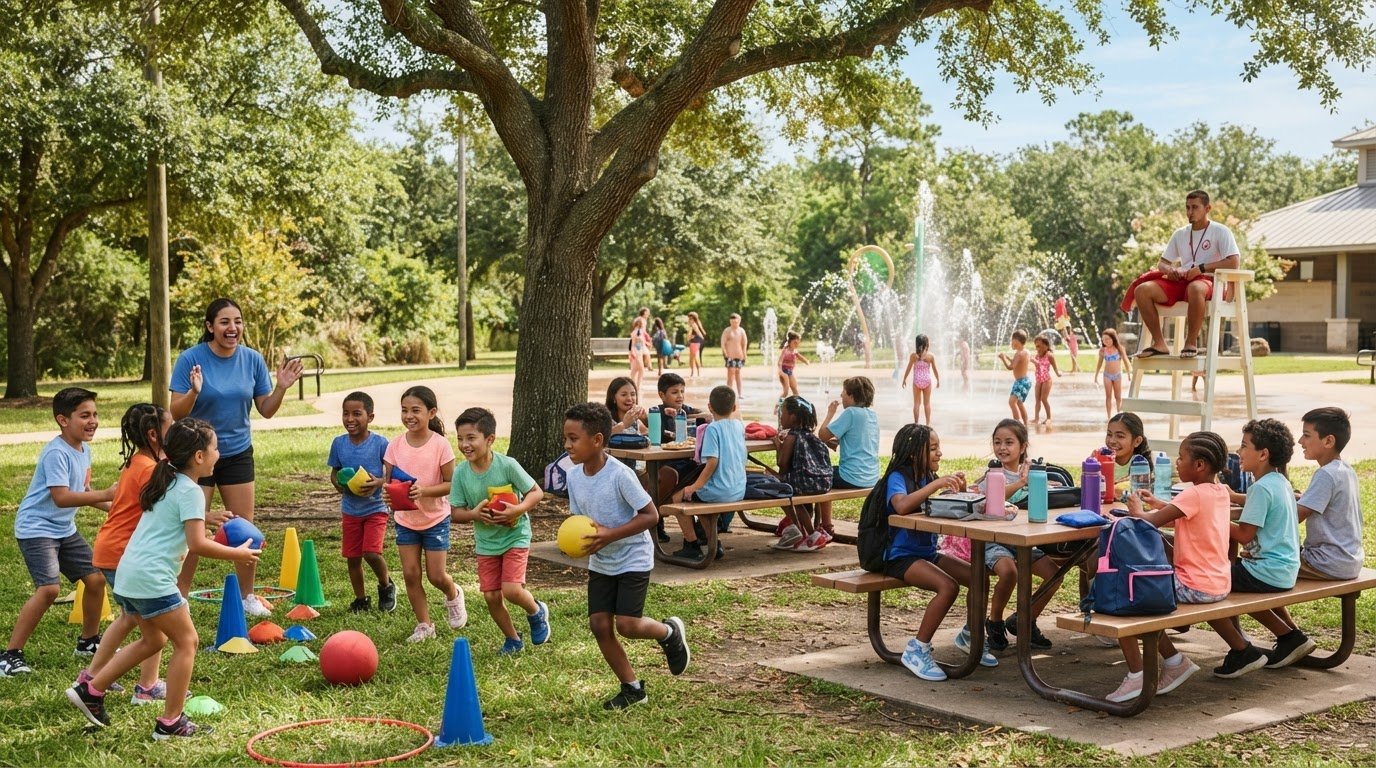
Movement can be informal or guided. A child might play tag, dance to music, walk with a parent, or join an organized martial arts and fitness class. Age-appropriate options can also include gentle stretching, simple movement games, or helping with an active family task. The best fit depends on the child, not on how intense or impressive an activity looks.
Short, manageable periods count as opportunities to move. A brief walk before homework or a few rounds of a favorite game may be easier to sustain than expecting a long activity every afternoon. Let children help choose, too. Offering two suitable options, such as a walk or a movement game, gives them ownership without leaving parents to plan from scratch.
Why a balanced routine matters
Movement is one part of a well-rounded afternoon, alongside a chance to eat, settle after school, work on homework, and rest. These needs don’t have to compete. A little room to move can break up a seated stretch of the day, and a calm transition afterward leaves space for other responsibilities. The aim isn’t to fill every open minute. It’s to create a rhythm that feels manageable for the whole family.
Children can also benefit from having different ways to participate and connect with others. The broad benefits of extracurricular activities can include opportunities for social and personal development, though any one activity will suit some children better than others. If your child enjoys guided practice, classes focused on kids’ fitness and coordination offer a structured way to explore movement. If they prefer flexibility, play or a family walk may be a better starting point. In La Porte, Pasadena, and Deer Park, choosing an option your child is willing to return to can make active afternoons more sustainable than chasing a perfect routine.
Build a realistic after-school activity routine for La Porte
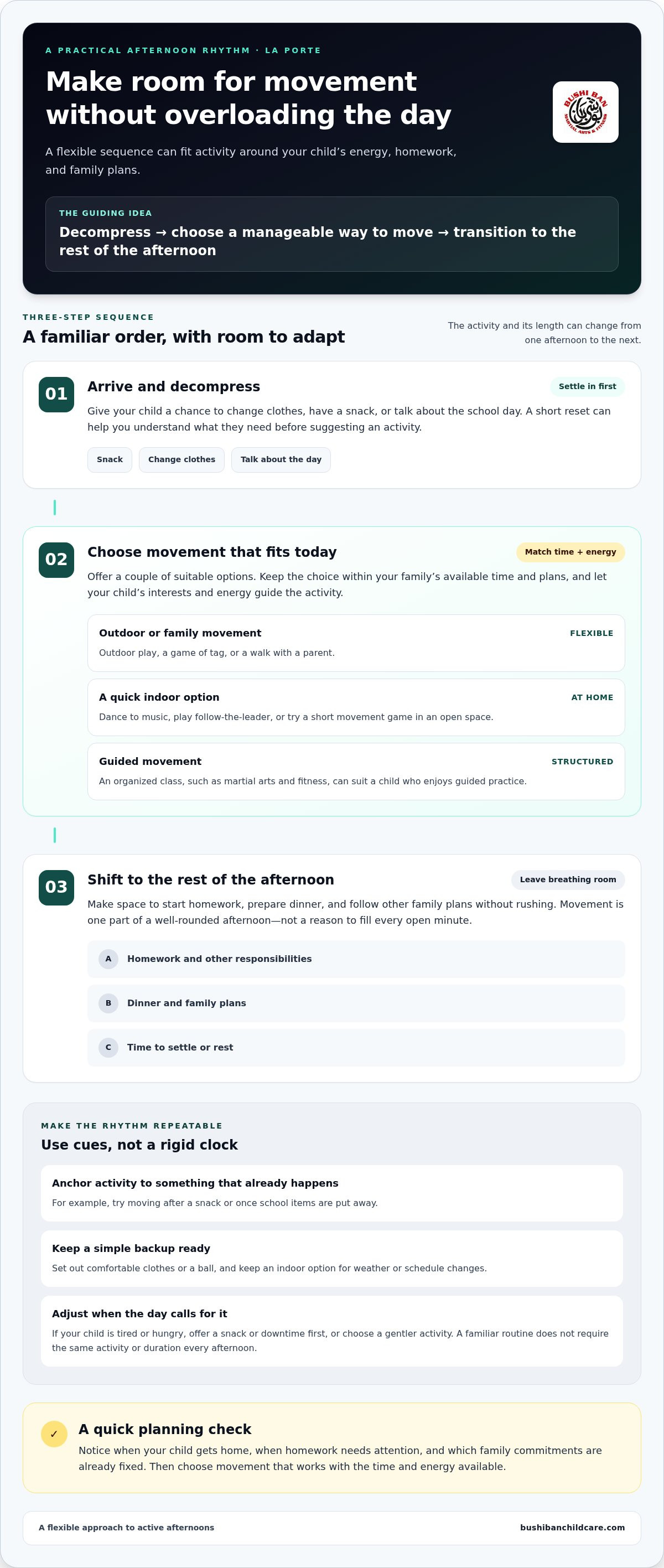
A routine works best when it fits the afternoon you actually have, not an idealized schedule with unlimited time. Start by noticing when your child gets home, when homework needs attention, and which family commitments are already fixed. Then make movement a flexible part of the flow. On a busy day, a short activity may be enough; on a more open afternoon, your child might have time for a longer game or an organized class.
Let your child decompress, choose a manageable way to move, then transition to homework and evening plans. Keeping those steps in a familiar order can make activity easier to repeat without turning it into another family obligation.
Arrive and decompress. Give your child a chance to settle in, change clothes, have a snack, or talk about the school day. This transition can help you understand what they need before suggesting an activity.
Choose movement. Match the option to the time and energy available, such as outdoor play, a family walk, a quick movement game at home, or an organized class.
Shift to the rest of the afternoon. Leave enough breathing room to start homework, prepare dinner, or follow other family plans without rushing.
Start with your child’s energy and preferences
Ask a simple question: “Would you like to play, go for a walk, try a class, or have a quiet break first?” Keep the choices within your family’s limits, including available time and where you can go. If your child is tired or hungry, adjust the order: offer a snack or downtime first, or choose a gentler activity. Listening helps the plan feel shared rather than imposed.
Make movement easier to repeat
Use a natural cue, such as after a snack or once school items are put away, rather than relying on an exact time every day. If it helps, set out comfortable clothes or a ball ahead of time so getting started takes less effort. Keep an indoor backup for weather or schedule changes, such as dancing, follow-the-leader, or a short movement circuit in an open space at home.
Flexibility matters. A routine can have a familiar shape without requiring the same activity or duration every afternoon. After a demanding school day, your child might need a quieter reset; another day, they may be eager to move. Families in La Porte can start with one repeatable cue and a couple of realistic options, then adjust as they learn what fits.
If guided movement suits your child, Bushi Ban’s after-school martial arts and fitness program offers structured enrichment. It can give your afternoon a dependable rhythm while leaving room to change course when the day calls for it.
Compare after-school activities by fit, not by how busy they look
The most suitable activity isn’t necessarily the one that fills the most time or looks the most structured. Consider what your child enjoys, how much energy they have after school, and what your family can repeat during a typical week. One child may welcome a class with clear instruction; another may prefer choosing a game at home. Either can be a useful part of an active routine.
Use this comparison as a starting point, not a ranking. The planning involved can vary with the child’s age, available space, and whether an adult joins in.
When informal movement may be the right fit
Informal movement works well when afternoons vary or a child wants room to choose. Invite them to pick between a short walk, a movement game, or active play, while you set practical boundaries around time and supervision. Keep the invitation positive: activity is a chance to have fun together, not a consequence for sitting or using a screen. It can also complement an organized class on other days.
A family walk might suit an afternoon when everyone needs a change of pace, while a quick indoor game can work when plans are tight. There’s no need to turn every choice into a new project. Simple, familiar options make it easier for children to participate and for parents to fit movement around the rest of the evening.
When a structured class may help
A class can suit a child who enjoys learning through demonstration, practicing skills, or taking part in a planned group activity. Martial arts and fitness classes combine movement with instruction in a structured setting. That predictability may appeal to families who prefer a clear format, while informal play can fill other afternoons. For more context, a guide to martial arts for focus and discipline can help parents consider what this kind of practice involves.
To decide what fits, notice how your child responds before, during, and after an activity. Do they seem interested in returning? Does the option leave room for homework, meals, and downtime? If not, adjust the choice or how often it appears in the week. When considering how to keep kids active after school La Porte, a balanced mix is often more practical than expecting one activity to suit every child and every afternoon.
Keep after-school activity enjoyable, safe, and age-appropriate
A useful activity is one your child can take part in comfortably and look forward to trying again. Watch their reactions: do they seem engaged, understand what to do, and recover comfortably afterward? A child who regularly resists, feels overwhelmed, or seems unusually tired may need a different activity, a gentler pace, or more rest. The goal is supportive movement, not a perfect performance.
Use sensible supervision for the setting and activity. Make sure children understand simple instructions, have room to move, and can take a water break when needed. If a child says something hurts, feels uncomfortable, or is too tiring, pause and adjust rather than pushing through. For health or development concerns, discuss the activity with an appropriate health professional.
Adjust activity to age, ability, and confidence
Choose instructions and challenges that match your child’s experience, and let them build familiarity gradually. A beginner might first watch or try a simpler version of a movement before joining a more involved game or class. Progress looks different for each child, so avoid comparing siblings or classmates. Notice individual signs of growing comfort, such as willingness to participate or try a new step.
Children’s needs can shift from day to day. A child who enjoys an active game one afternoon may prefer a calmer option after a demanding school day. Encourage them without making participation a test of effort or character. If your child has a health condition, recurring discomfort, or a specific concern about physical activity, a healthcare professional can help you decide what adjustments may be appropriate.
Balance movement with rest and other after-school needs
Activity is only one part of the afternoon. Leave space for a snack, homework, family connection, and unstructured downtime, too. If screens are part of the routine, use a predictable transition rather than blame: tell your child when screen time will pause, then offer a clear next step, such as changing clothes or choosing a game. A consistent cue can make the shift feel less abrupt without requiring unrealistic restrictions.
Pay attention to the overall rhythm. If movement regularly leaves little time for eating, schoolwork, or rest, shorten the activity or choose a simpler option. If your child has energy but needs direction, kids’ fitness and coordination classes can provide a guided way to practice movement. Consider the child’s age, experience, and confidence when deciding whether that structure feels right.
For families considering how to keep kids active after school La Porte, enjoyment and comfort are practical signs that a routine may be a good fit. Bushi Ban’s after-school program combines martial arts training and fitness as structured enrichment, rather than all-day child care. Learn about Bushi Ban’s after-school program as one option for adding guided movement to your child’s routine.
Explore After-School Activities in La Porte with Bushi Ban
Families in La Porte, Pasadena, and Deer Park have different needs after the school day. Some children are happiest with informal play, while others enjoy a regular activity with clear instruction and a familiar routine. Bushi Ban’s after-school martial arts and fitness program is a structured enrichment option for families considering how to keep kids active after school La Porte. It combines martial arts training, fitness, and discipline in an after-school setting.
Think of it as an activity option, not a replacement for the whole day’s care. The program is structured enrichment, not all-day child care. That distinction can help parents decide whether they want a guided activity to complement the afternoon or care throughout the day.
What a structured martial arts and fitness option can add
A planned class gives children a guided setting for movement and practice. Bushi Ban’s daily classes are designed to build confidence and physical strength, with martial arts training, fitness, and discipline at the center of the program. The Student Leadership Program gives students an additional opportunity to develop teaching, activity-leading, public-speaking, and mentorship skills. These offerings may appeal to children who like learning alongside peers and practicing new skills with direction.
Structured activities don’t need to crowd out informal movement. A child might take part in a class and still enjoy relaxed play or family activity on other afternoons. The useful question is whether the format matches the child’s interest and the family’s routine. If they prefer clear guidance, a class may feel engaging; if they need more flexibility, a less structured choice might fit better.
Choose a next step that suits your family
Before choosing, consider what your child enjoys, how they respond to group instruction, and how much structure feels comfortable after school. Talk together about what sounds appealing: learning martial arts, moving as part of a class, or keeping activity informal. Their response can help you weigh a program alongside homework, rest, and family plans.
There’s no single activity that suits every child, and preferences can change. A structured option offers a consistent framework for movement, while family-led activities leave more room to adapt from day to day. Bushi Ban’s Student Leadership Program adds another dimension for students interested in practicing leadership skills as part of their development.
Guided martial arts and fitness are one option for adding structured enrichment to the family’s routine. Explore Bushi Ban’s after-school program to learn more.
Choose a next step your child can look forward to
You don’t need to settle on a permanent routine all at once. Treat the next step as a chance to learn what feels right for your child: notice which activities spark interest, what fits around family commitments, and whether more structure would make afternoons easier. That practical approach can help answer how to keep kids active after school La Porte in a way that suits your family, rather than following someone else’s ideal schedule.
If your child is curious about guided movement, Bushi Ban’s after-school program combines martial arts training and fitness. Students can also develop teaching, activity-leading, public-speaking, and mentorship skills through the Student Leadership Program. These experiences can appeal to children who enjoy learning and taking part with others, while leaving room for each student’s individual growth.
Explore Bushi Ban’s after-school program and consider whether this structured enrichment option aligns with your child’s interests and your family’s routine. Start with a conversation at home about the kind of movement your child would look forward to.
Frequently Asked Questions
How can I keep my child active after school in La Porte?
For families searching for how to keep kids active after school La Porte, start with a small choice that fits the day. Your child could help walk the dog, play a simple game with a sibling, or join you for a stroll near home. Let your child choose between two options, then adapt if weather, homework, or family plans change. A routine should make movement easier, not add pressure.
How much physical activity do school-age children need each day?
The CDC recommends that children and adolescents ages 6 through 17 get at least 60 minutes of moderate-to-vigorous physical activity each day. The CDC also recommends including vigorous aerobic activity, muscle strengthening, and bone strengthening on at least three days a week. Activity can come from different parts of the day, not just after school. See the CDC’s physical activity guidelines for children for details.
What are easy ways for kids to be active after school at home?
Try a simple indoor obstacle path using cushions or other stable household items, with an adult checking that the route is clear. Children can also practice balance by standing on one foot near a support, or take turns inventing movement challenges such as reaching, stepping, and stretching. Keep the activity brief and let your child choose a variation. Stop or change it if the space feels cramped or a movement is uncomfortable.
Should kids do homework or exercise first after school?
Either order can work, depending on your child’s energy and your family’s evening. If your child is restless after sitting in class, a short movement break before homework may help them transition. If they arrive hungry or tired, offer a snack and downtime first, then decide together whether to move before or after schoolwork. Consider deadlines and bedtime, too, so activity doesn’t make the rest of the evening feel rushed.
Are martial arts a good after-school activity for children?
Martial arts may suit a child who enjoys learning physical skills, practicing with guidance, and following a class structure. Consider whether your child is curious about the activity and comfortable trying beginner-level instruction. Bushi Ban’s after-school program combines martial arts training and fitness, with discipline as a focus. A child’s interests and experience matter, so an organized class is one option to weigh alongside less structured activities.
How can I help my child stay active without overscheduling them?
Keep the plan modest: choose an activity that fits naturally into the week, and leave afternoons open for homework, meals, and downtime. Ask your child what they’d like to try, and notice whether the activity remains enjoyable after the novelty wears off. If the schedule becomes stressful, reduce the frequency or switch to a simpler option. An active routine can include unplanned play, not just scheduled classes.
What can children do when outdoor play is not practical?
Choose indoor movements that fit the available space, such as marching in place, gentle stretches, or simple balance poses. Move breakable objects out of the way, use a stable floor, and supervise according to your child’s age and activity. Skip fast running or jumping if the room is crowded or the floor is slippery. If your child gets uncomfortable or overly tired, pause and offer water or a rest.

Comments