
A dependable pickup plan matters just as much as the care that follows. For families seeking after-school care with transportation in Pasadena, TX, it’s important to distinguish school pickup from the after-school program itself. Check which schools are served and how the daily routine works before deciding if the arrangement fits.
It’s natural to want a clear plan for the hours between the school bell and the end of the workday. This guide explains what transportation can mean in an after-school program, which Pasadena elementary schools may be served, and what children can do during before- and after-school care. You’ll also get a practical picture of how a structured program can make room for movement, learning, and positive daily habits.
Key Takeaways
- Transportation arrangements can vary by program, so understand how school pickup fits into the care routine.
- Use your child’s school and daily schedule to assess whether a program’s transportation and care plan suits your family.
- Before- and after-school routines can balance focused activities, movement, and time to recharge.
- Explore whether an after-school martial arts program can add fitness, discipline, and leadership practice to your child’s afternoon.
Table of Contents
Before- and after-school program activities
After-school programs in Pasadena differ in their schedules, activities, and transportation arrangements. Compare the school-age hours, daily routine, and enrollment details with your family’s needs, and treat pickup as a separate part of the decision.
School-Age Availability
School-age availability depends on the program’s stated schedule and the ages it serves. Compare the before-school and after-school hours separately, since a family may need one time block but not the other. For example, note whether care begins before the morning school routine or continues after dismissal. Then match those hours to your child’s school day and your own schedule.
For enrollment, review the program’s age range, school-day calendar, and registration steps together. If a starter offer is presented, identify what it covers and how it fits the ongoing schedule. Keep the child’s school name and required start date handy while completing enrollment materials. This makes it easier to see whether the program’s stated availability fits your routine.
Activities and Transportation Comparison
Compare activities by the structure they bring to the afternoon. Programs may emphasize quiet work, group activities, movement, or a mix. Consider whether your child needs a calm transition after class, a chance to move, or a balance of both. Those priorities make comparisons more practical.
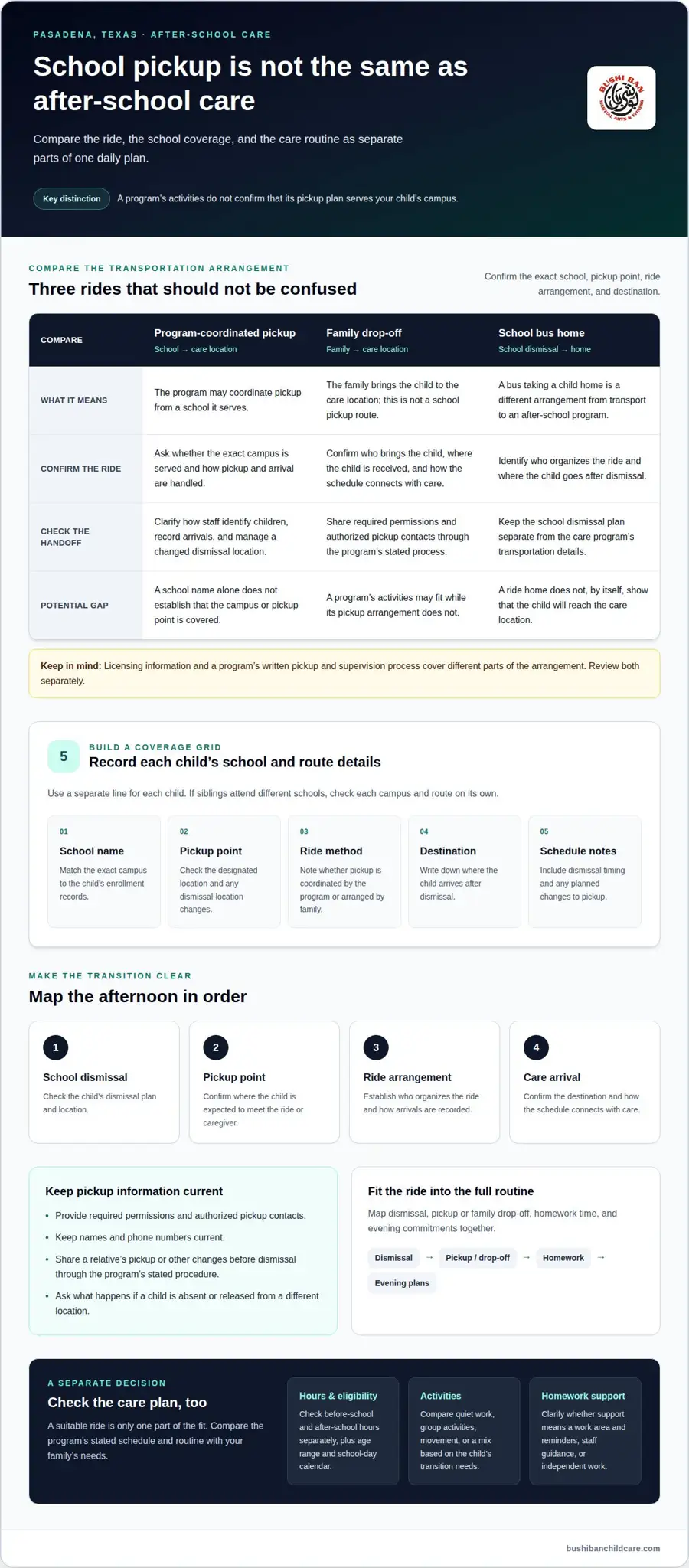
Transportation is a separate consideration from activities. Record the school pickup arrangement, the destination after pickup, and how the schedule connects with care. A program with engaging activities may still not fit if its pickup plan does not match your child’s school. Compare these details side by side.
Use a simple comparison list: school-age eligibility, before- or after-school hours, activity types, transportation arrangement, and enrollment steps. A child who enjoys movement may respond well to active options; one who needs a quieter transition may prefer a more settled start. Matching preferences with the practical schedule helps families choose a routine that supports the school day.
Is transportation provided for before- and after-school care?
Transportation depends on each program’s arrangement. Some programs coordinate school pickup, while others require families to bring children to the care location. Review licensing information separately from the program’s written pickup and supervision process, since each covers a different part of the arrangement.
For school pickup, look for clear steps covering how staff identify children, record arrivals, and handle a changed dismissal plan. Consider what happens if a child is absent or the school releases students from a different location. A defined process helps families understand how the transition from classroom to care is managed.
Parents should provide the program’s required permissions and authorized pickup contacts. Keep names, phone numbers, and any pickup changes current, and give updates through the program’s stated procedure. If a relative will collect a child on a particular day, share that change before dismissal rather than relying on an informal message.
Homework planning also shapes the afternoon. Compare whether the program offers a designated work area, school supplies, or time set aside for assignments. A child with reading to complete, for instance, may need a quieter space than one finishing a short worksheet. These details affect how much work may remain at home.
Homework assistance can mean different things. One program may provide a quiet place and reminders; another may offer staff guidance with instructions or organization. Clarify whether children work independently, get help understanding directions, or move to another activity after finishing. That distinction helps families plan homework, dinner, and family time without assuming every program provides tutoring.
To compare schedules, map school dismissal, pickup or family drop-off, homework time, and evening commitments. Then identify the arrangement that best fits your child’s school routine. A clear plan for transportation and assignments can make the transition from school to home more predictable.
Transportation from elementary schools
Transportation from a Pasadena elementary school depends on the program’s pickup arrangement. For families seeking after-school care with transportation in Pasadena, TX, a school name alone doesn’t establish whether its campus is served. Compare the exact school, dismissal location, pickup method, and care destination. A child released from a different campus entrance, for example, may need a different pickup plan.
Use a coverage grid to organize details for each child. Include the school name, pickup point, transportation method, arrival destination, and schedule notes. If siblings attend separate schools, record each campus on its own line. When comparing after-school care with transportation in Pasadena, TX, this makes route differences visible and helps prevent assumptions that one arrangement covers both children.
Bus service also needs careful comparison. A school bus taking children home differs from transportation arranged by an after-school program. Note who organizes each ride and where your child goes after dismissal. For instance, a program may involve family drop-off rather than a school pickup route. Keep the school’s dismissal plan distinct from the care program’s transportation details.
Match schools served to your child’s actual campus, not just the district or neighborhood. Compare the program’s school coverage information with the school name on enrollment records. Also consider dismissal times and designated pickup locations, since these shape the transition from class to care. The care destination matters only if the route connects it with the correct school.
Before finalizing a routine, write down the transportation steps in order: school dismissal, pickup point, ride arrangement, and arrival destination. Add your child’s authorized pickup information and planned schedule changes. This checklist helps caregivers share a clear reference and spot gaps, such as a campus missing from the route or a pickup point that conflicts with dismissal.
Before- and after-school care
Before-school and after-school care solve different scheduling gaps. Before school, the key fit is the time between a caregiver’s departure and the start of the school day. After school, families need a plan from dismissal through pickup or the next home routine. Write down which part of the day needs coverage before comparing programs.
A useful schedule follows your child’s actual school day. Note morning drop-off, school start, dismissal, care period, and family pickup. Then compare those points with work hours, sibling schedules, and evening commitments. A program that fits after dismissal may not cover an early-morning need, so assess each time block separately.
Care routines can also differ in how they balance quiet and active time. A child who arrives home tired after a full school day may benefit from a calmer transition rather than immediate structured activity. Another child may welcome movement after class. Consider homework, meals, rest, and play together, then look for a routine that complements those needs.
Before choosing, use these practical steps:
List the days and time blocks when care is needed.
Map school dismissal and the expected family pickup routine.
Consider where homework, a snack, and downtime fit into the afternoon.
Identify schedule changes, such as early dismissal or a different caregiver.
These details help distinguish a consistent school-day routine from occasional care. They also make it easier to spot conflicts, such as an activity that overlaps with a family pickup time. For a child who needs active after-school structure, explore an activity-based afternoon option as you compare routines. The right choice should fit the child’s school schedule and the family’s daily rhythm.
Bushi Ban Child Care: After-School Martial Arts Program
Bushi Ban Child Care offers an After-School Martial Arts Program for families seeking structured activity after the school day. Martial arts and fitness classes support physical health and discipline, giving children an active focus beyond classroom routines.
The Student Leadership Program adds opportunities to develop teaching and activity-leading skills. Seasonal and Holiday Camps offer another option during school breaks, while the Bushi Ban After School Program connects families with a school-age activity routine. These offerings may suit children who enjoy movement, practice, and taking on leadership responsibilities.
If martial arts and fitness align with your child’s interests, visit bushibanchildcare.com to learn more about the programs.
Build a Routine That Fits Your Family
Choosing after-school care with transportation in Pasadena, TX, is also a chance to shape the rhythm your child carries from school into the evening. Look beyond pickup: consider which activities help your child feel energized, focused, and ready to reconnect with family. A routine that reflects your child’s interests can make the school-to-home transition feel purposeful.
Turn your priorities into a simple plan. Note the school schedule, the transportation arrangement your family needs, and the kind of after-school experience your child enjoys. Then explore Bushi Ban Child Care’s after-school martial arts program, classes, and camps to find an option that brings movement and personal growth into the day. Contact Bushi Ban to discuss your child’s after-school routine.
Contact Bushi Ban Child Care to discuss an after-school option for your family. You’re taking a positive step toward a more supportive school-day routine.
Frequently Asked Questions
Need a ride?
School transportation is part of a program only when its arrangement includes pickup. Separate the ride question from the care question: a child may attend an after-school activity without receiving transportation from school. If you need pickup on school days but can handle holiday schedules yourself, prioritize the weekday route and destination when comparing arrangements.
Which after-school care programs in Pasadena, TX provide transportation from local schools?
A program’s after-school activities don’t, by themselves, establish that it transports children from school. Bushi Ban Child Care offers an After-School Martial Arts Program, but transportation is a separate consideration. For families comparing after-school care with transportation in Pasadena, TX, identify the school, destination, and ride arrangement as part of your decision.
Which Pasadena, TX schools do after-school care providers pick up from?
Pickup routes depend on the schools included, not simply on a Pasadena address. If one child attends one campus while a sibling attends another, compare the school names separately. School attendance, dismissal location, and the program’s destination all shape whether one routine can work for both children.
What are the service areas and pickup routes for Pasadena after-school transportation programs?
A pickup route connects a school dismissal point with the care destination; a service area describes the broader locations served. For families weighing after-school care with transportation in Pasadena, TX, identify the school, campus entrance, destination, and attendance days. A route may serve one campus without covering every nearby neighborhood, so compare the specific school and destination against your family’s routine.
What ages or grade levels can enroll in Pasadena after-school care programs?
Age and grade eligibility depend on the individual program. Bushi Ban Child Care’s Martial Arts & Fitness Classes are tailored to various age groups and skill levels, so a child’s experience is also relevant. When comparing options, consider both school grade and interest in martial arts rather than assuming every program uses the same enrollment range.
What hours are after-school care and transportation available?
Available hours depend on the program’s schedule and whether your family needs morning care, afternoon care, or both. Map school start and dismissal, caregiver work hours, and planned pickup time. A schedule that covers afternoons may not address an early-morning gap, so assess each part of the day separately.