
A fuller after-school week isn’t always a better one. An after-school routine for elementary kids in Deer Park works best when it fits your family’s fixed commitments, your child’s energy, and the time needed for homework and downtime. Choose program days that fit those anchors, then check availability in Deer Park before building them into the week.
It’s understandable to want afternoons to feel productive and manageable. A thoughtful after-school routine for elementary kids in Deer Park can make room for activity and learning without crowding out rest or family time. This guide explains how to shape a routine around your child’s needs, compare program schedules with your family’s commitments, and adjust the plan as the week changes.
Key Takeaways
- Choose an after-school program by considering your child’s interests, daily needs, and the structure your family wants.
- Use practical details about a program and your Deer Park schedule to determine whether it fits your week.
- Build structured activities around your family’s existing commitments, and adjust the routine when it isn’t working.
- Balance organized time with room to unwind, so afternoons support activity as well as rest and family connection.
Table of Contents
2. Is Bushi Ban’s after-school program available to families in Deer Park?
3. How can families match the program to their weekly routine?
1. Choosing a program for an elementary student
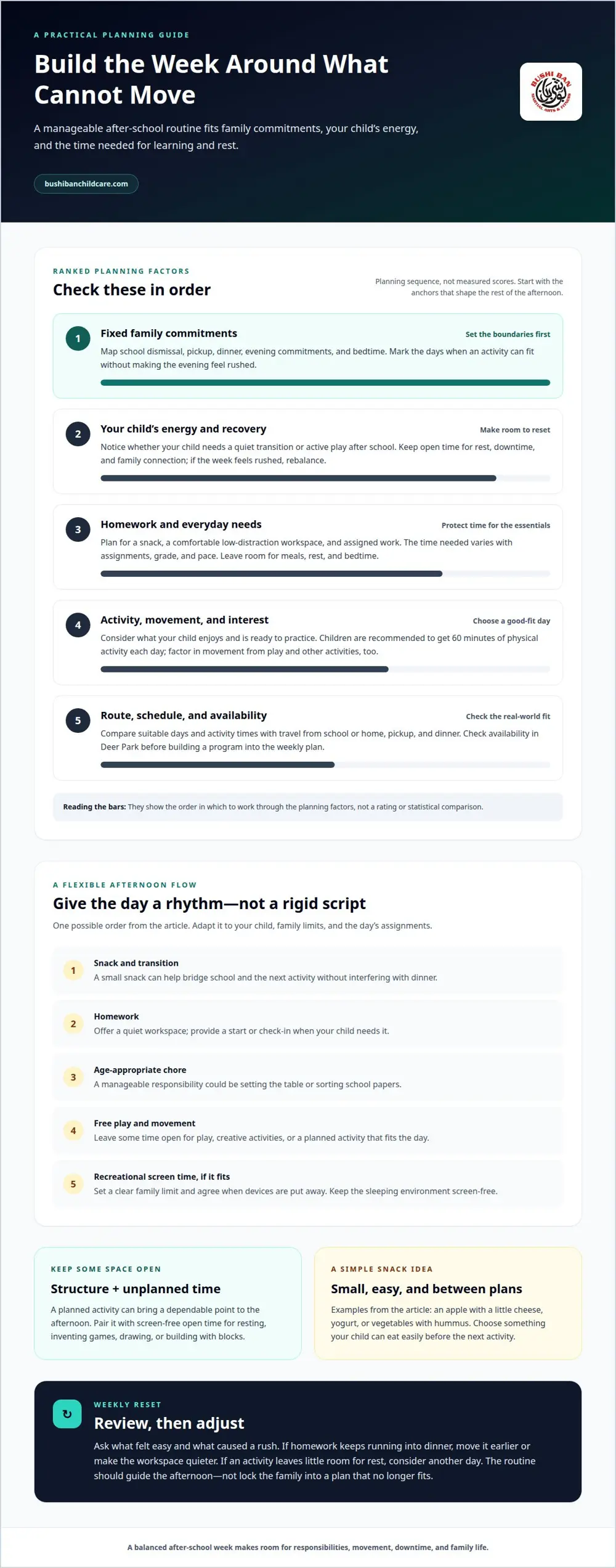
A useful after-school routine for elementary kids in Deer Park makes room for a snack, homework, movement, and downtime. Start by mapping the school day against pickup, dinner, and evening commitments. Then compare activities and schedules with those fixed points. A child who needs quiet after school, for example, may do better with a calm transition before joining a group activity. That can make the week feel manageable rather than crowded.
How much homework should elementary students do after school? There’s no single duration that works for every student; assignments, grade, and pace all matter. Set up a comfortable workspace with few distractions, then help younger students get started or understand difficult instructions. A more independent child may need only a brief check-in. Aim to finish assigned work without letting it crowd out meals, rest, or bedtime.
How much physical activity do elementary-age children need each day? Children are recommended to get 60 minutes of physical activity each day. Consider how a program’s movement activities fit alongside play and other activity. Ask what your child enjoys, too. For an after-school routine for elementary kids in Deer Park, choosing an activity they look forward to can help it feel like a welcome part of the week.
What are the recommended screen-time limits for elementary school children? Set a clear family limit for recreational screen use, while making room for homework, movement, and time together. Keep the sleeping environment screen-free and agree on when devices are put away. These boundaries can make afternoons more predictable without relying on screens to fill quiet moments.
Consider which skills your child is ready to practice. A structured activity can offer chances to follow directions, build confidence, and learn alongside peers. Choose a routine that fits your child’s current needs, then notice how they respond throughout the week. If they come home tired or rushed, adjust the balance between activity and recovery time. A well-fitting after-school routine for elementary kids in Deer Park should support the whole afternoon, not just fill the hours.
2. Is Bushi Ban’s after-school program available to families in Deer Park?
For a Deer Park family, practical availability means that a program’s location and schedule fit the school week. Map the route from school or home, then compare it with pickup, dinner, and evening commitments. A program may look appealing on paper but prove difficult to fit if travel disrupts the rest of the afternoon.
Compare after-school options by the details that shape an ordinary weekday: activities, suitable days, and how much transition time your child needs. A family with a tight dinner schedule, for example, may prioritize a convenient route and a consistent routine. Another child may value a structured activity that gives them a clear focus after school. Use these priorities to assess fit rather than choosing by a program label alone.
What are easy after-school snack ideas for kids? Keep snacks small enough not to interfere with dinner. Try an apple with a little cheese, yogurt, or vegetables with hummus. Choose something your child can eat easily between school and the next activity. A simple snack routine can also make the transition from school more predictable.
Before settling on a weekly plan, write down the school’s dismissal time, travel needs, planned activity days, and dinner time. Then look for conflicts, such as an activity that leaves too little time for homework or a long trip that pushes the evening later. Families can use after-school program details as one part of that comparison, alongside their own Deer Park routes and weekly commitments. The best fit is the option that works in the family’s real schedule, not just an idealized one.
3. How can families match the program to their weekly routine?
Start with a weekly calendar showing school dismissal, family commitments, meals, and bedtime. Mark the days when an after-school activity can fit without making the evening feel rushed. You might schedule an activity on a day with fewer appointments and leave another afternoon open for homework or family plans. A visible calendar helps children know what comes next and lets parents spot conflicts before the week begins.
Balance homework, chores, play, and screen time by choosing a consistent order that suits your child. One workable sequence is snack, homework, an age-appropriate chore, free play, then recreational screen time if it fits your family’s limits. A younger student may need a parent nearby to begin an assignment, while an older elementary student may manage independently. Keep the sequence flexible for longer assignments or unexpected changes.
When children have different ages or needs, use shared routines alongside individual expectations. Siblings might all put away their backpacks after school, then follow different homework routines based on their independence. Give each child a manageable household responsibility, such as setting the table or sorting school papers. If one child needs quiet before an activity and another wants active play, build both transitions into the family plan.
Review the routine each week to see whether it works in practice. Ask each child what feels easy and what causes a rush, then adjust the next week’s calendar. If homework repeatedly runs into dinner, move it earlier or make the workspace quieter. If an activity leaves little room for rest, consider moving it to another day. A routine should guide the afternoon, not lock the family into a schedule that no longer fits.
Structured after-school time versus unplanned time
A planned activity can give an elementary student a dependable point in the afternoon. Unscheduled time matters too: a screen-free stretch at home can let a child rest, invent games, draw, or build with blocks. The aim isn’t to schedule every moment. Pair a predictable activity with open time so structure supports the day without crowding out a child’s own ideas.
What is a healthy after-school routine for elementary school kids? A balanced routine includes a transition from school, time for responsibilities, movement, meals, and room to unwind. For example, a child might have a snack, attend an activity, finish homework, then choose a quiet or creative pastime before dinner.
Organized youth sports can benefit children’s physical and mental health, including lower rates of anxiety and depression and increased life satisfaction. Those potential benefits don’t mean every afternoon needs a formal activity. Families can choose a regular program on selected days and keep other afternoons open for relaxed play, reading, or unwinding at home.
Notice what your child chooses during open time. If they quickly reach for a device, offer screen-free alternatives such as sidewalk chalk, a puzzle, or helping prepare dinner. If they’re worn out after a busy school day, quiet play may suit them better than another scheduled commitment. These options leave room for your child’s mood and interests without making the afternoon entirely screen-led.
Try the balance for a school week, then discuss what worked. A child who enjoys group movement may welcome another organized activity; a child who needs more breathing room may benefit from a less crowded schedule. Keep the family’s established commitments in view, and make changes when an activity consistently displaces rest or creative play. To explore a structured activity option, look into after-school activities that can fit your child’s week.
Bushi Ban Child Care
Bushi Ban Child Care helps families add structured activity and skill-building to an elementary student’s week. Its after-school program combines martial arts training with playtime, obstacle courses, drills, games, fitness classes, snacks, and homework time. The Student Leadership Program offers students opportunities to develop teaching and activity-leading skills, while seasonal and holiday camps provide structured activities during school breaks.
Consider Bushi Ban’s programs when your family’s routine has room for an organized activity and your child is ready to learn through movement, practice, and participation. The right fit should complement existing commitments, leaving space for homework, meals, rest, and family time. Your child’s interests and needs can help guide the choice.
For a conversation about your family’s after-school routine, contact Bushi Ban Child Care.
Make the Next Week Work for Your Family
Treat your schedule as a working plan, not a permanent prescription. An after-school routine for elementary kids in Deer Park can change as school demands, family commitments, and your child’s interests shift. Choose one adjustment to try next week, such as protecting an open afternoon or moving an activity to a less crowded day. Then notice whether evenings feel more manageable and your child has enough room to recharge.
Small, thoughtful changes can help a routine serve your family instead of becoming another source of pressure. Keep the parts that work, and revisit the rest when your needs change. A balanced week can make room for growth, connection, and a little breathing space.
If you’re ready to explore a structured option that could fit your child’s week, contact Bushi Ban Child Care. One considered next step can help your family shape afternoons with confidence.
Frequently Asked Questions
How can families match the program to their weekly routine?
Begin with commitments that can’t move, such as school dismissal, family meals, and recurring appointments. Then choose activity days around those anchors. A family with a standing midweek commitment, for example, might schedule a program on another weekday and keep that evening lighter. A calendar shared with your child makes changes easier to understand and helps everyone prepare for the week.
How does a structured program differ from unplanned after-school time?
A structured program gives children a planned activity and guidance on how to participate, while unplanned time lets them choose how to spend a break. Both can have a place in the week. A child might attend a scheduled activity one afternoon, then spend another drawing, reading, or engaging in imaginative play at home.
Is Bushi Ban’s after-school program available to families in Deer Park?
Yes. Bushi Ban Child Care serves families in Deer Park, as well as Pasadena and La Porte, Texas. Its after-school program gives local families a structured way to include martial arts and enrichment in a child’s weekday. Deer Park parents can consider how the program fits their school-week plans and their child’s interests.
What should Deer Park parents expect from an elementary after-school program?
Expect a clear activity focus and a routine that helps children transition from school into the afternoon. Bushi Ban’s program combines martial arts training with playtime, obstacle courses, drills, games, fitness classes, snacks, and homework time. Children can move, practice skills, and work on school assignments within a structured after-school setting.
What after-school programs are available for elementary students in Deer Park?
Bushi Ban Child Care offers its After-School Martial Arts Program, Martial Arts & Fitness Classes, and Student Leadership Program. Seasonal and Holiday Camps provide another option during school breaks. The programs have different emphases, from physical practice to student leadership, so families can consider which structured activity best suits their elementary student.