
A hurtful moment isn’t always bullying. Bullying is a repeated pattern of aggressive behavior involving an imbalance of power. It can be physical, verbal, or relational. Families looking for anti-bullying classes for kids in Deer Park can start by helping children recognize these different forms.
It’s understandable to want a clear response when a child is being hurt, sees someone else targeted, or worries their own actions have crossed a line. Children should tell a trusted adult, such as a parent or teacher. Adults can listen calmly and take the concern seriously.
This article explains how bullying differs from occasional conflict, how kids can speak up, and practical ways students and parents can help prevent harm. You’ll also learn how supportive classes can reinforce confidence, self-control, and respect for others as part of a child’s growth.
Key Takeaways
- Help a child share what happened with a trusted adult, including where it occurred and whether it has happened before.
- Parents and students can build safer routines together, from practicing assertive responses to speaking up when someone is targeted.
- Consider how a joke or teasing might feel to the person hearing it, and help children choose respectful ways to connect.
- Explore school prevention supports alongside local activities that encourage fitness, confidence, and leadership.
Table of Contents
1. Reporting bullying to trusted adults
Bullying is repeated aggressive behavior involving an imbalance of power or strength. It can be physical, verbal, or relational. If a child is targeted or witnesses bullying, they should tell a parent, teacher, or another trusted adult. Help them explain what happened, where it occurred, who was involved, and whether it has happened before. These details help adults respond. Parents considering anti-bullying classes for kids in Deer Park can use these conversations to help children practice speaking up.
Adults should respond quickly and consistently to show that bullying is unacceptable. Consistent responses can help stop the behavior over time. School staff who witness bullying should intervene, record the incident, and inform appropriate administrators. Parents can report concerns to the school. If an initial inquiry receives no response, follow up with a letter copied to the superintendent. Keep notes of dates, incidents, and school communications.
For school-based support in Deer Park ISD, report the concern to a teacher or school administrator and ask how the school will address it. This is a practical reporting step, not a claim about a named districtwide program. Bullying that overlaps with discriminatory harassment may be covered by federal civil rights laws, according to the U.S. Department of Education, Office for Civil Rights.
Children’s class ages and grade levels depend on how each program groups students. Useful topics include recognizing bullying, telling a trusted adult, and practicing assertive responses. Class schedules, locations, and enrollment steps depend on the program’s format and setting. Parents evaluating safety and reputation can look for clear supervision practices, instructors who explain their approach, and a process for responding to concerns.
When comparing anti-bullying classes for kids in Deer Park, distinguish prevention lessons from martial arts programs. Anti-bullying classes focus on identifying harmful behavior, seeking help, and preventing further harm. Martial arts programs teach physical skills and may also develop fitness and discipline, but they don’t replace reporting bullying to adults. Telling a teacher or parent gives adults a chance to address what happened.
Student and parent involvement in prevention
Prevention works best when students, parents, school staff, and community adults take practical steps together. The American Psychological Association recommends that teachers, parents, and students act to address bullying. At home, practice short scenarios with children: rehearse a calm, assertive response, leaving the situation, or telling an adult. Role-play gives children words to use before a difficult moment arises.
Students can adjust routines to feel more comfortable and reduce exposure to bullying. A child who feels uneasy on the bus might sit near the front or travel with a friend. At school, walking with classmates or taking another hallway route can make isolated moments less likely. These steps don’t replace adult action when bullying occurs.
Digital habits matter, too. Parents can set a nightly time for children to leave phones in a shared area of the home. This may reduce opportunities for nighttime bullying and inappropriate messages. Talk about respectful online communication, and encourage children to bring troubling interactions to a trusted adult rather than replying impulsively.
Families can contribute beyond home routines. Parents and students may join school safety teams or antibullying task forces to raise concerns and support prevention planning. Schools can also help students build friendships or offer a child who feels isolated a lunch or recess job. Small roles can create opportunities to participate and belong.
Children learn from the behavior they see. Parents and caregivers can model respectful disagreement, listening, and apologies in everyday relationships. For a child ready to practice guiding peers and taking responsibility, explore leadership-building activities for students as one way to develop positive habits alongside prevention efforts.
A broader plan can connect these everyday actions. Parents, school staff, and other adults in the community can discuss bullying, build a safe school environment, and create a community-wide prevention strategy. At home, practicing how to ignore a bully or use assertive coping strategies can complement students’ efforts to stay with others, sit near the front of the bus, or take an alternative hallway route. Schools can support connection through friendships or lunch and recess jobs, while parents’ phone routines and respectful behavior provide further examples at home.
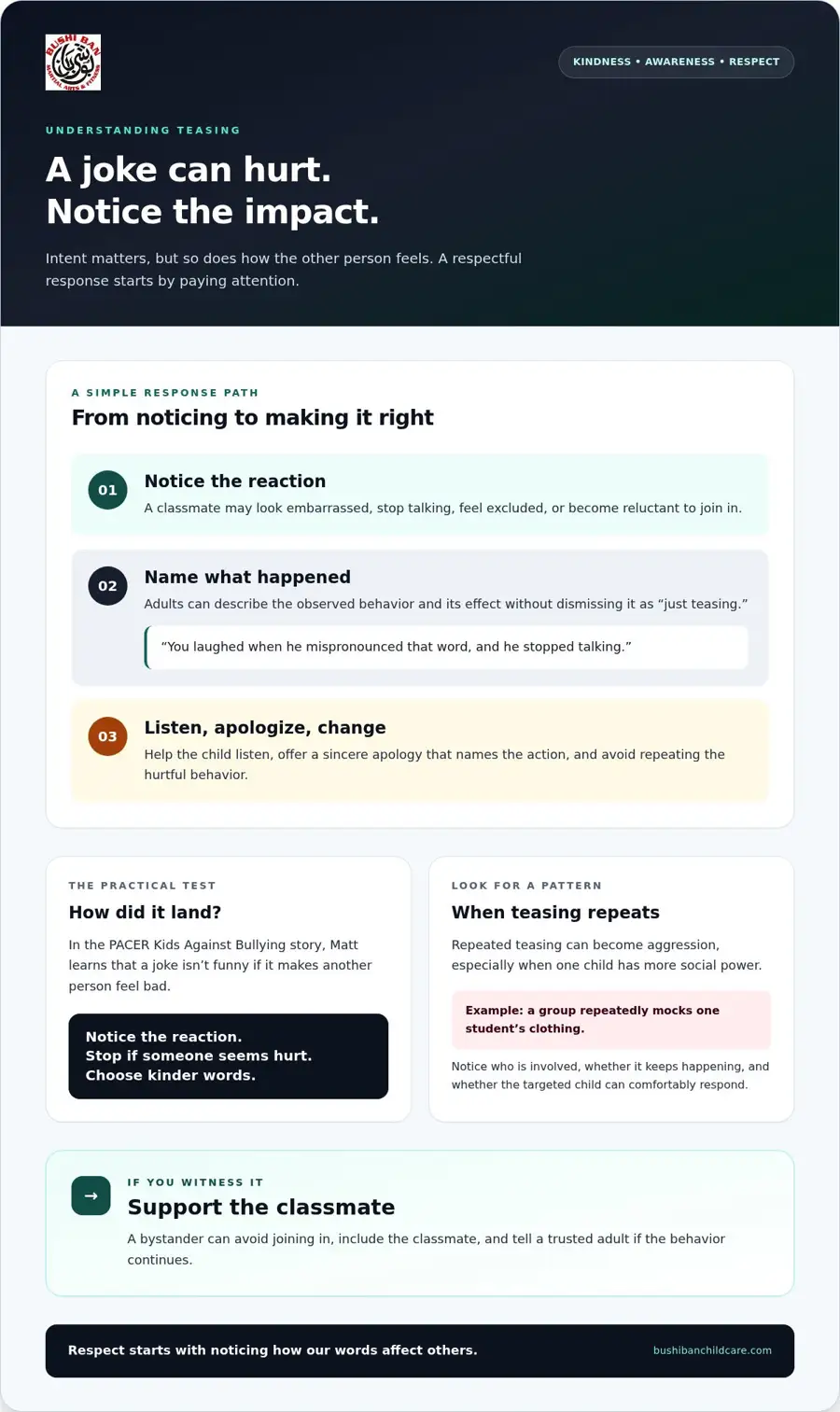
How teasing can hurt others
A joke can still leave a classmate embarrassed, excluded, or reluctant to join in. In the PACER Kids Against Bullying story, Matt learns that a joke isn’t funny if it makes another person feel bad. The lesson offers a practical test: notice the other person’s reaction, stop if they seem hurt, and choose kinder words. Intent matters, but so does impact.
Some children find social cues difficult to read. A child may repeat a nickname or imitate a classmate without realizing it is hurtful. Adults can explain the impact by describing what they observed: “You laughed when he mispronounced that word, and he stopped talking.” Then help the child listen, apologize sincerely, and avoid repeating the behavior. A thoughtful apology names the action instead of dismissing it as “just teasing.”
Repeated teasing can become a pattern of aggression, especially when one child has more social power. For example, a group that repeatedly mocks one student’s clothing may make that student feel singled out, even if each comment seems small on its own. Notice patterns, who is involved, and whether the targeted child can comfortably respond. A bystander can help by not joining in, including the classmate, and telling a trusted adult if the behavior continues.
Online teasing can follow a child beyond school. Hurtful messages sent by phone or online can reach children 24 hours a day, according to StopBullying.gov. In a PACER Kids Against Bullying story, Shannon and her friends admit they spread online rumors and apologize to the classmate they hurt. Their example shows that repair starts with taking responsibility, stopping the rumor, and making amends. Children should also avoid forwarding hurtful messages, even when they didn’t create them.
4. What anti-bullying classes or programs are available for kids in Deer Park, Texas?
Families in Deer Park can consider two kinds of support: school-based prevention and skill-building activities outside school. School efforts may include clear behavior expectations, safety teams, and ways for students to raise concerns. These aren’t necessarily stand-alone classes. Ask school staff what students can access and how they handle concerns.
Dedicated anti-bullying education focuses on recognizing harmful patterns, responding without escalating conflict, including classmates, and telling an adult. A useful lesson might let children practice what to say after hearing a hurtful nickname or seeing a peer left out. Parents can look for lessons that teach bystander support and empathy, not just physical techniques. Practice should reinforce that adults handle ongoing or serious incidents.
Martial arts and fitness classes have a different purpose. They may build physical skills, discipline, and confidence, but that doesn’t make them an anti-bullying curriculum. Consider what your child needs: direct instruction about bullying, structured physical activity, or both. Keep reporting concerns to school staff or trusted adults, whatever activity your family chooses.
Before enrolling, ask how instructors teach respectful conduct, manage disagreements, and support children who feel uncomfortable. Look for age-appropriate explanations and opportunities to practice calm communication. Children should understand that self-control means choosing safe actions, not retaliating. For school concerns, ask how students can report incidents and how adults follow up.
Families seeking a structured activity alongside school-based prevention can explore supportive youth activities. Choose the kind of support that matches your child’s needs, and keep communication open between home and school. A class can help children practice positive habits, while adults remain central to addressing bullying itself.
School-based prevention efforts may be available, such as clear behavior expectations, safety teams, and ways for students to raise concerns, but these may not be stand-alone classes. Ask school staff what students can access and how concerns are handled.
Bushi Ban Child Care: After-School Martial Arts Program
Bushi Ban Child Care offers an After-School Martial Arts Program for families seeking structured after-school activity. Its Martial Arts & Fitness Classes and Student Leadership Program support children’s development through physical practice and opportunities to build leadership skills.
These programs are different from dedicated anti-bullying classes. They don’t replace telling a trusted adult or asking school staff to address bullying. They can be an additional activity for children who would benefit from martial arts, fitness, or leadership opportunities alongside support at home and school.
If you’re exploring these options for your child, contact Bushi Ban Child Care to learn about its programs.
Choose a positive next step for your child
Children build confidence through practice, supportive relationships, and adults who listen. Families considering anti-bullying classes for kids in Deer Park can think about which environment best fits their child’s needs: direct prevention lessons, physical activity, or opportunities to develop leadership. Martial arts and fitness activities can complement those efforts, while school staff and trusted adults remain important partners when bullying occurs.
Bushi Ban Child Care offers an After-School Martial Arts Program, Martial Arts & Fitness Classes, and Seasonal and Holiday Camps. These programs give families options for structured movement and skill-building as children grow. Choose a next step that feels manageable for your family and encourages your child to keep learning, connecting, and treating others with respect.
Contact Bushi Ban Child Care to explore its programs. A thoughtful start can help your child move forward with confidence.
Frequently Asked Questions
What is Bullying?
Bullying is repeated aggressive behavior involving an imbalance of power or strength. For example, a student who repeatedly humiliates a classmate who feels unable to make it stop may be bullying, rather than having a single disagreement. Look at the pattern and power difference. If a child is affected, ask what happened and whether they feel safe, then involve a trusted adult.
Which Deer Park-area martial arts schools offer anti-bullying classes for children?
Bushi Ban Child Care offers an After-School Martial Arts Program and Martial Arts & Fitness Classes for families in Deer Park, Pasadena, and La Porte. These are martial arts and fitness programs, not dedicated anti-bullying classes. Families seeking specific instruction about bullying can ask a school about its prevention lessons and consider martial arts as a separate structured activity for physical practice and discipline.