
Choosing the Best Youth Fitness Programs in Pearland: A Parent’s 2026 Guide
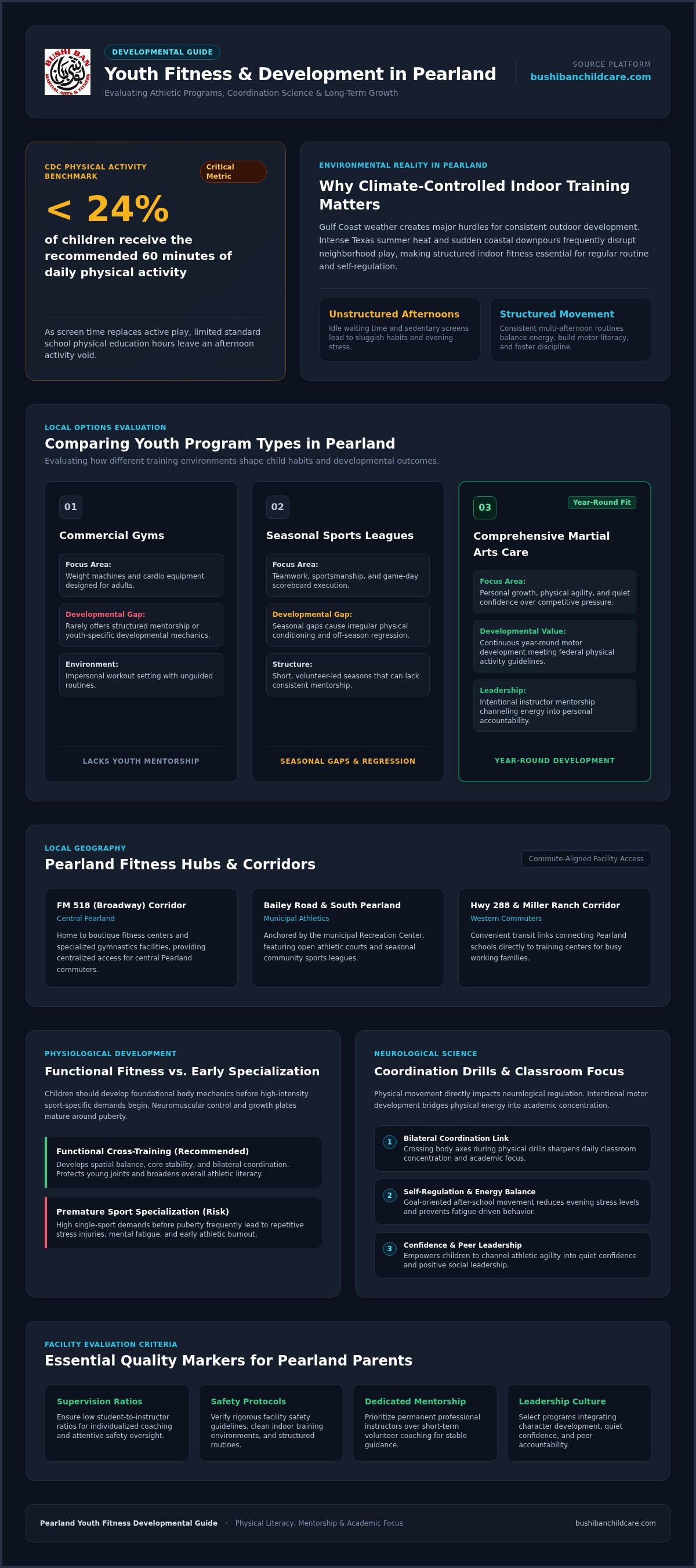
What if the key to unlocking your child's focus at school isn't another hour at a desk, but the right structured movement after the final bell? According to the CDC, less than 24% of children get the recommended 60 minutes of daily physical activity, and like many parents, you're likely watching screen time replace active play. Finding quality youth fitness programs pearland parents can truly rely on shouldn't mean settling for impersonal workout facilities or disorganized leagues. You already know your child needs more than just a place to burn off energy; they need an uplifting community that nurtures their self-esteem.
In this 2026 guide, you'll discover how to evaluate Pearland's athletic options to find a program that builds sharp coordination alongside lasting character and classroom focus. We'll examine the real differences between casual recreation and mentorship-driven training, compare local alternatives, and highlight how the right environment inspires your child to lead others with quiet confidence.
Table of Contents
The Landscape of Youth Fitness Programs in Pearland
For elementary and middle schoolers across Pearland, foundational physical literacy sets the stage for lifelong health. Physical literacy isn't just about athletic skill; it's the confidence and agility to move effectively through daily life. While Pearland ISD provides standard physical education, limited class hours cannot bridge the activity gap required for thriving bodies. Between school bells and evening dinner, children face an afternoon void. That's why local families are turning away from passive after-school babysitting in favor of high-value movement. Choosing dedicated fitness focused after school care transforms idle waiting time into structured motor development, discipline, and positive social interaction.
The Rise of Structured After-School Fitness
After a full school day, sedentary screen time often lures children into sluggish habits. Goal-oriented movement flips this script, channeling natural restless energy into productive athletic progress. Gulf Coast weather presents real hurdles, too. Brutal Texas summer heat and sudden coastal downpours frequently disrupt outdoor neighborhood play, making climate-controlled indoor training essential for consistent development. When children participate in structured fitness multiple afternoons a week, routine turns into genuine self-regulation. Consistent activity keeps their energy balanced, reduces evening stress, and builds athletic durability that occasional weekend outings simply cannot duplicate.
Pearland Fitness Hubs: From FM 518 to Bailey Road
Parents evaluating organized youth sports programs and local fitness options discover that Pearland's athletic map stretches across distinct commercial corridors. Facilities cluster in primary pockets:
The FM 518 (Broadway) Corridor: Home to boutique gyms and specialized gymnastics centers, offering centralized access for central Pearland commuters.
Bailey Road and South Pearland: Anchored by the municipal Recreation Center, featuring open courts and seasonal athletic leagues.
The Highway 288 and Miller Ranch Corridor: Convenient for western commuters and busy families needing direct transit links between schools and training facilities.
Proximity matters for working schedules, but convenience should never compromise program culture. Pearland youth athletics often rely on short, volunteer-led seasons that leave gaps in mentorship. Because of this, thoughtful parents frequently prioritize specialized martial arts facilities that unite fitness, year-round martial arts classes, and character mentorship under one roof. Selecting a facility located along your daily school commute ensures your child benefits from top-tier athletic training without disrupting family logistics.
Comparing Program Types: Gyms, Sports Leagues, and Martial Arts
Every parent wants their child to stay active, but selecting the right environment requires understanding how different settings shape habits. While commercial gyms provide weight machines and cardio equipment, they rarely offer structured developmental mentorship for growing bodies. Youth sports leagues teach teamwork and sportsmanship, yet seasonal schedules cause irregular physical conditioning and frequent off-season regression. In contrast, comprehensive fitness programs for school children rooted in martial arts deliver year-round structure, meeting the federal physical activity guidelines through an approach that prizes personal growth over competitive pressure.
Functional Fitness vs. Performance Training
Functional fitness develops foundational body mechanics like spatial balance, core stability, and bilateral coordination. It builds a durable base before heavy athletic demands begin. Children typically shouldn't jump into high-intensity sport-specific training before their growth plates and neuromuscular control mature around puberty. Single-sport specialization too early often leads to repetitive stress injuries, mental fatigue, and early burnout. Multi-disciplinary cross-training protects young joints while broadening athletic literacy, giving kids the motor confidence to excel across any sport they try later in life.
The Discipline Factor: Why Martial Arts Wins for MOFU Searchers
Coaches in seasonal leagues often focus on playbook execution and game-day victories. That works for scoreboards, but it can overlook personal accountability. Martial arts instructors operate as dedicated mentors, guiding each student through steady individual progression while establishing clear boundaries of respect and effort. Every physical drill ties directly to behavioral expectations, teaching children to listen actively, control their impulses, and persist through fatigue. This structured habit of following directions on the training mat directly improves how a child organizes assignments, listens to teachers, and sustains concentration in Pearland classrooms.
Evaluating youth fitness programs pearland families consider often reveals that general workouts burn energy, but martial arts channels it toward lifelong self-mastery. If you want a program that blends physical conditioning with character development, exploring a specialized after-school martial arts program can provide the steady guidance your child needs to thrive.
Evaluating Quality: What Pearland Parents Should Look For
How do you separate an exceptional youth studio from a run-of-the-mill recreational gym? High equipment counts and flashy facilities don't guarantee a safe or positive developmental setting. When evaluating youth fitness programs pearland families must look deeper into the teaching philosophy, daily cleanliness routines, and coach-to-student ratios. A truly supportive environment balances technical skill with intentional character building.
Pedagogical Credentials: Look for coaches trained in pediatric movement patterns and youth behavioral guidance, not just an online personal training certificate meant for adults.
Curriculum Depth: Top programs establish clear milestones for belt or rank advancement alongside pathways like a Student Leadership Program, teaching older youths to model discipline for younger peers.
Transparent Communication: Instructors should regularly update parents on developmental milestones, listening habits, and motor improvements rather than leaving you in the dark.
The Importance of Physical and Emotional Safety
A child's fitness space should inspire confidence, not anxiety. When walking into a local facility, observe the overall environment. Is the space welcoming and spotless, or does it feel chaotic and intimidating? Inquire whether every staff member undergoes strict background screenings and youth protection protocols. Beyond spotless mats and well-maintained equipment, emotional safety matters deeply. Achieving the CDC physical activity guidelines for school-aged youth requires a nurturing environment where positive reinforcement replaces harsh criticism, encouraging children to view challenging physical drills as fun accomplishments.
Trial Classes and Assessment Procedures
Never commit to an enrichment program without experiencing an initial assessment. A structured trial session lets instructors observe your child's baseline coordination, flexibility, and listening habits while you observe how the coaching staff interacts with the group. Pay close attention to how instructors manage a mixed room. Skilled mentors seamlessly differentiate instruction, providing extra challenges for athletic kids while offering patient, step-by-step encouragement to shy beginners.
The Science of Coordination and Academic Success
Did you know that physical agility directly primes the brain for academic problem-solving? A November 2024 study published in Behavioral Sciences revealed that motor fitness skills serve as the strongest predictor of youth executive function, with coordination outperforming traditional academic metrics in predicting mental focus. Repetitive, cross-body athletic drills stimulate bilateral brain activity. When a child performs "crossing the midline" movements, such as throwing opposite-side strikes or executing diagonal blocks, both cerebral hemispheres communicate instantly. This enhanced neural connectivity translates directly into classroom mechanics, boosting visual tracking for reading comprehension and refining fine motor control for handwriting. Families seeking martial arts for focus and discipline quickly notice these cognitive benefits carrying over into report cards.
Building Physical Literacy in School-Aged Children
Physical literacy gives children the physical competence and emotional confidence to embrace movement throughout their lives. Fundamental movement skills like agility, balance, and spatial awareness serve as the essential ABCs of lifelong pediatric health. Without these building blocks, children often feel self-conscious during recess and retreat toward sedentary screens. Physical literacy serves as the foundation of all youth fitness programs Pearland parents evaluate. When students discover how to run, pivot, and kick with precision, active play turns into a rewarding personal triumph rather than an intimidating chore.
The "Beyond the Belt" Philosophy
Earning an advancement stripe on a training mat mirrors the exact perseverance required to conquer long division or draft a book report. Under our structured "Beyond the Belt" philosophy, physical fitness milestones show children that consistent effort yields clear results. When a student struggles to master a complex combination, they encounter safe, supervised frustration. They don't shut down; they learn to breathe, listen to feedback, and try again. This resilience replaces self-doubt with authentic pride. Over time, that athletic grit turns into quiet, lasting self-esteem that elevates every area of a child's life.
Ready to help your child transform physical agility into academic success? Visit bushibanchildcare.com to register for an introductory session in our after-school martial arts program today.
The Bushi Ban Advantage: Fitness and Leadership for Pearland Families
Founded circa 1980 by Grandmaster Zulfi Ahmed, Bushi Ban delivers an intentional developmental pathway that blends vigorous physical conditioning with mental resilience. While many youth fitness programs pearland parents encounter treat exercise as generic recreation, our system integrates structured Martial Arts & Fitness Classes with character cultivation. Beginners discover coordination without intimidation, while advanced students sharpen athletic reflexes and composure. Central to this vision is our Student Leadership Program, where maturing youth learn to assist instructors, model respectful discipline, and mentor younger peers. It transforms athletic growth into real-world leadership, giving your child the poise to guide others on and off the mat.
A Day in the Life of a Bushi Ban Student
The Bushi Ban After School Program offers a seamless afternoon transition for busy families. Instead of sitting idle in passive childcare, students arrive ready for structured enrichment that balances supervised homework time with high-energy physical training. Our daily rhythm pairs rigorous calisthenics and striking drills with character-building discussions on focus, humility, and integrity. Parents love picking up children who have finished their assignments, completed an empowering workout, and gained positive momentum for the evening ahead. It is an uplifting community where every child is seen, supported, and celebrated.
Next Steps: Joining the Bushi Ban Community
Taking the first step toward lasting health is simple. Getting started begins with scheduling an introductory fitness assessment, giving our mentors clear insight into your child's movement mechanics and personal goals. While proudly serving families across Pearland and the greater Houston area, our regional facilities in Pasadena, Deer Park, and La Porte provide welcoming spaces equipped for safety, athletic progression, and positive mentorship. Ready to invest in your child's strength, academic focus, and confidence? Discover the Bushi Ban difference for your child today!
Building Strength, Focus, and Character for the Road Ahead
Every child deserves an active environment that nurtures their physical abilities while strengthening their personal resolve. When exploring youth fitness programs pearland parents quickly realize that the most rewarding path blends consistent movement with intentional mentorship. By choosing a structured space that prioritizes physical literacy, academic focus, and mutual respect, you provide your child with tools that serve them far beyond the athletic mat.
Serving Houston area families since 1980, Bushi Ban was founded by Grandmaster Zulfi Ahmed with a clear mission: redefining youth fitness through martial arts and leadership. Our instructors partner with parents to cultivate genuine self-discipline, sharp coordination, and the poise to lead others with humility. If you're ready to see your child flourish in the classroom, gain athletic confidence, and build lifelong healthy habits, take the next step. Join the Bushi Ban family and build a stronger future for your child today.
Frequently Asked Questions
What is the best age to start a youth fitness program in Pearland?
Children can begin structured movement programs as early as age three or four. At this stage, sessions focus on balance, listening, and basic motor agility through active play. As kids reach elementary age, around six or seven, their focus matures, allowing them to engage in formal martial arts drills and bodyweight conditioning. Starting early builds lasting habits that keep physical activity fun rather than intimidating.
How do martial arts fitness classes differ from traditional gym classes?
Traditional gym classes usually emphasize machine repetitions or open-ended games without clear behavioral guidance. In contrast, martial arts classes combine cardiovascular drills and functional mobility with explicit character education. Students learn spatial control, self-restraint, and mental discipline alongside physical conditioning. Every movement connects to personal achievement, offering an intentional structure that standard athletic facilities often miss.
Are these programs suitable for children who are not naturally athletic?
Yes, structured youth fitness programs pearland families select are designed to meet children at their individual starting points. Because martial arts celebrates personal progress over team rivalry, non-athletic kids don't sit on a bench. Caring instructors break down bilateral movements into simple, manageable steps, helping hesitant children build coordination, celebrate small victories, and gain authentic confidence in their physical capabilities.
How often should my child attend a fitness program to see results?
Attending two to three days each week delivers ideal balance for most school-aged children. Consistent attendance reinforces neuromuscular memory, helps build aerobic endurance, and solidifies positive behavioral habits without causing physical exhaustion or academic burnout. Children enrolled in daily after-school martial arts routines benefit even further, enjoying regular homework support and active physical enrichment Monday through Friday.
What should my child wear to their first youth fitness class?
For a trial class, comfortable athletic clothing like a t-shirt and shorts or sweatpants works perfectly. Avoid clothing with loose zippers or sharp snaps to maintain safety on the mats. Students train barefoot to improve foot strike mechanics, grip, and ankle stability. Once enrolled in our formal program, your child will receive an official uniform representing their commitment to training.
Can youth fitness programs help with behavioral issues or ADHD?
Structured physical training provides remarkable support for children managing attention challenges or excess energy. The bilateral coordination drills and clear expectations of martial arts help calm overactive nervous systems and improve impulse control. By channeling restlessness into productive movement, youth fitness programs pearland parents trust reinforce attentiveness, listening skills, and emotional regulation that translate directly into the classroom.
Do you offer transportation from Pearland schools to your facilities?
Transportation availability varies by school campus and seasonal schedule. While our after-school programs provide organized transportation from many local schools across our service areas, parents should contact our front desk directly to verify current van routes and pickup availability for specific Pearland campuses. Our staff is happy to walk you through convenient logistics for your family's daily routine.
What makes the Student Leadership Program different from other leadership camps?
Unlike temporary summer workshops that teach abstract leadership concepts, our Student Leadership Program is a continuous, hands-on apprenticeship. Maturing students actively step onto the mat to assist certified instructors, demonstrate drills, and encourage younger peers. This regular responsibility develops real-world public speaking skills, emotional empathy, and natural authority, shaping young martial artists into confident role models within their communities.


Comments