
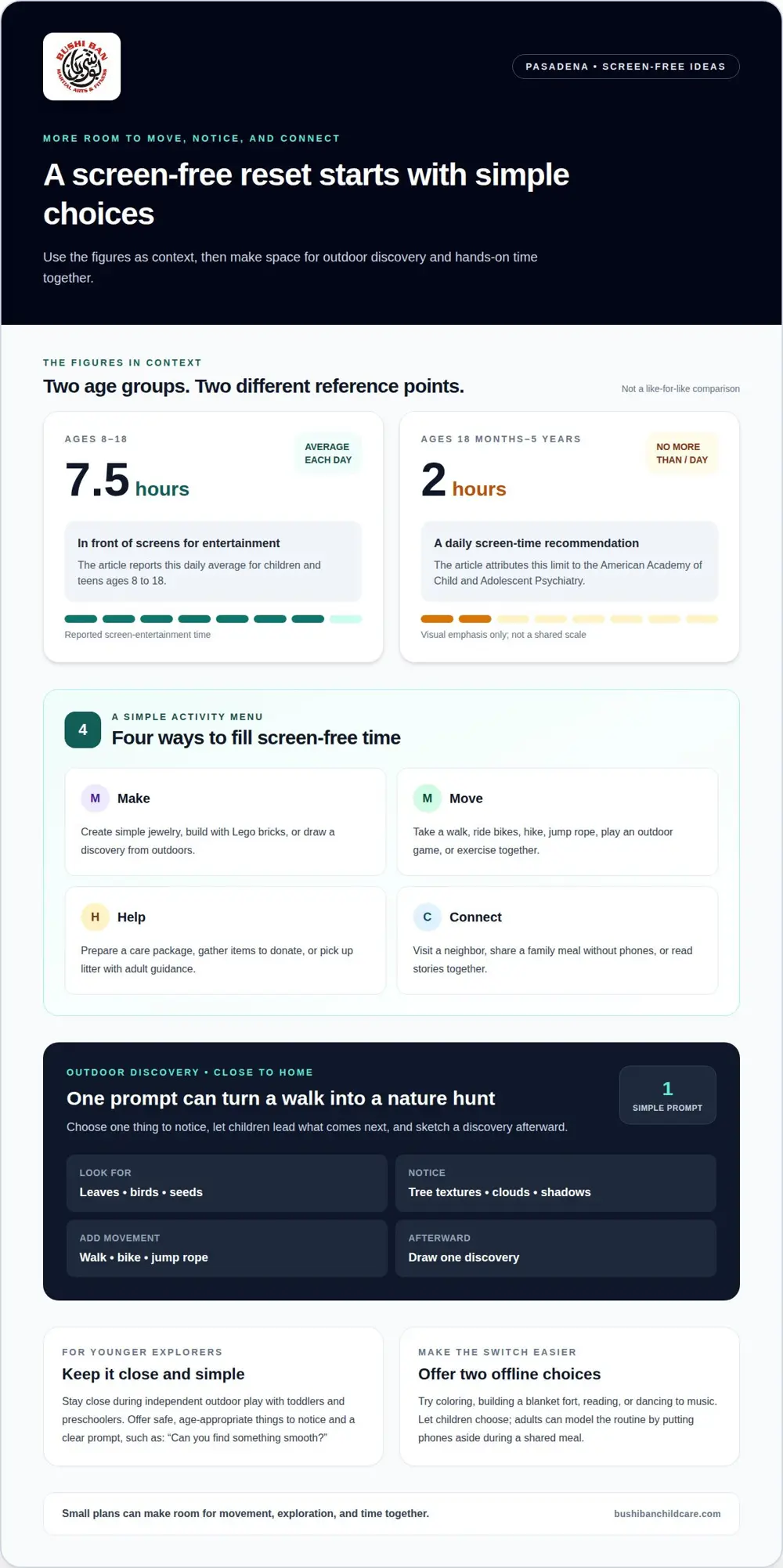
Children ages 8 to 18 spend an average of 7.5 hours every day in front of screens for entertainment. For families looking for screen time alternatives for kids in Pasadena, outdoor play offers a practical place to start: a walk, a backyard scavenger hunt, or time noticing the plants and animals nearby.
Screens can be an easy way to fill a quiet moment, especially after a busy day. But screen-free time creates opportunities for movement, fresh-air exploration, and shared family moments. Activities do not need to be elaborate: simple ideas can encourage children to observe, move, and imagine.
This guide shares outdoor play ideas for Pasadena kids, ways to make nature exploration engaging across ages, and practical screen time alternatives for kids in Pasadena. Try these approachable options at home or outdoors, choosing what suits your child and family routine.
Key Takeaways
- Try simple outdoor options such as a nature scavenger hunt, a walk, or a backyard game to make screen-free time inviting.
- Replacing some screen time with active play can create more opportunities for movement, exploration, and family connection.
- Offer children a choice of creative, hands-on activities so they can find screen-free interests that suit them.
- Use low-cost supplies already at home, such as coloring materials or stickers, to make an easy start without screens.
Table of Contents
1. Outdoor play and nature exploration
A short outdoor plan can turn an ordinary afternoon into a screen-free adventure. In Pasadena, children can walk, ride bikes, play outdoor games, or look for natural details close to home. Choose one activity, such as spotting different leaf shapes, then let children lead what comes next. A simple plan gives the outing direction without making it feel like another school assignment.
Make a scavenger hunt from things children can observe without collecting: a bird, a rough tree trunk, a seed, or a cloud shaped like an animal. Invite them to sketch one discovery afterward. For a movement challenge, combine the hunt with a walk or a jump-rope break. These ideas build attention and imagination while getting children moving.
Outdoor options include walking, biking, hiking, and outdoor games. Children can also draw what they notice outside. For organized activities, explore sports, art, music, or recreation classes that fit your child’s interests and schedule.
This week, plan a family walk, a backyard nature hunt, or an outdoor game. Let children choose the activity and decide what to look for, such as leaves, birds, or interesting shadows. These are practical family activities you can enjoy without relying on scheduled Pasadena events.
Cold-weather play can still include a brief walk or nature hunt when conditions suit your family. Children should wear one more layer than adults when going outdoors in cold weather. Keep the activity flexible: choose a nearby route, notice a few outdoor details, and head inside if anyone feels uncomfortable.
For toddlers and preschoolers, stay close during independent outdoor play so you can help and keep an eye on how they’re doing. Offer safe, age-appropriate things to notice, such as leaves on the ground, and give a simple prompt: “Can you find something smooth?” A few clear choices can help young children explore with confidence.
For families seeking screen time alternatives for kids in Pasadena, nature exploration needs little preparation. A walk, one scavenger-hunt prompt, and a drawing afterward make a complete outdoor activity. Let children take turns choosing the next observation, game, or route.
Kids can walk, bike, hike, play outdoor games, or take a family nature walk or backyard scavenger hunt. They can look for leaves, birds, seeds, tree textures, clouds, or shadows, then draw a discovery. Jump rope and organized sports, art, music, or recreation classes are other options.
2. Benefits of reducing screen time
Excessive screen time can be associated with sleep problems, poorer school performance, and less time with family and friends. Replace part of a video or gaming session with conversation, reading, or a shared household task to make room for other parts of daily life. A screen-free evening routine can also give children time to unwind without a program playing in the background.
Possible effects of excessive screen use include weight and mood problems, poor self-image, body image concerns, and fear of missing out. It can also leave children with less time to learn to relax and enjoy themselves away from screens. These are reasons to consider a balanced routine, not to blame a child for enjoying a show or game.
For children ages 18 months to 5 years, the American Academy of Child and Adolescent Psychiatry recommends no more than two hours of screen time each day. Parents can explain a household limit in plain language, then invite children to suggest offline choices. A child might choose reading before bed or a family game after dinner.
Adults can make the change easier by modeling it. Put phones aside during a shared meal and give children your attention while everyone talks. If a screen-free evening feels challenging, agree on one routine first, such as keeping devices away during dinner. When adults set the example, limits apply to the whole family.
Offer specific plans instead of leaving children to solve the problem alone. Try coloring at the table, building a blanket fort, reading stories together, or dancing to music. Let children choose between two options so they have a say in the transition. Rotate activities weekly to keep choices fresh, and join in when possible. Shared activities create quality family time, especially for young people.
Choosing activities besides watching screens can help families spend more quality time together. The benefit can reach family members across the household, with young people especially benefiting. Making room for shared activities beyond screen watching gives families another way to spend time together, keeping quality family time at the center of a balanced routine.
3. What are screen-free activities for kids in Pasadena, Texas?
Families in Pasadena, Texas, can choose screen-free activities that give children something to make, do, or contribute. At home, invite a child to help with a simple cooking task, such as washing vegetables or stirring batter. For a creative project, try making jewelry or building with Lego bricks. These hands-on activities make time together meaningful.
Choose an activity that suits your family’s energy. Put on music and exercise together, or pause for a relaxation exercise, such as slow breathing. Children can also help prepare a care package, pick up litter in the neighborhood, donate items, visit a neighbor, or plan another act of kindness. Let them choose the task and decide how to contribute.
Make: Create simple jewelry or build a Lego design together.
Move: Choose a family workout or practice a relaxation technique.
Help: Prepare a care package or gather items to donate.
Connect: Visit a neighbor or plan a thoughtful gesture.
Give each activity a clear, manageable role. For a care package, children can sort items and arrange them neatly. During a neighborhood litter pickup, adults can guide the route and show children what to leave untouched. A visit to a neighbor might include a friendly conversation or a small helpful gesture. Shared tasks help children feel included.
Some screen-free moments can be quiet. Invite children to lie in the grass for two minutes and notice the clouds, breeze, or nearby sounds. Then ask what they observed. This simple pause gives the family a calm moment together without special equipment or a detailed plan.
To get an activity started, offer two choices, such as cooking together or making jewelry. Let children choose, then gather what they need. A clear first step makes it easier to begin while leaving room for children’s own ideas.
4. Free or low-cost screen-free activities in Pasadena
Creative projects can make screen-free time engaging without elaborate preparation. Start with coloring books, paint sets, dot markers, hole punchers, or stickers. Use materials already at home, and let your child choose a project before gathering supplies. A clear starting point turns “What should I do?” into a hands-on activity.
For a simple art session, offer a coloring page and a small selection of stickers. Children can decorate the page, make a scene, or tell a story about their choices. Dot markers offer another way to fill shapes and patterns. An adult can join in by making a matching picture or asking the child to describe what they’re creating.
Paint sets invite a different kind of exploration. Lay out paper and a few colors, then suggest painting an imagined place, favorite animal, or family portrait. Keep the prompt open so children can decide how to approach it. A finished picture can become a gift for a relative or a display at home.
A hole puncher adds a hands-on step to a paper project. Children can punch shapes from scrap paper, arrange the pieces, and glue them into a collage. Stickers can add details or create a pattern. With younger children, adults can manage tools that need close supervision and offer simpler tasks, such as choosing colors or placing stickers.
To make activities easy to repeat, create a small art box with paper, coloring materials, stickers, and other supplies you already have. Set it out when a screen-free moment comes up, then invite your child to choose an item. Rotate the materials or change the prompt to keep familiar projects fresh. A short art session can lead naturally to storytelling, sharing finished work, or making another page together.
Choose one activity for the next screen-free break, such as a sticker scene or dot-marker picture, and prepare the materials together. Giving children a choice and a clear first step makes it easier to start creating.
Bushi Ban Child Care
Bushi Ban Child Care offers structured programs that add active, skill-building time to a child’s routine. The After-School Martial Arts Program, Seasonal and Holiday Camps, Martial Arts & Fitness Classes, and Student Leadership Program give families options centered on movement, practice, and personal growth.
These programs can suit families looking for an organized alternative to some screen-based downtime, especially when children enjoy guided physical activity or developing leadership skills. They complement home activities such as crafts, reading, and outdoor exploration rather than replacing every screen-free choice.
If you’d like to explore a structured activity for your child, contact Bushi Ban Child Care.
Make the Next Step a Shared Choice
Choosing screen time alternatives for kids in Pasadena can be an ongoing family practice, not a one-time change. Invite your child to help choose an activity, then make room for it in the weekly routine. A small, repeatable plan can make screen-free time feel familiar and help children discover what they enjoy.
For families seeking organized ways for children to stay active, Bushi Ban Child Care offers an After-School Martial Arts Program, Seasonal and Holiday Camps, and Martial Arts & Fitness Classes. These programs add guided movement and skill-building to a child’s routine alongside activities at home.
Consider what would suit your child’s interests and your family’s schedule. Contact Bushi Ban Child Care to explore the available programs and take a thoughtful next step toward more active time.