
A spring break camp should do more than fill the school break. For families considering a spring break martial arts camp in Deer Park, registration is the first step toward understanding what the day includes and whether the program fits their child.
Bushi Ban Child Care combines martial arts training with structured activities for children during school breaks. Its seasonal and holiday camps focus on martial arts, while regular classes build self-defense skills, coordination, and fitness. This guide explains what families in Deer Park, Pasadena, and La Porte can consider when choosing a spring break camp and how Bushi Ban’s programs fit into that decision.
Key Takeaways
- Learn which registration details help you understand the camp schedule and decide whether it fits your family.
- See how camp activities and martial arts classes can combine movement, practice, and skill-building.
- Understand what staff certifications can tell you about preparation and why safety practices matter, too.
- Find out what to consider when matching a child’s age and experience level to a camp environment.
Table of Contents
Camp registration
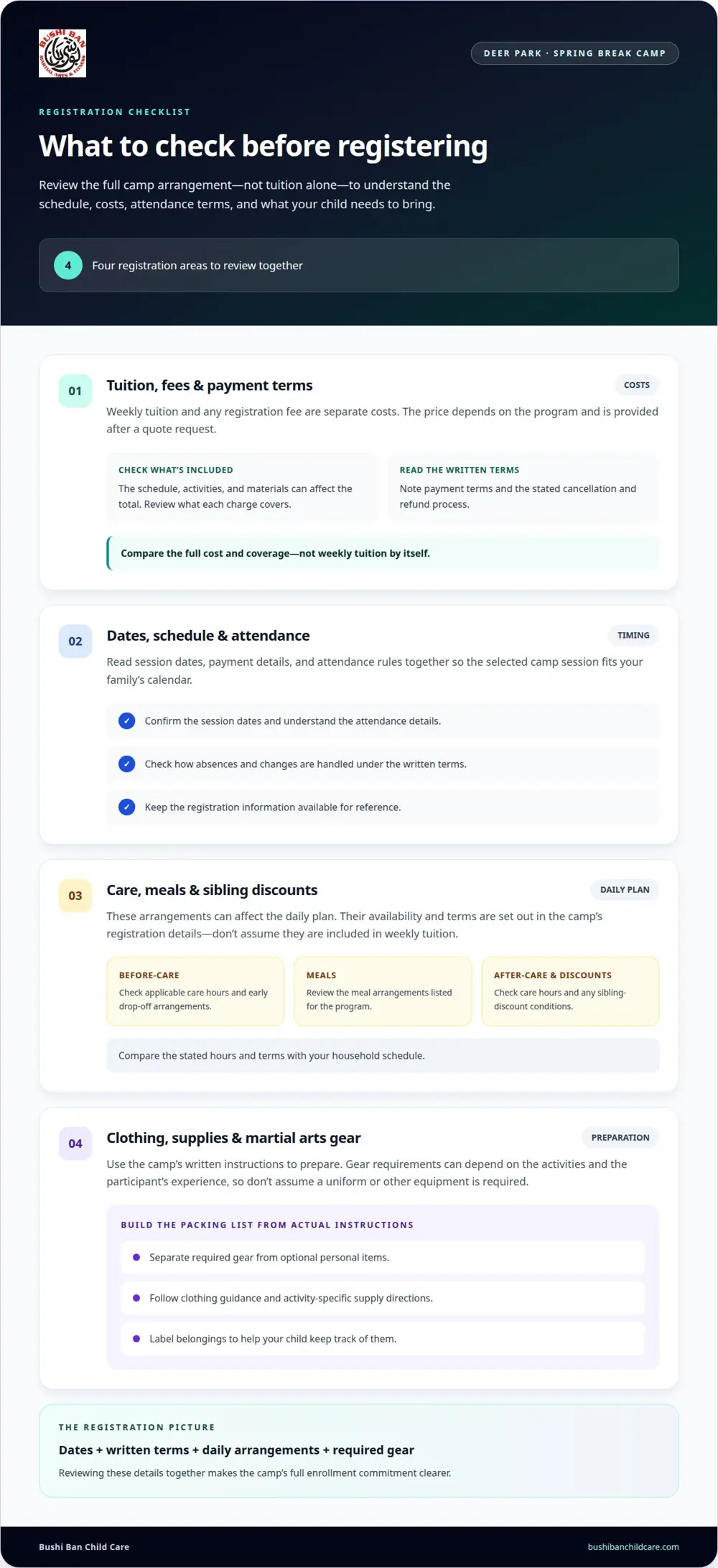
Registration details help families compare the camp schedule, costs, and daily arrangements. Review each term before enrolling, especially the charges, attendance rules, and required gear.
Tuition and Registration Fees
Weekly tuition and any registration fee are separate costs to review. The price depends on the program and is given after a quote request; the schedule, included activities, and materials can affect the total. Look for what each charge covers, rather than comparing tuition alone. Cancellation, refund, and attendance policies follow the written registration terms, which explain how absences and changes are handled.
Read the dates, payment terms, and attendance details together before completing registration. Confirm that the selected session matches your family’s calendar and that you understand the stated cancellation process. Keep the registration information accessible in case you need to refer to the terms later.
Care, Meals, and Sibling Discounts
Before-care, after-care, meals, and sibling discounts each affect a family’s daily plan. Their availability and terms are governed by the camp’s registration details, so review each item separately rather than assuming it comes with weekly tuition. Note the applicable care hours, meal arrangements, and any discount conditions shown for the selected program.
Then compare those details with your household schedule. A family that needs early drop-off, for example, should distinguish that arrangement from the camp’s main hours. A sibling discount, if offered under the stated terms, may have its own eligibility requirements. Clear terms help you understand the full enrollment commitment.
Camper Supplies and Required Gear
Use the camp’s written instructions to prepare clothing and equipment. Martial arts gear requirements can depend on the activities and the participant’s experience, so don’t assume a uniform or other equipment is required. Check the registration materials for required items, clothing guidance, and any supplies the camp expects each child to bring.
Make a simple packing list from those instructions before the first day. For example, separate required gear from optional personal items, and label belongings to help your child keep track of them. If the schedule includes activities beyond martial arts, follow the directions for those activities too. This step keeps preparation focused on the camp’s actual requirements.
Camp activities and martial arts classes
A well-planned camp schedule makes time for movement, instruction, and transitions. Martial arts classes differ from open activity periods: classes have a teaching focus, while other camp activities can provide variety around that practice. A schedule helps families see how these parts fit together during a school break.
Look for a clear description of the class structure. For example, a martial arts session might include an instructor demonstration, guided practice, and time to repeat a movement. Those are examples of common teaching elements, not a guarantee of a particular camp schedule. The useful detail is how instruction is organized and how campers move from one part to the next.
Activities beyond class can give children different ways to participate. A schedule might identify group games, fitness activities, or creative projects as examples, but each camp sets its own program. Knowing the activity names helps families understand whether the day balances focused practice with other experiences. It also gives a child something specific to anticipate.
Ask how the day’s sequence supports attention and participation. For instance, a shorter instruction period followed by a practical activity may feel different from several consecutive classes. Clear transitions matter too: campers benefit from knowing what comes after martial arts practice, such as a group activity or a quieter break. These details explain more than a broad promise of a fun day.
Martial arts instruction can also emphasize progress beyond learning movements. Respectful participation, listening, and persistence are useful skills to notice in the class approach. A family comparing a spring break program with a summer camp can focus on schedule, instruction, and activity variety, rather than assuming the two formats match. Explore martial arts and fitness classes as one way to understand the instructional side of a camp experience.
Camp safety and staff certifications
For a spring break camp, safety includes staff preparation and clear routines. A holiday schedule can bring different activities, so each activity needs appropriate supervision. For example, martial arts practice calls for clear movement boundaries and instructions before drills begin. A written plan also helps staff respond consistently during transitions, arrival, and dismissal.
Staff certifications can indicate training in a defined subject, but credentials vary. A useful description names the issuing organization, training area, and renewal terms. First aid and CPR are examples of credentials families may encounter, not proof that every camp employee holds them. A credential also doesn’t replace active supervision, clear rules, or a plan for responding to concerns.
During martial arts instruction, practical safeguards include demonstrating movements before practice and adapting drills to participants’ abilities. Staff can explain where children wait, how they enter practice space, and when they stop. For example, a clear stop signal gives campers a shared instruction during drills. These routines make expectations easier to understand for beginners and experienced students alike.
Arrival and dismissal procedures deserve equal attention. A consistent check-in process records who has arrived, while a clear pickup procedure helps staff manage departures. Emergency contacts and relevant health information also help staff respond to a child’s needs. These details should be handled through the camp’s established registration and safety procedures, rather than informal conversations alone.
Families can consider how the camp explains staff roles, credentials, supervision, and emergency response. Specific examples are more informative than broad claims: a camp might describe how staff supervise a transition from class to another activity. Clear explanations help parents understand the safety approach without confusing a certification with a guarantee. That distinction matters for spring, summer, and holiday programs alike.
What ages and skill levels can attend?
Age and experience can help families think about camp fit, but a child’s interests and readiness to participate in group activities matter too. Martial arts training includes opportunities to learn and practice at different skill levels.
Age eligibility is set by each camp’s enrollment criteria. Read the stated age range alongside the daily activities, not in isolation. A younger child may need more guidance during transitions, while an older camper may be ready for longer periods of focused practice. The program’s structure helps determine which age groups can participate comfortably.
Prior martial arts experience isn’t the only measure of fit. Beginners can approach a class by learning foundational movements, listening to demonstrations, and practicing at a comfortable pace. A child with previous training may already recognize class routines, yet still benefit from reviewing instructions and respecting the group’s pace.
Before selecting a session, consider how your child responds to three practical situations: following a coach’s directions, waiting for a turn, and trying an unfamiliar movement. These examples can help you think about participation without treating a belt rank or athletic background as the sole measure. Share relevant experience and support needs during enrollment so staff can understand the child’s starting point.
Ask how instruction accommodates different experience levels. For instance, a class can introduce a movement through demonstration before campers practice it. Clear explanations of class expectations can help children understand how to participate, whether they’re new to martial arts or returning to training. A supportive learning environment values effort, focus, and respect alongside physical skill.
For a child ready to build skills through structured instruction, explore martial arts class options and consider how their age, experience, and comfort with group activities align with the camp.
Bushi Ban Child Care: Seasonal and Holiday Camps
Bushi Ban Child Care offers Seasonal and Holiday Camps for families seeking structured activities during school breaks. If your child enjoyed martial arts practice or is ready to explore it, these camps connect movement with opportunities to build focus and discipline. Martial Arts & Fitness Classes can also support continued physical practice beyond a camp session.
Choose a seasonal or holiday camp when you’re planning for a school break and want a structured martial arts activity. For ongoing learning, the After-School Martial Arts Program combines martial arts training with after-school care and enrichment. Bushi Ban serves families in Deer Park, Pasadena, and La Porte.
For details about the next step, contact Bushi Ban Child Care.
Choose a Confident Next Step
Choosing a spring break martial arts camp in Deer Park is also a chance to consider what your child wants to practice next. A new activity can become a starting point for building confidence, focus, and steady routines beyond the school break. Talk through your child’s interests together, then decide which kind of instruction feels like a good fit.
Bushi Ban Child Care offers seasonal and holiday camps, Martial Arts & Fitness Classes, and an After-School Martial Arts Program. Serving families in Deer Park, Pasadena, and La Porte, these programs give children ways to explore martial arts training and continue learning beyond a single camp session.
Explore your options with Bushi Ban Child Care, and help your child approach the next season with curiosity and confidence.
Frequently Asked Questions
Are there spring break martial arts camps in Deer Park, Texas?
Yes. Bushi Ban Child Care offers seasonal and holiday camps during school breaks for families in Deer Park, Pasadena, and La Porte, Texas. The camps focus on martial arts training, giving children a structured activity while school is out. Review the session schedule for the dates that fit your plans.
Which martial arts schools in Deer Park offer spring break camps?
Bushi Ban Child Care’s seasonal and holiday camps focus on martial arts training during school breaks, making them a relevant option for families in Deer Park. Families in Pasadena and La Porte can also explore the camps. Consider the session schedule and training focus alongside your child’s interests and routine.
What are the dates and daily hours for Deer Park spring break martial arts camps?
Dates and daily hours follow the schedule for each camp session. Match the session with your child’s school-break calendar, then plan transportation around the published drop-off and pickup times. Contact Bushi Ban Child Care to discuss the current schedule for families in Deer Park, Pasadena, and La Porte.
What martial arts styles and activities are included?
The camp focuses on martial arts training. Bushi Ban Child Care’s Martial Arts & Fitness Classes teach self-defense, coordination, and overall fitness. The specific style and activity schedule depend on the camp session, so consider which learning goals matter most to your child. For example, a beginner may value foundational instruction, while a returning student may want continued practice.
How much does a spring break martial arts camp in Deer Park cost?
Tuition depends on the selected camp session and enrollment details, and the specific amount is provided after a quote request. To get a useful figure, identify the camp dates and enrollment option you want priced. This keeps the amount tied to the program you plan to use rather than relying on a broad estimate that may not match your family’s plans.
How do parents register, and what are the enrollment deadlines?
Start by contacting Bushi Ban Child Care about the camp session that fits your school-break calendar. Share the dates you’re considering, along with your child’s age and martial arts background, so the enrollment conversation can address practical fit. Deadlines can vary by session, so reach out early enough to plan around the dates and complete the applicable enrollment steps.