
Summer Camp for 5-Year-Olds in Deer Park: A Parent’s Guide
What if the best summer camp for your five-year-old isn’t the one with the longest activity list, but the one whose structure feels right for your child? When searching for a summer camp for 5 year olds Deer Park parents need more than an appealing activity list. It’s natural to wonder whether a program will suit a young child’s interests, readiness, and comfort in a new setting.
A good fit gives a child room to explore an activity within a clear routine and age-conscious instruction. To compare sports, recreation, and enrichment camps, look at what children do, how the day is organized, and what the camp expects of young participants. Those details can help you identify an experience that feels engaging rather than overwhelming.
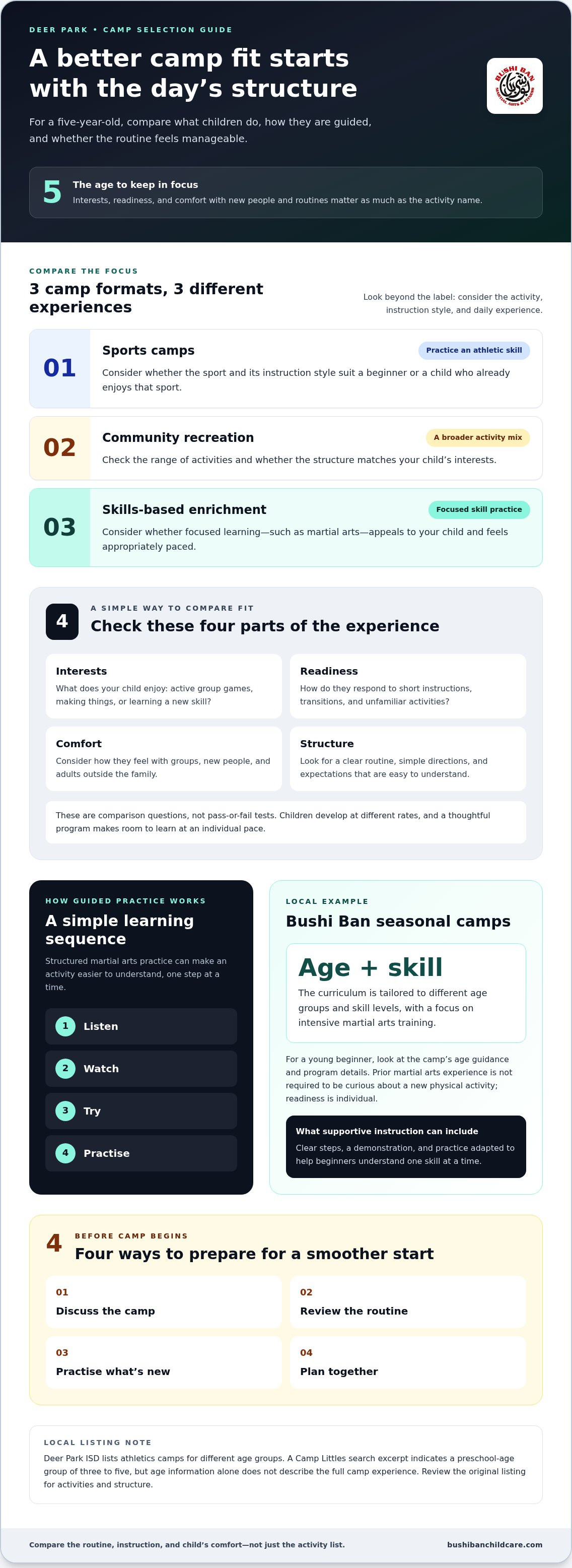
This guide explains how to match a camp’s focus and structure to your child, what to consider before enrollment, and how to prepare for a new routine. For families in Deer Park, Pasadena, and La Porte exploring martial arts enrichment, Bushi Ban Child Care’s seasonal camps focus on intensive martial arts training, with curriculum tailored to different age groups and skill levels.
Key Takeaways
Choose a summer camp for 5 year olds Deer Park by weighing your child’s interests, readiness, and comfort with the program’s structure.
Compare sports, recreation, and martial arts enrichment by their focus, instruction style, and daily experience.
Age- and skill-tailored martial arts instruction gives young learners a structured way to practise movement and skills.
Prepare for a smoother start with four steps: discuss the camp, review the routine, practise what’s new, and plan together.
Bushi Ban’s seasonal camps focus on intensive martial arts training, with curriculum tailored to different age groups and skill levels.
Table of Contents
Choosing a Summer Camp for a 5-Year-Old in Deer Park
Choosing a camp involves more than finding an activity close to home. Consider whether the structure suits your five-year-old’s interests, readiness, and comfort with new people and routines. A program may sound exciting but still feel like too much if its pace, instructions, or group expectations don’t match your child.
Start with what helps your child feel settled. Do they enjoy active group games, or prefer a gradual introduction to new activities? How do they respond to short instructions, transitions, and time with adults outside the family? These aren’t pass-or-fail questions. They help you compare your child’s experience with the camp’s approach. Clear expectations and age-conscious guidance can make an unfamiliar setting easier to understand.
Children develop physically, cognitively, and socially at different rates. A parent-friendly overview of early childhood development can offer useful context, but your child’s temperament and experience matter most. Invite them into the decision with a simple question: “Would you rather play sports, make things, or learn a new skill?” Their answer can help you narrow the options without putting the full responsibility on them.
What matters most when choosing for age five?
Look beyond the activity name to how the camp is organized. Is the routine clear? Are directions simple, and are expectations easy to understand? Consider how your child handles groups, transitions, and unfamiliar activities. These details can shape whether camp feels welcoming or overwhelming. A thoughtful program makes room for children to learn at their own pace instead of assuming all five-year-olds have the same attention span or confidence.
What kinds of summer camps can Deer Park families compare?
Compare camps by what children spend their time doing. Sports camps focus on practising a particular athletic skill. Community recreation programs may offer a broader mix of activities. Enrichment programs focus on learning or practising a specific skill. Martial arts enrichment combines guided physical practice with skill development. Bushi Ban’s seasonal camps focus on intensive martial arts training, with curriculum tailored to different age groups and skill levels.
Sports: Consider whether the activity and instruction style suit a beginner or a child who already enjoys the sport.
Community recreation: Look at the range of activities and whether the structure matches your child’s interests.
Skills-based enrichment: Consider whether focused practice, such as martial arts, appeals to your child and feels appropriately paced.
Deer Park ISD lists athletics camps for different age groups, which can help families compare local sports options. Review the current district listings for each camp’s age range. A local Camp Littles search excerpt indicates a preschool-age group of three to five, but that age information alone doesn’t describe the full camp experience. Use the original listing to understand a program’s activities and structure before making plans.
How Structured Martial Arts Camp Can Suit a Young Beginner
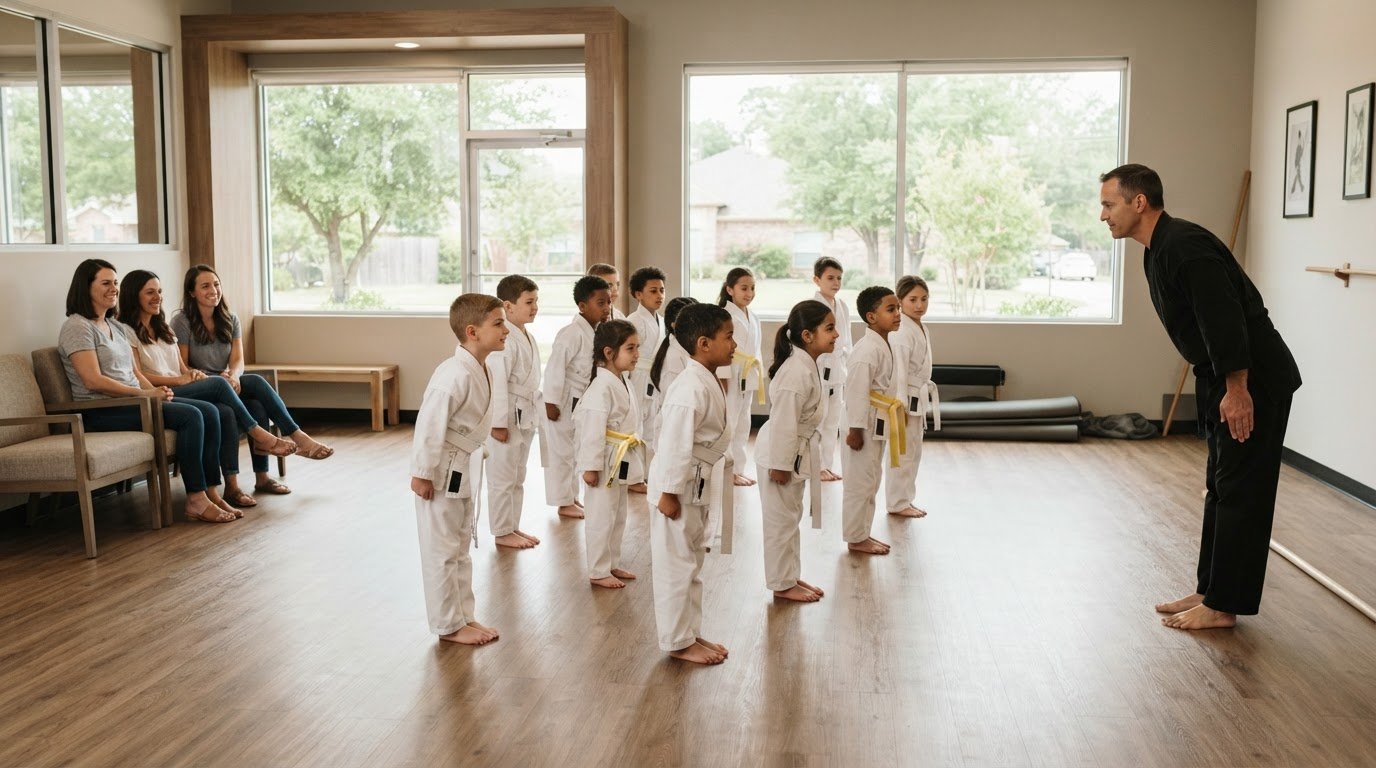
A structured martial arts camp combines guided physical practice with skill development. Children learn movement and techniques step by step, following a framework that makes the activity easier to understand: listen, watch, try, and practise.
Structure doesn’t have to mean pressure. A supportive learning environment lets children participate without making competition or rapid advancement the measure of success. Five-year-olds differ in coordination, confidence, and experience. Clear instruction gives each child a way to take part while allowing practice and progress to unfold at an appropriate pace.
What can age- and skill-tailored instruction mean?
Instruction tailored to age and skill takes a child’s experience into account. That can involve explaining a movement in clear steps, demonstrating what to try, and adapting practice so it’s understandable for beginners as well as children with more experience. Learning one skill at a time gives a young child something specific to focus on instead of requiring them to grasp a full sequence at once.
Guided practice also introduces routines such as listening to directions, taking turns, and making a focused effort. These are part of the learning experience, not guaranteed changes in a child’s behavior. An age-conscious martial arts camp offers clear, supportive instruction matched to a child’s developmental stage and experience, without requiring every child to learn at the same pace.
Is martial arts a fit for a child who is new to it?
A child doesn’t need prior martial arts experience to be curious about a new physical activity. Consider whether your five-year-old is interested, willing to take part in guided practice, and comfortable exploring something unfamiliar with support. If they’re hesitant, talk about what they might learn or practise and listen to what appeals to them. Readiness is individual, not a test of athletic ability.
Bushi Ban’s seasonal camps focus on intensive martial arts training, and the curriculum is tailored to different age groups and skill levels. That approach gives families a specific way to consider whether martial arts enrichment suits their child. Use the camp’s age guidance and program details to assess the fit for your five-year-old.
For parents comparing a summer camp for 5 year olds Deer Park, martial arts is one option among several, especially for a child drawn to movement and learning through practice. Explore Bushi Ban’s seasonal martial arts camps as you consider whether this kind of structured enrichment aligns with your child’s interests and readiness.
Compare Deer Park Summer Camps by Fit, Structure, and Focus
Camp labels tell you the activity, but not how a five-year-old will experience it. Compare each program’s focus, published age guidance, and daily structure, then consider what helps your child feel engaged and comfortable. The examples below summarize local listing details and highlight practical points to weigh.
How do sports, recreation, and martial arts camps differ?
Sports camps generally focus on skills in a particular athletic activity. Recreation programs can offer a broader leisure experience, while martial arts enrichment centers on guided training and practice. Each format suits different interests and activity preferences. The best fit depends on what your five-year-old enjoys and how they respond to the program’s pace and expectations.
Martial arts training may sound intense, especially when a child is new to it. Consider the camp’s focus on intensive training alongside its age- and skill-tailored curriculum. Your child’s interest in trying the activity and the way instruction is matched to their experience are more useful guides than assumptions that every martial arts program has the same pace or competitive emphasis.
What questions help parents compare camp options?
Use program listings to compare age guidance, focus, and practical details. Deer Park ISD’s athletics listings provide an example of published age-group information. A local Camp Littles search excerpt indicates an ages-three-to-five group, but that alone doesn’t explain the full program structure. Review the original listings for current details instead of relying on abbreviated descriptions.
Age: Does the published age guidance include your child?
Focus: Does the main activity interest your child?
Structure: Are the schedule and daily routine described clearly?
Practical details: Are the location and registration information current?
For additional selection criteria, the guide to 2026 holiday camps offers a broader framework for comparing camp experiences. For a summer camp for 5 year olds Deer Park, use the same approach: weigh the published details against your child’s interests and readiness.
Prepare Your 5-Year-Old for a Positive Summer Camp Experience
A little preparation can make camp feel more familiar without suggesting every moment will be easy. Keep the conversation upbeat and honest. Explain the activity in simple terms, welcome questions, and let your child know it’s normal to feel curious or unsure. This gives them time to picture what’s ahead and gives you time to plan practical details.
How can parents help a child feel ready?
Start with what your child already knows. For a movement-based camp, you might describe listening to an instructor, trying an activity, and practising a new skill. Ask what sounds fun and what they wonder about. You can also practise small independence skills that fit the camp, such as carrying their belongings or asking an adult for help.
Use this four-step sequence to prepare together:
Discuss: Introduce the camp positively and ask what your child is excited to try. Make space for worries without promising that every detail will feel easy.
Review: Read the current camp information together. Explain relevant details, such as when camp takes place, what the activity involves, and what your child can expect.
Practise: Rehearse a useful routine, such as putting on shoes or speaking up when they need help. Keep practice relaxed and connected to your child’s needs.
Plan: Talk through transportation and scheduling, then revisit any questions as the start approaches.
What should families plan before enrollment?
Before enrolling, compare your family’s needs with the camp’s current information. Review the dates, age guidance, registration steps, location, and stated participation expectations. These details can change from year to year, so use the current listing rather than relying on an old post or general description.
Think through the practical routine, too. Does the location work with your family’s transportation plan? Does the timing fit your household schedule? Is your child genuinely interested in the activity? These questions help connect an appealing camp description to everyday family life.
For a movement-based program, it may also help to consider whether your child enjoys active play and practising new movements. Look at the activities the camp describes and think about whether they match your child’s interests and experience.
For families considering martial arts enrichment, preparation can be as simple as talking about learning through guided practice and making room for questions. Bushi Ban’s seasonal camps focus on intensive martial arts training, with curriculum tailored to different age groups and skill levels. Explore Bushi Ban’s seasonal camps as you consider a structured activity for your child.
Explore Bushi Ban’s Structured Summer Camp Approach in Deer Park
For families in Deer Park, Pasadena, and La Porte considering a movement-focused camp, Bushi Ban offers seasonal camps centered on intensive martial arts training. The program serves families across the Houston area and provides an enrichment experience focused on martial arts rather than general recreation. That focus may appeal to a child who enjoys active practice, learning skills, and following clear instruction.
A focused camp won’t be the right fit for every child, and recognizing that can help you make a better choice. Consider whether your child is curious about martial arts and whether guided physical practice matches their interests. The goal is to understand the camp’s focus and compare it with your child’s preferences, not to assume every five-year-old is ready for the same experience.
What makes Bushi Ban’s approach distinct?
Bushi Ban’s martial arts curriculum is tailored to different age groups and skill levels. Instruction takes learners’ ages and experience into account rather than treating every student as if they started from the same place. The camps focus on intensive martial arts training. Review the current camp information for its activities, schedule, and age guidance.
Structured martial arts practice combines physical activity with focused skill work. Repeating techniques and following instruction make discipline part of the learning process, but no camp can promise a particular change in a child’s behavior or development. For parents interested in how martial arts relates to attention and self-discipline, Bushi Ban’s martial arts guide to focus and discipline offers related context.
How can Deer Park parents take the next step?
Start with your child’s interest, then review the camp details together. Read the published dates, age guidance, schedule, and enrollment information to decide whether the experience suits your family. Use the current program information to guide your decision rather than relying on assumptions based on a previous season or a general description of martial arts training.
Ask your child what they think about practising martial arts and what they’d like to learn. Their response can add a useful perspective alongside practical considerations such as your family’s schedule and the camp’s location. A positive fit brings the child’s curiosity together with an activity that feels manageable and engaging.
If a structured, martial arts-focused experience sounds like a possible match, explore Bushi Ban’s camp information and enrollment details. Families searching for a summer camp for 5 year olds Deer Park can use those details to decide whether this enrichment option aligns with their child’s interests and readiness. Explore Bushi Ban’s programs to take the next step.
Take the Next Step Toward a Summer of Discovery
Choosing a summer camp for 5 year olds Deer Park can be the start of a new interest, not a test your child has to pass. Invite them to share what they’d like to explore, then use that conversation to guide your next step. Their excitement, questions, or hesitation can help you decide what feels like a comfortable way to begin.
Set aside a few minutes to review camp information together and picture how the experience might fit your family. Start with one useful step: explore Bushi Ban’s programs and summer camp information, then consider whether this martial arts-focused option fits your child.
A thoughtful choice gives your five-year-old room to try something new with your encouragement. Let curiosity lead and take the next step by exploring Bushi Ban’s seasonal camps.
Frequently Asked Questions
Is a martial arts summer camp suitable for a 5-year-old?
A martial arts summer camp may suit a five-year-old if the teaching approach matches the child’s readiness and the camp’s age guidance. Notice whether your child enjoys copying movements, listening to short directions, or practising a skill more than once. Those interests can offer clues about comfort with the format. Bushi Ban’s martial arts curriculum is tailored to age groups and skill levels.
Can a 5-year-old attend a summer camp in Deer Park?
A five-year-old can attend a local summer camp when the program’s published age requirements include five-year-olds. Families in Deer Park, Pasadena, and La Porte can compare school, recreation, and enrichment options, but age rules vary by program. Review the current dates and age guidance in each camp’s published information rather than inferring eligibility from a general description or a listing for a different age group.
What should I look for in a summer camp for a 5-year-old?
Look for an activity your child enjoys and clear information about the age range, routine, location, and participation expectations. For a summer camp for 5 year olds Deer Park, compare the original program details rather than relying only on a short search excerpt. A child who likes focused practice may prefer a skills-based option, while a child drawn to varied activities may prefer recreation.
Does my child need martial arts experience before attending a camp?
Each camp sets its own expectations, so use its published information to understand what participation involves. A child’s willingness to watch, listen, and try an unfamiliar movement can be useful to consider alongside past experience. Bushi Ban’s curriculum is tailored to different age groups and skill levels.
How can I help my 5-year-old feel comfortable at summer camp?
Help your child picture the new experience. Explain where you’ll go and what you know about the activity, then invite questions. You could practise a simple phrase such as “Can you help me?” or agree on a familiar goodbye routine. Be reassuring without promising that your child won’t feel nervous. Getting used to a new setting can take time.
What should a 5-year-old bring to summer camp?
Follow the camp’s current parent instructions, since appropriate items depend on its activities and schedule. Review the information together and prepare what the program requests or permits. Choose clothing suited to the activity and weather, and identify any personal essentials your child may need. Use the camp’s own guidance for any martial arts equipment.


Comments