
Why Fitness Focused After School Care is Vital for Child Development in 2026
Did you know that the national grade for youth physical activity in the United States remains a discouraging D-? With only about 20% of children meeting the recommended hour of daily movement, the typical afternoon spent in a sedentary "holding pen" isn't just a missed opportunity; it's a hurdle to their development. Choosing a fitness focused after school care program is no longer just a luxury for athletic families. It has become a vital necessity for parents who want to rescue their children from the post-school "screen paralysis" that defines 2026.
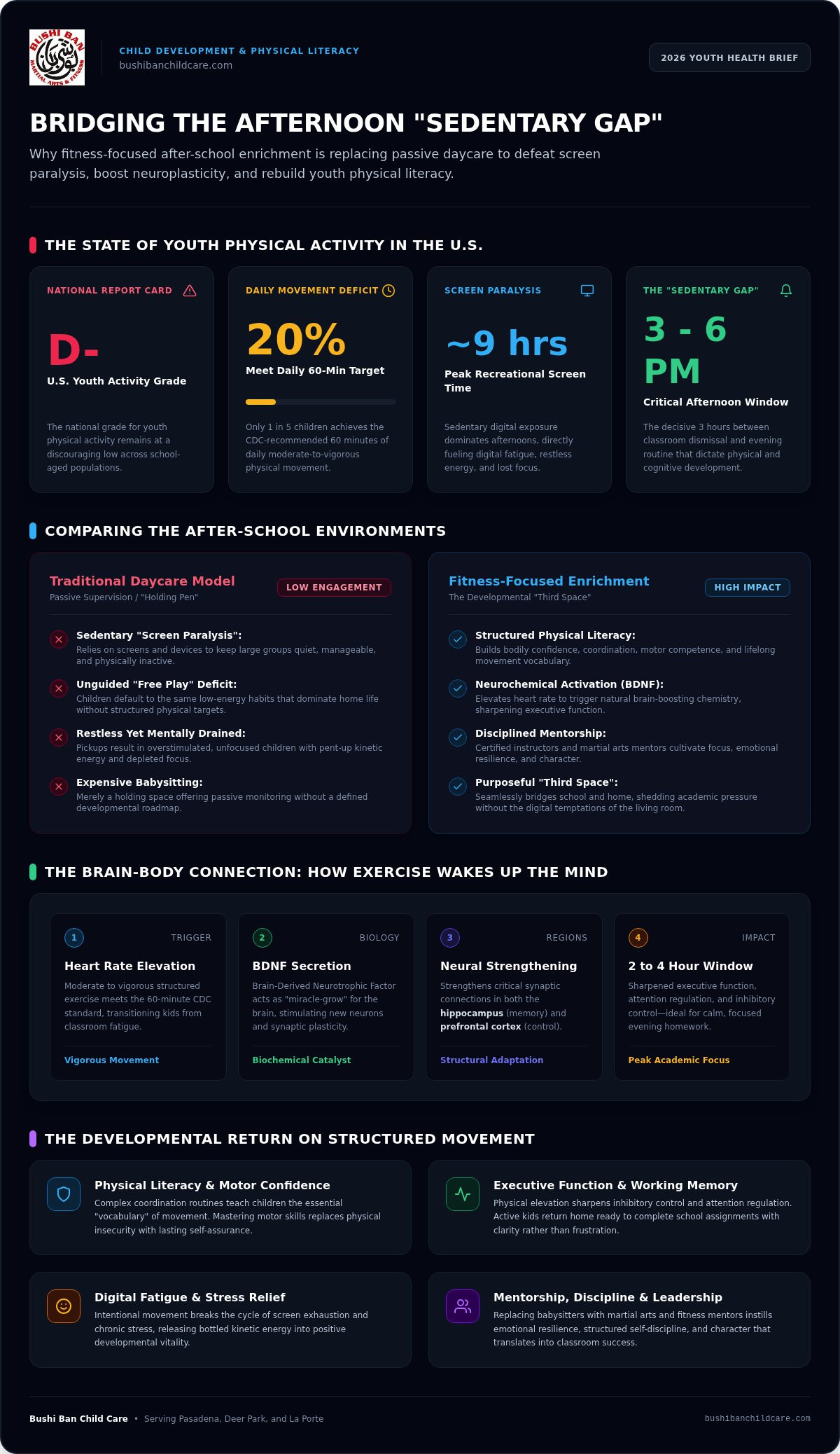
You likely feel that standard daycare often feels like little more than expensive babysitting, leaving you worried about your child's physical coordination or fading confidence. It's frustrating to pick up a child who is restless yet mentally drained from hours of staring at a device. In this guide, you'll discover how structured, movement-based programs transform physical health while sharpening academic focus through natural brain-boosting chemistry. We will explore how replacing passive supervision with disciplined mentorship builds the character and leadership skills your child needs to thrive both in the classroom and in life.
Table of Contents
The Growing Need for Fitness Focused After School Care in 2026
Fitness focused after school care is more than a simple exercise block; it's a structured model of enrichment that prioritizes physical literacy. This ensures children develop the confidence and competence to move their bodies effectively. For many families in Pasadena and Deer Park, the hours between 3:00 PM and 6:00 PM represent a "sedentary gap." While school days are filled with academic rigors, the lack of traditional physical education in many modern curricula means children often miss out on the 60 minutes of daily activity recommended by health experts. It is within this context that fitness focused after school care has emerged as a vital solution for the modern family.
This approach introduces the concept of the "third space" for child development. This space bridges the gap between the classroom and the home, offering a purposeful environment where children can grow without the pressures of school or the distractions of the living room. Parents are increasingly seeking structured after-school activities that provide a clear developmental path rather than just a safe place to sit.
The Sedentary Trap: Why Standard Daycare Falls Short
The primary difference between high-quality enrichment and standard daycare lies in the transition from passive supervision to active engagement. Many traditional programs function as holding pens where children wait for pickup, often relying on screen time to keep groups quiet and manageable. This missed opportunity during the peak afternoon window can lead to restless energy and a lack of physical progress. Choosing fitness focused after school care ensures that these vital hours are used to build strength and coordination rather than reinforcing sedentary habits. When children are left to "free play" without guidance, they often gravitate toward the same low-energy activities that dominate their digital lives.
Why 2026 Demands a New Approach to Youth Fitness
As we move through 2026, the challenges facing our children in La Porte and the surrounding areas have become more complex. With youth physical activity grades in the U.S. currently sitting at a D- and recreational screen time reaching nearly nine hours for some age groups, the need for intentional movement is critical. Digital fatigue is real, and it often manifests as a lack of focus or increased anxiety. Specialized kids fitness and coordination classes offer a necessary outlet for pent-up energy while teaching children how to master their own motor skills. Physical literacy is the essential foundation for lifelong health, giving children the "vocabulary" of movement they need to remain active and confident throughout their lives.
How Physical Activity Enhances Cognitive and Behavioral Development
Movement is the catalyst that wakes up a child's brain after a long day of sedentary classroom learning. When children participate in fitness focused after school care, they aren't just burning off steam; they're engaging in a biological process that enhances neuroplasticity. Scientific research indicates that moderate to vigorous exercise triggers the secretion of Brain-Derived Neurotrophic Factor (BDNF). This protein acts like "miracle-grow" for the brain, supporting the growth of new neurons and strengthening synaptic connections in the hippocampus and prefrontal cortex. This isn't a temporary boost. The cognitive enhancement and improved executive function typically last for two to four hours post-exercise, which is the perfect window for completing evening homework with clarity.
Elevating the heart rate does more than just improve physical stamina. It directly strengthens the brain's ability to regulate attention, working memory, and inhibitory control. Following the CDC physical activity guidelines for school-aged youth ensures that children receive at least 60 minutes of daily movement, which is essential for reducing the risk of chronic stress and improving classroom behavior. By prioritizing these active minutes, we help children transition from the mental fatigue of school to a state of high-functioning alertness.
The Brain-Body Connection in Elementary Students
Complex movements, such as those found in martial arts, require a high level of coordination that forces the brain and body to communicate rapidly. These activities build dense neural pathways that simple, repetitive motions cannot replicate. Learning a new sequence of movements or mastering a balance drill challenges the nervous system, leading to better motor control and cognitive flexibility. Many parents find that enrolling their children in martial arts for focus and discipline results in a noticeable improvement in school grades and organizational skills. It's a structured way to ensure that fitness focused after school care delivers academic dividends.
Emotional Regulation Through Structured Movement
The end of the school day often brings a mix of pent-up energy and emotional exhaustion. Structured movement provides a safe, productive outlet for children to process the day's stressors. Physical exertion serves as a natural "cool down" for anxiety and hyperactivity, allowing the nervous system to reset. We've observed that a tired body often leads to a calm, focused mind, making the evening transition at home much smoother for the whole family. If you're looking for a partner to help guide this development, exploring the Bushi Ban after-school philosophy can provide the structured environment your child needs to thrive emotionally and physically.
Comparing Traditional Daycare vs. Fitness-Focused Enrichment
Choosing the right environment for your child’s afternoon is a significant decision that impacts their long-term growth. While traditional daycare provides basic safety, fitness focused after school care offers a transformative experience that builds character and physical competence. Parents should evaluate their options based on the quality of engagement rather than just convenience. In a standard playroom, social dynamics are often left to chance, which can sometimes lead to conflict or exclusion. In a fitness class or martial arts dojo, social interaction is governed by a clear code of conduct that emphasizes respect, empathy, and leadership.
When you look at the long-term ROI, the choice becomes clear. Traditional care is a recurring expense for time. Fitness-focused enrichment is an investment in your child's health, behavioral maturity, and academic readiness. You aren't just paying for a seat; you're paying for a future leader who knows how to set goals and work hard to achieve them.
Structured Activity vs. Passive Supervision
Passive supervision is essentially a holding pattern. It keeps kids out of trouble but doesn't move them forward. In 2026, children need more than just "free play" to combat the physical delays caused by increased screen time. They need coordinated movement that challenges their balance, agility, and spatial awareness. This structured practice is a key driver for executive function and self-regulation development. It turns the "babysitting" experience into a mentorship where every activity has a specific developmental purpose.
The Role of Goal Setting and Progression
A major drawback of traditional care is the lack of measurable milestones. Children need to feel like they're moving toward something meaningful. By using a system of progression, such as earning stripes or new belts, enrichment programs instill a deep sense of accomplishment. These specialized fitness programs for school children teach that mastery comes through persistence rather than luck. This creates a growth mindset that stays with them long after they leave the facility, fostering the resilience needed to face academic and social challenges with confidence.
Daycare: Passive environment, high screen use, and unstructured play.
Fitness Enrichment: Active curriculum, mentor-led drills, and measurable skill progression.
Outcome: A child who is not only safe but also stronger, more focused, and better prepared for the next day of school.
What to Look for in a High-Quality Youth Fitness Program
Finding the right program in the Pasadena or Deer Park area involves more than just checking for school van pickup. You are choosing the mentors who will shape your child's physical habits and self-image during their most formative hours. High-quality fitness focused after school care should feel like an extension of your family's values, blending professional excellence with a nurturing touch. Safety is the primary concern, so look for facilities that maintain strict instructor-to-student ratios and utilize specialized flooring designed for impact absorption. This ensures that while children are active, they're also protected from unnecessary strain.
The distinction between casual supervision and professional instruction is often found in the staff's credentials. You should prioritize programs where instructors hold recognized certifications in youth fitness or martial arts. These professionals understand the biomechanics of growing bodies and can prevent injuries that untrained staff might overlook. A great program also finds the "sweet spot" between challenging a child to reach their potential and ensuring they have enough fun to want to return every day. It's about building a lifelong love for movement, not just filling three hours of time.
Evaluating the Curriculum and Instructor Expertise
Parents should never hesitate to ask detailed questions about the afternoon's "plan." Does the program have a written curriculum that evolves as the child grows? Age-appropriate scaling is essential; a seven-year-old's coordination drills should look very different from the strength-building exercises of a twelve-year-old. When staff have a deep background in martial arts or youth athletics, they bring a level of discipline and technical knowledge that casual daycare workers simply cannot match. This expertise ensures that every movement is performed with the correct form to build lasting physical literacy. Ask if the program offers a trial period so you can observe the interaction between the instructors and the students firsthand.
Integration of Character and Leadership Education
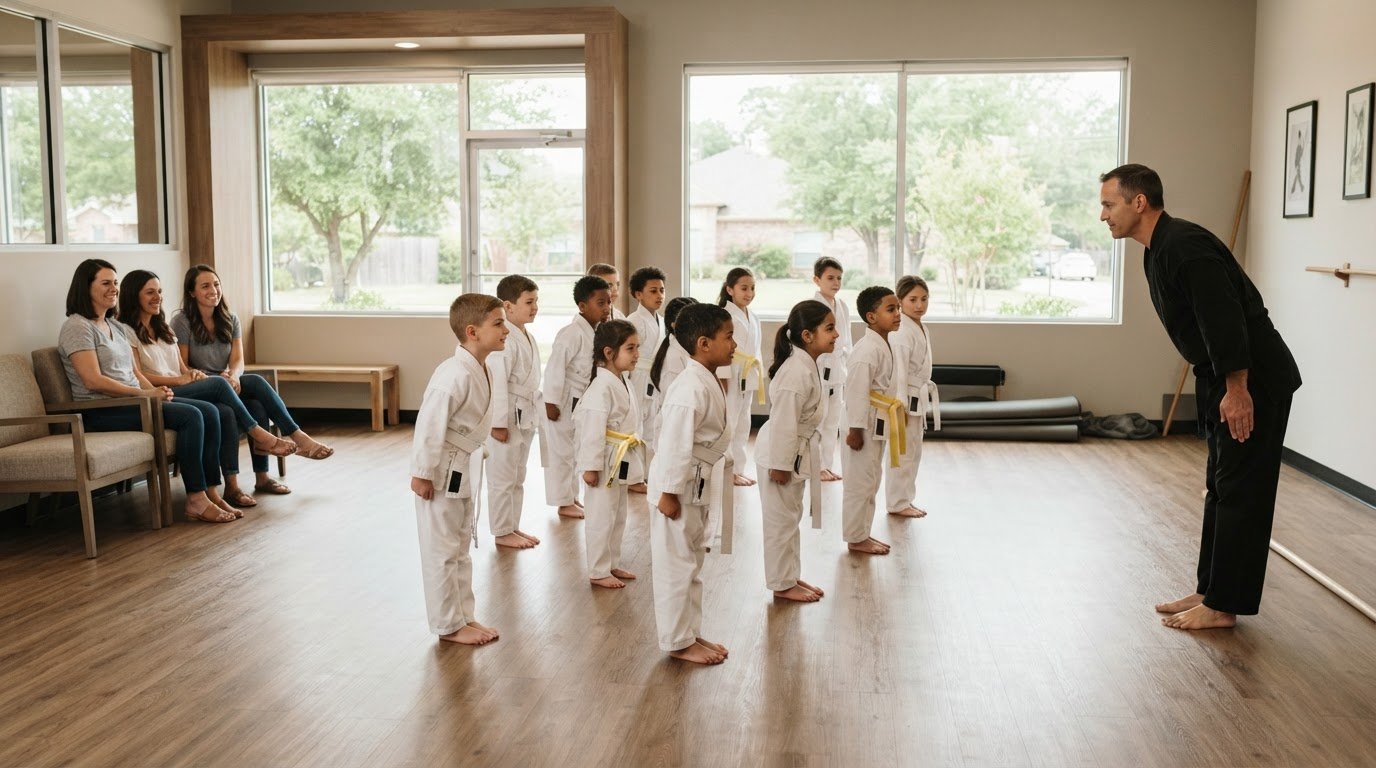
Physical strength is only one half of the equation. A truly elite program integrates "soft skills" like respect, perseverance, and integrity into every session. You want to see an environment where children are encouraged to step into leadership roles, perhaps by leading a group stretch or helping a new student find their place. These moments build a level of self-esteem that translates directly to classroom confidence and social resilience. A positive, encouraging atmosphere is vital; your child should feel safe to fail and try again under the guidance of a supportive mentor. If you're ready to see this balance in action, you can explore our after-school martial arts options to find the perfect fit for your family's schedule.
The Bushi Ban Approach: Martial Arts as the Ultimate Fitness Care
At Bushi Ban, our philosophy centers on "Total Development," a concept that views the child as a whole person rather than just a student or an athlete. Our fitness focused after school care serves families in Pasadena, Deer Park, and La Porte by providing a safe, structured bridge between school and home. We understand the logistical hurdles of modern parenting, which is why we offer direct transportation from local schools. This convenience allows you to focus on your workday while knowing your child is being nurtured in a high-energy, supportive environment.
The atmosphere within our facilities reflects a unique blend of disciplined confidence and nurturing warmth. We believe that true growth happens when a child feels secure enough to push their limits. By focusing on fitness focused after school care, we help students channel their vitality into productive skills that build character. Our instructors act as wise mentors, guiding each child through their personal journey of achievement with optimistic encouragement.
Why Martial Arts Beats Standard Gym Classes
Unlike a standard gym class that might focus solely on physical output, our martial arts curriculum addresses the mind, body, and spirit simultaneously. This holistic approach ensures that the cognitive benefits discussed earlier, like improved focus and executive function, are deeply integrated into daily practice. Grandmaster Zulfi Ahmed founded this system over 40 years ago, creating a legacy of excellence that allows for individual progression within a group setting. Every child moves at their own pace, ensuring they never feel overwhelmed or left behind. This legacy provides a level of stability and tradition that simple fitness centers cannot replicate.
Building Future Leaders in Pasadena and Deer Park
Our Student Leadership Program is a cornerstone of the Bushi Ban experience, designed specifically to help elementary students recognize their own potential. It isn't just about physical mastery; it's about the transition from being a student who follows to a mentor who leads. As children earn their stripes, they're given opportunities to assist peers and model positive behaviors, which builds an unshakable sense of self-esteem. This structured path ensures that the discipline learned on the mats follows them into every area of their lives. Learn how our fitness-focused care can transform your child’s afternoon.
Empowering Your Child for a Brighter Future
The decisions you make for your child's afternoon hours ripple into their academic performance and emotional resilience. Moving beyond passive supervision toward fitness focused after school care ensures that your child is not just waiting for the day to end; they're actively growing in strength and character. By prioritizing structured movement and professional mentorship, you provide them with the essential tools to navigate the challenges of 2026 with confidence and poise.
Bushi Ban brings over 40 years of martial arts excellence to families throughout the Pasadena, Deer Park, and La Porte communities. Our unique Student Leadership Program is specifically designed to build character and self-esteem, turning today's students into tomorrow's leaders. It is time to trade sedentary "babysitting" for a high-quality enrichment program that celebrates your child's potential and supports your family's busy schedule.
Join the Bushi Ban After-School Martial Arts Program Today! We look forward to becoming your partner in your child's journey toward vitality, discipline, and lasting success.
Frequently Asked Questions
Is fitness-focused after-school care better than traditional daycare?
Yes, because it replaces passive supervision with structured enrichment that prioritizes physical literacy. Traditional daycare often involves long periods of idle time or screen use. In a fitness-focused program, children engage in purposeful movement and skill-building. This approach ensures the 3:00 PM to 6:00 PM window is used for growth rather than just waiting for pickup. It builds a foundation for lifelong health and discipline that standard babysitting models simply cannot provide.
What does a typical afternoon look like in a fitness-focused program?
A typical afternoon at Bushi Ban begins with a safe pickup from local schools in Pasadena or Deer Park. Once students arrive, they transition into a designated homework and study block to ensure academic tasks are prioritized. This is followed by a healthy snack and a high-energy martial arts and fitness class led by certified instructors. The day concludes with character-building exercises or leadership drills before parents arrive for evening pickup.
Is martial arts safe for children who have never done sports?
Martial arts is exceptionally safe for beginners because the curriculum is designed for progressive skill acquisition. Our instructors emphasize proper form and body mechanics to prevent injury while building coordination from the ground up. Children who have never participated in sports often find martial arts more welcoming because they compete against their own previous records rather than a team. This nurturing environment allows every child to develop physical confidence at their own steady pace.
Will my child have time to finish their homework at Bushi Ban?
Yes, we provide a structured study hall block specifically for completing school assignments. Our staff understands that academic success is a priority for families in the La Porte and Deer Park communities. By finishing their homework in our quiet, supervised environment, children can enjoy their evening at home with their families. This balance between physical exertion and mental focus ensures that the brain is primed for learning after a vigorous fitness session.
How does structured fitness help with behavioral issues at home?
Structured fitness focused after school care helps regulate behavior by providing a productive outlet for pent-up energy. When children engage in disciplined movement, they learn emotional regulation and impulse control. The physical exertion triggers the release of endorphins, which naturally reduces stress and anxiety. Many parents report that their children are calmer and more cooperative at home because they've successfully processed the day's frustrations through goal-oriented physical activity and clear mentorship.
Do you provide transportation from schools in Pasadena and Deer Park?
We provide reliable transportation using our branded vans from several elementary and middle schools throughout Pasadena, Deer Park, and La Porte. Our professional drivers ensure a safe and seamless transition from the classroom to our facility. This service is a vital part of our fitness focused after school care model, as it gives working parents peace of mind knowing their children are supervised from the moment the school bell rings until evening pickup.
What ages are eligible for the after-school martial arts program?
Our program is primarily designed for school-aged children, typically ranging from kindergarten through middle school. We group students by age and skill level to ensure the curriculum remains challenging and appropriate for their developmental stage. Younger children focus on fundamental motor skills and listening, while older students engage in more complex martial arts techniques and leadership training. This ensures every child receives the specific attention they need to thrive physically and socially.
How does the Student Leadership Program benefit my child’s future?
The Student Leadership Program prepares children for the future by teaching them the soft skills of mentorship and public speaking. Students learn how to assist instructors, lead small group drills, and act as positive role models for their peers. These experiences build an unshakable sense of self-esteem and integrity that translates into classroom leadership and future career success. It transforms a child from a passive participant into a confident, proactive member of their community.

Comments