
Youth Mentoring Through Martial Arts: What Parents Should Look For
Updated: Oct 5
What if a martial arts class could help your child grow beyond learning kicks and forms? Parents often look for confidence and character-building, but it can be difficult to tell whether those promises reflect everyday guidance or just appear in a program’s messaging. Youth mentoring through martial arts is most meaningful when instruction is reinforced by positive example and age-appropriate responsibility.
A well-structured program can give students opportunities to practise respect, persistence, and communication as they build physical skills. Leadership should be supported and suited to a child’s readiness, not treated as a one-size-fits-all milestone. What should you look for, and what questions can help you understand how a school puts mentorship into practice?
This article looks at how mentoring can develop through instruction, instructor example, and opportunities to take responsibility. You’ll find questions to ask about supervision, leadership expectations, and program fit. As one local example, Bushi Ban’s Student Leadership Program gives students opportunities to assist instructors in teaching while developing public speaking, character, and mentorship skills. Families in Pasadena, Deer Park, and La Porte can use these details to consider whether a structured martial arts program aligns with their child’s interests and needs.
Table of Contents
What Does Youth Mentoring Through Martial Arts Look Like?
A martial arts class can teach a child how to perform a technique, but meaningful mentorship involves more than demonstrating a move and correcting form. It means supportive guidance that helps a young person practise skills, learn from feedback, and gradually take on responsibility. Youth mentoring through martial arts is guidance woven into training, where an adult supports a student’s growth in skills and responsibility.
That guidance can appear in small, observable moments: an instructor demonstrates respectful conduct, recognizes a student’s effort, or helps them work through a challenge without expecting instant progress. These interactions offer opportunities to practise patience, confidence, and consideration for others. They don’t guarantee particular outcomes. A child’s experience depends on the program’s approach, the consistency of its guidance, and the child’s own interests and readiness.
Parents can look beyond the physical curriculum, too. Some descriptions of martial arts schools recognize their potential role in physical, mental, and social development. The practical question is how a specific program puts that broader purpose into action.
How Can a Martial Arts Instructor Become a Mentor?
Mentoring may happen through everyday teaching rather than a separate one-to-one arrangement. An instructor can model respect, offer specific feedback, and encourage steady practice when a student finds a skill difficult. Roles and mentoring arrangements vary, so parents shouldn’t assume every instructor provides the same kind of guidance. Ask how instructors support students who need extra encouragement and what that support looks like during a typical class.
What Makes Mentoring Different From a Regular Class?
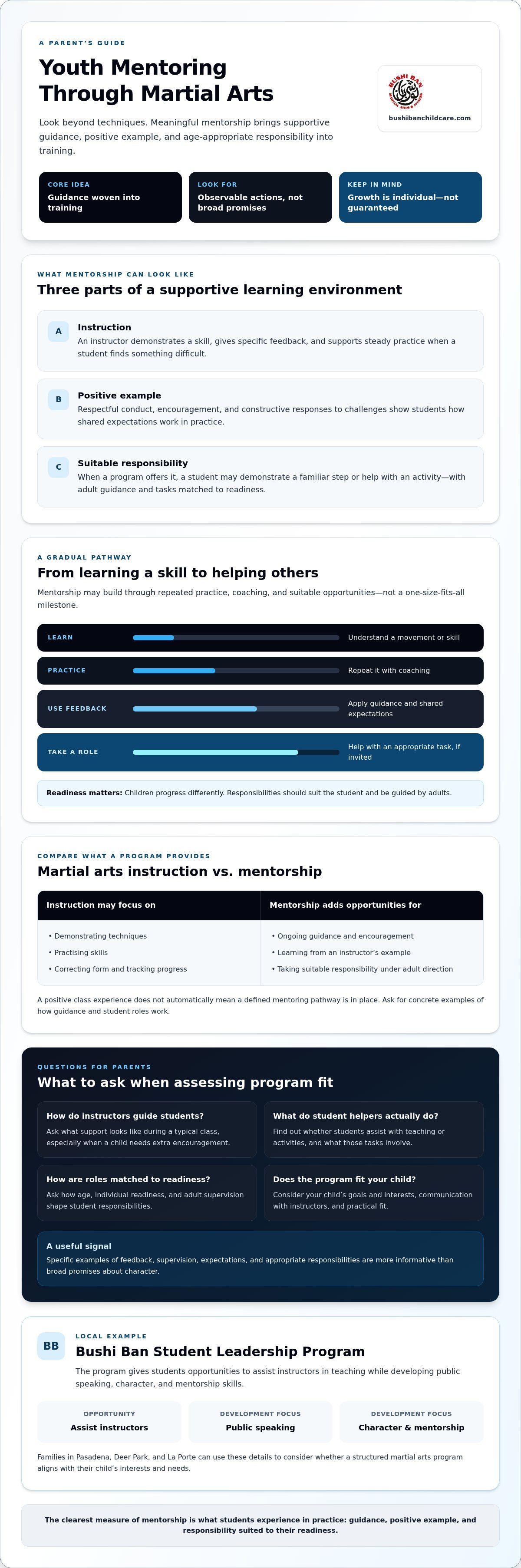
A regular class may focus mainly on instruction, practice, and progress in martial arts skills. Those activities can create positive learning experiences, but they don’t automatically mean a defined mentoring pathway is in place. When offered, mentoring opportunities add guidance or age-appropriate responsibilities, such as helping with an activity under adult direction. Ask what students are expected to do, how adults guide them, and how responsibilities are matched to individual readiness. For broader context on structured leadership development, explore this student leadership programs guide.
When comparing programs, look for specific examples rather than broad promises about character. A conversation with instructors can help you understand whether your child will have opportunities to learn, receive feedback, and take on suitable responsibility as they grow. Looking at established academies like Renzo Gracie NH can show parents how structured belt progression and supportive coaching help reinforce accountability and skill building.
How Martial Arts Mentoring Builds Through Practice and Leadership
Mentorship can develop gradually as a student learns a skill, practises it, receives feedback, and, when ready, takes on a suitable responsibility. For example, a student might learn a movement, repeat it with coaching, then be invited to demonstrate a familiar step or help with an activity if the program offers that opportunity.
Repeated practice gives students opportunities to show responsibility by applying feedback, following shared expectations, and helping with appropriate tasks when invited.
Consistent expectations help students understand what to do. When they know how to take turns, respond to feedback, and treat classmates respectfully, they can practise those behaviors alongside their physical skills. Progress looks different for every child. One young person may become more comfortable speaking up, while another may need more time or a different kind of encouragement. Mentoring creates opportunities for growth, not guaranteed outcomes.
Youth.gov’s overview of the Benefits of Mentoring for Young People describes potential benefits associated with mentoring relationships. Those broad findings aren’t a promise that martial arts training will produce the same results for every student. The quality of guidance and each child’s experience matter.
Can Older Students Practise Leadership by Helping Others?
Some programs may invite students to assist with teaching or activities, but peer support isn’t part of every class. Ask what student helpers actually do, how tasks are matched to age and readiness, and how instructors guide them. Clear boundaries matter: a student helper can practise leadership, while instructors remain responsible for direction and instruction.
Which Skills Might Children Practise Along the Way?
Listening to directions, communicating clearly, showing patience, and following through on a task are skills a child may practise during training or a leadership opportunity. They aren’t automatic results. Bushi Ban’s Student Leadership Program includes opportunities to assist instructors in teaching, with goals that include public speaking, activity-leading, character, and mentorship skills. For more ideas about age-appropriate development, see this guide to leadership skills for elementary kids.
Families considering structured responsibility can learn about Bushi Ban’s programs and ask how student roles are guided and matched to readiness.
Martial Arts Instruction or Mentorship: What Should Parents Compare?
A child can learn valuable skills in a regular martial arts class, but participation alone doesn’t show that mentoring is an intentional part of the program. To understand what’s offered, compare the program’s purpose, what students are asked to do, and how adults guide them. While specialized training centers such as Performance Krav Maga focus on practical self-defense techniques and personal safety, other schools place more emphasis on competitive sport or structured mentorship pathways. No single approach is best for every child. The right fit depends on your child’s age, interests, and readiness.
What Questions Reveal Whether Mentoring Is Intentional?
Ask for concrete examples rather than relying on general character-development claims. What leadership opportunities are available, and how are students prepared? How do instructors respond when a student feels discouraged or has difficulty learning a skill? Find out who supervises student responsibilities and what boundaries are in place. These questions reveal actual practices without assuming every program uses the same mentoring model.
How Does a Student Leadership Pathway Differ From Regular Classes?
A leadership pathway may add responsibilities such as helping instructors teach or leading activities, while regular classes focus on martial arts instruction and practice. Bushi Ban’s Student Leadership Program includes opportunities to assist instructors in teaching, with stated goals that include activity-leading skills, public speaking, character, and mentorship skills. Ask Bushi Ban about participation details and how the pathway may fit your child. For another overview, explore kids martial arts leadership programs.
When evaluating youth mentoring through martial arts, look for a clear match between your child and the program’s structure. A defined pathway may suit a young person eager to try new responsibilities; another child may prefer to focus on learning and practising first. Ask questions, observe when permitted, and consider which setting feels encouraging and appropriate.
How to Choose a Youth Martial Arts Mentoring Program
Start with your child, not a promise of fast results. Use this checklist to compare how a program teaches, guides, and communicates, then consider whether its approach suits your child’s interests and comfort.
1. Goals: Ask what students learn beyond martial arts techniques. If leadership is a goal, request examples of the responsibilities students may take on.
2. Guidance: Find out how instructors introduce leadership opportunities, give feedback, and support students who find practice challenging. Ask who guides students as they take on a task.
3. Responsibilities: Ask what student helpers do, how responsibilities are matched to age and readiness, and what boundaries apply. Don’t assume leadership is part of every class.
4. Communication and safety: Confirm how the provider shares information with parents, how students are supervised, and whom to contact with a question or concern. Make sure expectations are clear to you and your child.
5. Practical fit: Ask about class structure, age suitability, current schedules, availability, and any visit or introductory opportunity. Consider whether the activities and routine work for your family.
What Should Parents Ask Before Enrolling?
Be specific. How are leadership responsibilities introduced, and what support do students receive while practising? What does a typical class involve, and how does the program respond if a child needs extra encouragement? Ask directly about supervision and communication rather than assuming a particular approach. If the provider permits it, observing a class can help you see how instructions are given and how students interact.
How Can Families Tell Whether a Program Fits Their Child?
Consider whether your child is curious about structured physical activity and comfortable joining in, even if they’re still building confidence. Look for respectful communication and expectations they can understand. If a trial or introductory visit is offered, talk afterward about what felt enjoyable, confusing, or uncomfortable. Your child’s perspective is useful evidence of fit, not a detail to set aside for a program’s advertised outcomes.
For families in Pasadena, Deer Park, and La Porte, Bushi Ban’s Student Leadership Program may be worth asking about if a child is interested in supported responsibility. To explore whether it could suit your child, ask Bushi Ban about program fit and current participation details.
How Bushi Ban Connects Martial Arts With Youth Leadership
For students who want to do more than practise martial arts skills, Bushi Ban’s Student Leadership Program offers an opportunity to explore responsibility in a structured after-school setting. Students may assist instructors in teaching, and stated program aims include developing activity-leading skills, public speaking, character, and mentorship skills.
This is one practical example of youth mentoring through martial arts: a student can learn in class and, through an available leadership opportunity, practise contributing to an activity. The value for families isn’t a promise of particular results. It’s a chance to ask how the opportunities are structured and whether they match a child’s interests and readiness.
Bushi Ban offers after-school martial arts and fitness programs and structured after-school enrichment. This is distinct from all-day child care. Discuss the specific program you’re considering and confirm what it includes before making plans.
What Is Confirmed About Bushi Ban’s Student Leadership Program?
Students have opportunities to assist instructors in teaching. The program’s stated goals include activity-leading skills, public speaking, character, and mentorship skills. These details help parents move from broad claims about leadership to questions about what students may actually practise. Ask what assisting with teaching involves, how activities are led, and what guidance students receive. Confirm current age, eligibility, schedule, and participation details directly with Bushi Ban rather than assuming them.
Connect the answers to your family’s priorities. If your child is curious about speaking in front of others, ask how the program addresses its public-speaking goal. If they’re drawn to helping, ask what teaching assistance looks like in practice. The program’s stated aims are a starting point for a focused conversation, not a guarantee that every student will have the same experience.
How Can Families in Pasadena, Deer Park, and La Porte Learn More?
Families in Pasadena, Deer Park, and La Porte can ask Bushi Ban about the program’s current structure and whether it may suit their child. Confirm the relevant location, schedule, enrollment availability, and participation requirements directly with the provider. You can also share what your child enjoys, what kind of responsibility they’re interested in, and any questions they have about taking part.
A low-pressure first step is to start a conversation. Ask what a student’s involvement may look like and which details are current, then consider the answers alongside your child’s comfort and enthusiasm. That can help you decide whether the Student Leadership Program feels like a supportive fit for your family.
Take the Next Step Toward a Good Fit
Meaningful youth mentoring through martial arts is about more than learning techniques. Look for clear guidance, responsibilities suited to a child’s readiness, and communication that helps parents understand how the program works. Also consider whether your child feels interested and comfortable in that setting.
Bushi Ban’s Student Leadership Program offers students opportunities to assist instructors in teaching, with goals that include public speaking, character development, and mentorship skills. These details can help you ask practical questions about participation and whether the program may suit your child.
Contact Bushi Ban to ask about youth leadership opportunities and current program details. A thoughtful question is a strong first step toward finding a supportive fit for your child.
Frequently Asked Questions
What does youth mentoring through martial arts mean?
Youth mentoring through martial arts means a young person receives guidance and encouragement in a training setting as they learn physical skills. An instructor might model respectful behavior, give feedback, or help a student practise responsibility. The approach varies by program, and a class may focus mainly on teaching martial arts. Ask the provider for specific examples of how mentoring is included rather than assuming every student has a formal mentor.
Can martial arts instructors serve as mentors to children?
Yes, instructors can offer supportive guidance, though the nature of that role varies by program and instructor. Teaching a technique alone doesn’t establish an ongoing mentoring relationship. Ask how instructors communicate with students, encourage progress, and respond when a child faces a challenge. You can also ask how students are supervised, what boundaries apply, and how parents can share questions or concerns.
What skills can children practise through martial arts mentoring?
Children may have opportunities to practise listening, communication, patience, and responsibility, depending on the program and their participation. Some leadership pathways include teaching assistance or activity-leading, giving students a chance to practise explaining or guiding a task. These opportunities don’t guarantee particular outcomes. Ask which responsibilities students actually take on, what support they receive, and whether the activities suit your child’s interests and readiness.
How is a martial arts mentor different from a regular instructor?
A regular instructor may focus mainly on teaching techniques, class routines, and physical skills. A mentoring role can include additional encouragement and guidance as a student practises skills or takes on responsibility. The roles may overlap, but they aren’t automatically the same. Ask how the program describes mentorship and whether students receive guidance beyond ordinary instruction. Specific examples can show what support looks like during classes or leadership activities.
At what age can a child join a martial arts leadership program?
There isn’t one age that applies to every martial arts leadership program. Eligibility may depend on the provider’s requirements as well as a child’s interest, development, and readiness to follow expectations. Ask about minimum age, how students are selected or prepared, and what supervision is provided. For Bushi Ban’s Student Leadership Program, confirm current age and participation requirements directly with the organization before assuming your child is eligible.
How can I tell if a youth martial arts program is a good fit?
A good fit should reflect your child’s interests, comfort with structured physical activity, and goals. Ask what a typical class involves, how instructors guide students, and whether the program includes leadership opportunities. If a visit or trial is permitted, observe the atmosphere and note whether expectations seem clear and communication respectful. Discuss the experience with your child afterward, then confirm age suitability, schedules, supervision, and current availability with the provider.
Does Bushi Ban offer youth mentoring through martial arts?
Bushi Ban offers martial arts programs and a Student Leadership Program where students have opportunities to assist instructors in teaching. Stated program goals include public speaking, character development, and mentorship skills. This doesn’t mean every student receives a formal one-to-one mentor. Families in Pasadena, Deer Park, and La Porte can contact Bushi Ban to ask about the current program structure, age requirements, schedule, and participation details.


Comments