
Building Confidence Through Martial Arts: 5 Myths Debunked for Parents
What if the secret to your child standing taller at school isn't found in a textbook or a high-pressure team sport, but on a mat where they're actually encouraged to fail safely? It's often difficult to watch your child struggle to make friends or stay silent when they should be speaking up. You might worry that they lack the "toughness" for certain activities, or perhaps you've seen them get discouraged by the hyper-competitive nature of traditional athletics. You want a safe, structured space where they feel seen, supported, and capable of growth.
We understand those concerns because we see them every day. The truth is that building confidence through martial arts isn't about teaching children how to fight; it's about giving them the tools to lead. This structured environment provides a unique "brain break" from the school day, allowing kids to develop social skills and academic focus through disciplined play. In this article, we'll debunk five common myths that often prevent parents from considering the dojo. You'll discover how a nurturing approach to character development can transform a shy student into a self-assured leader who isn't afraid to take on the world.
Table of Contents
The Confidence Myth: Why Martial Arts Isn't Just for 'Tough' Kids
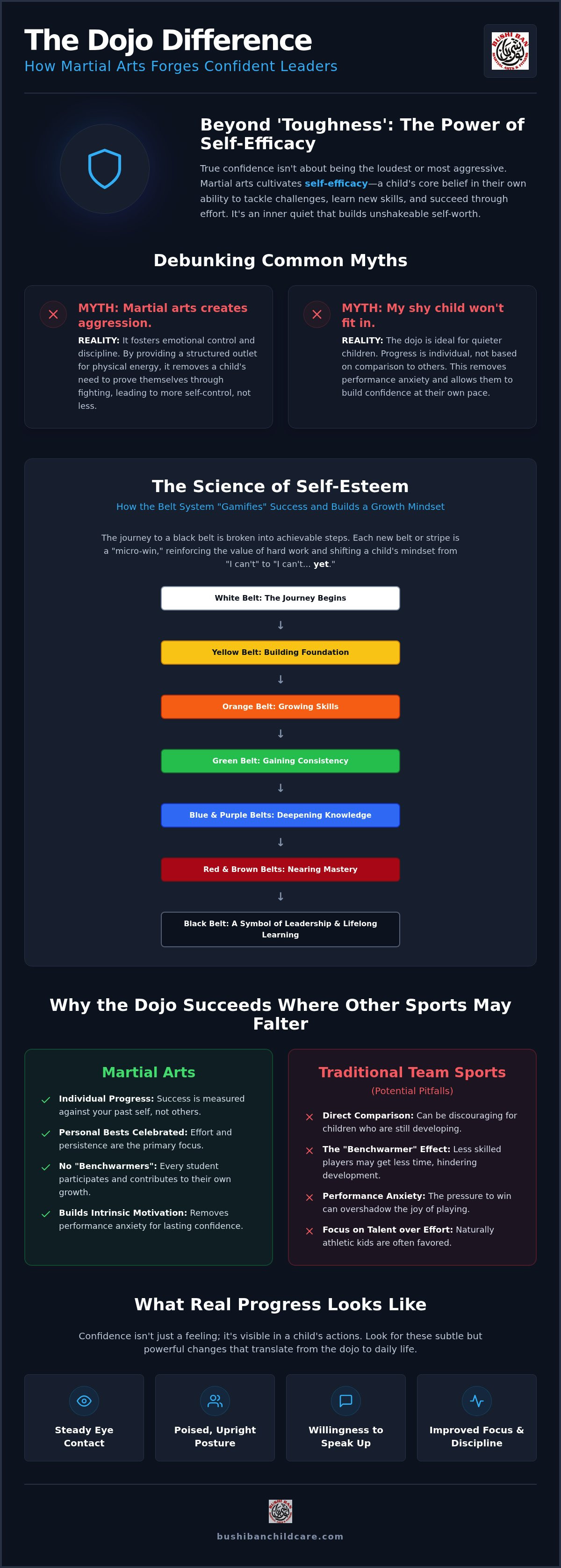
The Science of Self-Esteem: How the Belt System Gamifies Success
Addressing the Aggression Myth: Martial Arts as a Tool for Emotional Control
What Real Progress Looks Like: Benchmarks for Child Development
Bushi Ban’s Leadership Path: Building Confidence That Lasts a Lifetime
The Confidence Myth: Why Martial Arts Isn't Just for 'Tough' Kids
Many parents hesitate to enroll a shy or sensitive child in a dojo because they imagine a room full of aggressive, naturally bold kids. They worry their child will feel out of place or intimidated by the physical nature of the sport. In reality, the most profound impact of building confidence through martial arts happens for the child who starts out hesitant. We don't view confidence as an innate personality trait that some children have and others lack. Instead, we see it as "self-efficacy," which is the grounded belief in one's own ability to complete tasks, handle new challenges, and eventually succeed through effort.
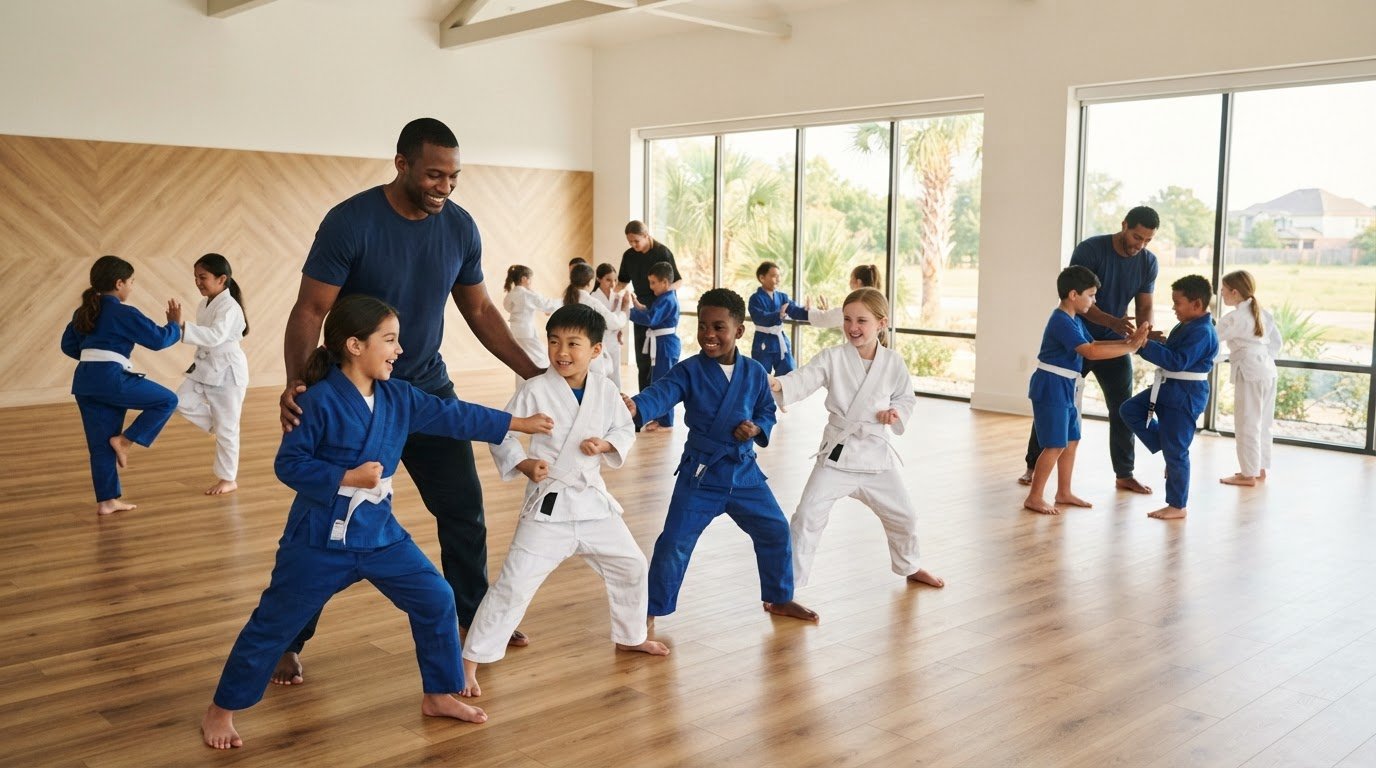
The dojo offers a unique, low-stakes environment where social growth happens naturally. For many students, the transition from the classroom to the mat acts as a necessary "brain break" where they can shed the day's academic pressures. Here, we introduce the concept of "courage over comfort." We celebrate the moment a child tries a new technique or speaks up in class, regardless of whether they perform it perfectly. Research into the therapeutic application of martial arts highlights how this structured setting helps children manage stress and build a foundation of self-worth that extends far beyond the dojo walls.
What is True Confidence in Childhood?
We often mistake loudness or bravado for confidence, but true confidence is actually an "inner quiet." It's the child who can maintain steady eye contact when speaking to an adult or stand with a poised, upright posture even when they feel nervous. These physical cues are more than just manners; they are external signals of internal strength that help deter bullying before it even starts. Martial arts confidence is the intersection of physical skill and emotional regulation.
Why Traditional Sports Sometimes Fail Shy Children
Traditional team sports can be wonderful, but they often rely on direct comparison and the "benchwarmer" effect. If a child isn't the fastest runner or the most coordinated kicker, they might spend more time watching from the sidelines than actually playing. This can be deeply discouraging for a child who is already struggling to find their place. In our martial arts programs, progress is entirely individual. A student isn't measured against the person next to them, but against who they were during their last session. By focusing on personal bests rather than defeating others, we remove performance anxiety and replace it with a sense of genuine, earned achievement that keeps them coming back.
The Science of Self-Esteem: How the Belt System Gamifies Success
Have you ever wondered why a simple strip of colored fabric holds so much power over a child's motivation? The martial arts belt system was actually one of the earliest forms of "gamification." Long before video games used leveling up to keep kids engaged, the dojo used colored belts to provide a visual roadmap for personal growth. For a young student, the distance between starting as a white belt and reaching a black belt can feel like an eternity. By breaking that long journey into smaller, manageable stages, we teach them that significant achievements are the result of small, consistent actions.
This structured progression is fundamental to building confidence through martial arts because it rewards persistence over raw talent. In a world of instant gratification and digital distractions, the dojo is a rare place where you cannot skip steps. A student learns they must earn their progress through physical repetition and mental focus. This requirement for delayed gratification serves as a vital counterweight to "right now" culture. When a child masters a complex physical form, they are practicing the same cognitive endurance required to solve a multi-step math problem or sit through a long exam.
The Power of Micro-Wins
Every time a student earns a stripe on their belt, their brain receives a healthy dopamine hit that reinforces the value of hard work. We focus on shifting a child's internal dialogue from "I can't do this" to "I can't do this yet." This subtle change in language fosters a growth mindset. By celebrating these micro-wins, we help children realize that their abilities aren't fixed. If they can learn a difficult kick through practice, they begin to believe they can learn anything else they set their minds to in the classroom.
Safe Failure: Learning to Fall and Get Back Up
True confidence doesn't come from never failing; it comes from knowing you can handle failure when it happens. The dojo provides a "safe failure" zone where the stakes are low but the lessons are high. Whether a student loses a sparring match or doesn't pass a belt test on their first try, these moments are treated as essential steps in their development. Our instructors act as mentors during these times of frustration, guiding students to analyze what went wrong and how to improve next time.
Recent research on emotional self-regulation suggests that this type of structured physical activity helps children build resilience against stress. By experiencing and overcoming small setbacks on the mat, they develop the emotional "armor" needed to handle social or academic challenges without becoming overwhelmed. If you're looking for a structured environment where your child can develop this level of grit, our Bushi Ban After School Program offers a supportive community to help them grow.
Addressing the Aggression Myth: Martial Arts as a Tool for Emotional Control
One of the biggest fears parents have when considering a dojo is that they'll be inadvertently training a bully. It's a natural concern. If we teach children how to strike and kick, won't they use those skills on the playground? The reality is quite the opposite. In our Pasadena and Deer Park dojos, we see that building confidence through martial arts actually leads to a significant decrease in aggressive behavior. This phenomenon is often called the "Peaceful Warrior" concept. When a child understands their own physical power and knows they can defend themselves, the insecure need to prove their strength through fighting simply vanishes. Confidence provides the internal security needed for de-escalation rather than confrontation.
Knowing how to defend oneself actually removes the "fight or flight" panic that leads to playground scuffles. A child who is confident in their skills doesn't feel threatened by a peer's posturing. They have the mental space to stay calm, use their words, and walk away. This level of emotional maturity is rare in elementary-aged children, but it's a standard outcome of a well-structured martial arts program.
Discipline vs. Aggression
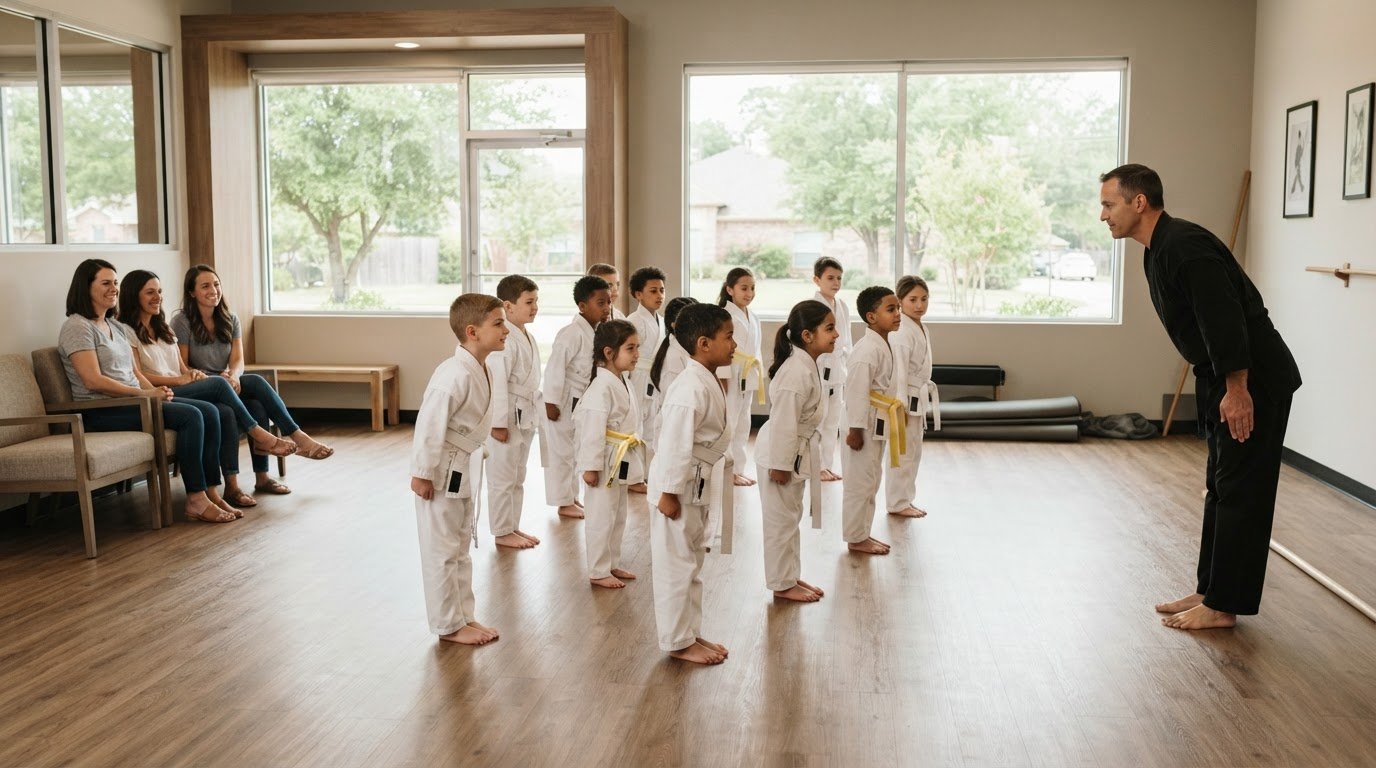
Every class begins and ends with bowing, a ritual that reinforces respect for authority and peers. This isn't just about tradition; it's about setting a clear boundary between physical activity and emotional outbursts. By venting their energy in a highly controlled environment, children find it easier to stay calm in stressful situations. A study on the psychological benefits of martial arts confirms that this type of training improves self-control and emotional regulation. This structured discipline often translates to better behavior at home, as children learn to process frustration through focus rather than "acting out."
The Anti-Bullying Paradox
Bullies rarely target the strongest or most skilled child in the room. They target those who appear vulnerable, hesitant, or lack self-assurance. By developing a strong sense of self, children naturally project a "voice of authority" that stops many conflicts before they even start. We teach students how to stand tall and speak firmly, using their words as their primary defense. This paradox is central to our philosophy: the more capable a child becomes, the less likely they are to ever need those physical skills. For a deeper look at how these traits impact daily life, read our Martial Arts for Focus & Discipline: Parent's Guide.
What Real Progress Looks Like: Benchmarks for Child Development
Parents often ask how they can measure the success of their child's training beyond the color of their belt. While the belt is a powerful motivator, the most significant indicators of building confidence through martial arts are often found in the small, everyday moments at home and school. You might notice your child looking you in eye when they speak or perhaps they start clearing their own plate without being asked. These subtle shifts in behavior signal a growing sense of responsibility and self-assurance that begins on the mat and flows into every other area of their life.
Real progress is a gradual unfolding of character. It shows up when a child who used to hide behind your leg now walks into a room with their chin up. It's visible when they handle a social disagreement with a peer by staying calm rather than getting upset. These social benchmarks are the true "black belt" skills we strive for. We focus on nurturing these traits because we know that a child who feels capable is a child who will eventually lead.
Month 1 to Month 6: The Transformation Timeline
During the first month, it's completely normal for a child to have the "new environment" jitters. They're learning a new language of movement and respect. By the third month, usually around the time they earn their first stripe or belt, you'll see the "I belong here" realization. Their movements become more decisive. By the six-month mark, many students begin taking initiative in their daily routines. They no longer wait for a prompt to start their homework or get ready for bed because they've internalized the dojo's rhythm of self-discipline.
The 'Dojo Effect' in the Classroom
The benefits of martial arts training are highly visible in a school setting. Teachers in Pasadena and Deer Park often report that students who practice martial arts stand out for their focus and participation. This isn't a coincidence. The physical requirement of maintaining a strong, upright posture in class naturally translates to better presence in the classroom. When a child learns to stand tall, they feel more capable of raising their hand to answer a question.
The mental endurance required to memorize a complex "kata" or form directly supports academic success. If a child can focus on a series of twenty precise movements, they can focus on a twenty-minute math assignment. This transition from the school day to the dojo provides a necessary "brain break" that allows them to vent physical energy so they can approach their evening studies with a clear, calm mind. If you're ready to see these developmental benchmarks in your own child, we invite you to explore our Bushi Ban After School Program and start their journey toward leadership today.
Bushi Ban’s Leadership Path: Building Confidence That Lasts a Lifetime
While many programs stop at physical mastery, we believe the ultimate expression of building confidence through martial arts is the ability to lead others. Our Student Leadership Program represents the pinnacle of this journey. In this specialized track, students transition from being learners to becoming mentors. This shift isn't just about status; it's a powerful psychological tool. When a child has to explain a technique to a junior student, they reinforce their own mastery and develop a profound sense of self-worth. They realize they have something valuable to contribute to their community. They aren't just followers anymore. They're contributors.
This mentorship model prepares children for the complex social dynamics of middle and high school. They aren't just learning to kick. They're learning to stand in front of a group, speak with clarity, and guide others with empathy. These are the life skills that transform a quiet student into a self-assured leader who can handle peer pressure with ease. By practicing leadership in the dojo, they develop the internal compass needed to navigate the challenges of their teenage years.
Beyond the Black Belt: The Leadership Track
In the Leadership Track, we focus on specific skills that traditional Houston daycares often overlook. Elementary-aged kids learn public speaking by leading class warm-ups and explaining dojo etiquette to new members. This "giving back" to the junior ranks creates a culture of mutual respect. It helps children understand that true strength is used to lift others up rather than push them down. By the time our students reach their teen years, they've already spent hundreds of hours practicing the exact leadership traits that future employers and colleges look for.
Your Child's Journey Starts in Pasadena and Deer Park
We invite you to visit our local facilities in Pasadena and Deer Park to see our philosophy in action. Choosing a structured after-school environment over passive care is one of the most impactful decisions you can make for your child's development. Our classes provide a safe, high-energy space where the "brain break" from school is used to build character and physical vitality. Whether you're looking for an alternative to standard childcare or a way to help your child find their voice, we're here to partner with you in their upbringing. It's time to see how a structured path can change their future. Join the Bushi Ban Family Today and let's start building that confidence together.
Empower Your Child’s Future Today
Your child’s potential is waiting to be unlocked. We’ve seen how the dojo transforms shyness into strength by focusing on individual progress rather than aggressive competition. By replacing the aggression myth with the reality of emotional control, we provide a foundation that supports better grades and stronger social skills. The journey of building confidence through martial arts is about much more than learning physical techniques; it’s about preparing your child for a lifetime of leadership.
Since 1980, we’ve served the Houston area by offering a structured alternative to standard childcare. Our program includes a dedicated Student Leadership Program and provides daily transportation from local schools, ensuring your child has a safe, productive place to grow every afternoon. It’s time to see them stand taller and speak with a voice of authority.
Enroll Your Child in Our Pasadena After-School Martial Arts Program Today! We look forward to welcoming your family into our community and watching your child achieve their personal best.
Frequently Asked Questions
Is my child too young or too shy to start martial arts?
No child is too shy to benefit from our classes. We specialize in helping school-aged children overcome social anxiety through structured, encouraging instruction. Our environment is designed to be a "brain break" where they can feel safe to try new things. By focusing on personal bests rather than defeating others, we ensure every student feels a sense of belonging from their very first day in Pasadena.
Will martial arts make my child more aggressive or prone to fighting?
Martial arts training actually reduces aggression by providing a healthy outlet for energy and teaching emotional regulation. We teach the "Peaceful Warrior" philosophy, where knowing how to defend oneself removes the insecure need to prove strength through fighting. Students in our Deer Park and La Porte programs learn that physical skills are a last resort, used only for self-defense and never for bullying.
How many times a week should my child attend for maximum confidence building?
For maximum impact on building confidence through martial arts, we recommend attending classes two to three times per week. This frequency allows for consistent physical repetition and reinforces the habit of discipline without overwhelming your family's schedule. Regular attendance ensures your child hits their developmental benchmarks and stays on track for their next belt ranking, which is a vital part of the success gamification process.
What is the difference between Bushi Ban and a regular daycare?
Unlike a regular daycare that offers passive supervision, the Bushi Ban After School Program provides a structured environment focused on character development and fitness. We do not offer all-day child care; instead, we provide daily transportation from local schools to our dojo for high-energy martial arts training. Your child spends their afternoon learning life skills, mentorship, and physical discipline rather than just waiting for pick-up.
How does the Student Leadership Program work for younger children?
Our Student Leadership Program allows younger children to assist instructors with basic tasks, such as leading a warm-up or helping a peer with their gear. This mentors-in-training approach builds self-worth and public speaking skills early on. By taking on small responsibilities, elementary-aged students in Pasadena learn that they have valuable contributions to make to the group, which is the ultimate confidence builder for their future.
Can martial arts help with my child's focus and grades in school?
Yes, the focus required to master a martial arts "kata" directly translates to better homework focus and classroom participation. Many local teachers notice that our students stand taller and are more willing to speak up in class. The discipline learned on the mat helps children manage their time and approach academic challenges with a growth mindset, often leading to improved school performance in La Porte and Deer Park.
What should I look for when choosing a martial arts school in Deer Park or La Porte?
Look for a school that emphasizes holistic development rather than just fighting techniques. A quality institution in the Deer Park or La Porte area should have a clear philosophy, a structured curriculum like our Student Leadership Program, and a history of community involvement. Ensure the instructors act as positive mentors and that the facility provides a safe, professional atmosphere where your child feels both challenged and supported.
Do I need to buy a lot of equipment before my child starts?
Your child does not need a significant amount of equipment to begin their journey. Most students start with just a basic uniform, which is often provided as part of an introductory enrollment package. As they progress through the ranks and enter specialized tracks, you might eventually consider additional protective gear for sparring. We always guide parents on exactly what is needed for each stage of development to keep costs manageable.
Comments