
Developing Social Skills in the Dojo: Why Martial Arts is the Ultimate Social Laboratory
What if the most effective classroom for your child's social development isn't a school desk or a playground, but a martial arts mat? It's a common worry for parents when they see their child struggle to make friends or shy away from group activities. You want them to feel connected and capable, yet traditional settings often leave children feeling overwhelmed. Many families find that using martial arts for social skills offers a unique, structured environment where children can overcome anxiety and build the confidence they need to speak up. We understand that you want a partner in your child's upbringing who focuses on their character as much as their physical health.
This article will show you how consistent training helps children build lasting friendships, high emotional intelligence, and the courage to take on leadership roles. We'll explore how the dojo's unique rituals foster respect and how specialized initiatives like the Bushi Ban Student Leadership Program transform students into confident mentors. You'll discover why the mat is the perfect place for your child to find their voice, manage their emotions, and thrive within a community that celebrates their progress and well-being. It's time to see how the discipline of the dojo creates the safety needed for your child to truly shine.
Table of Contents
Beyond the Mat: What are Social Skills in a Martial Arts Context?
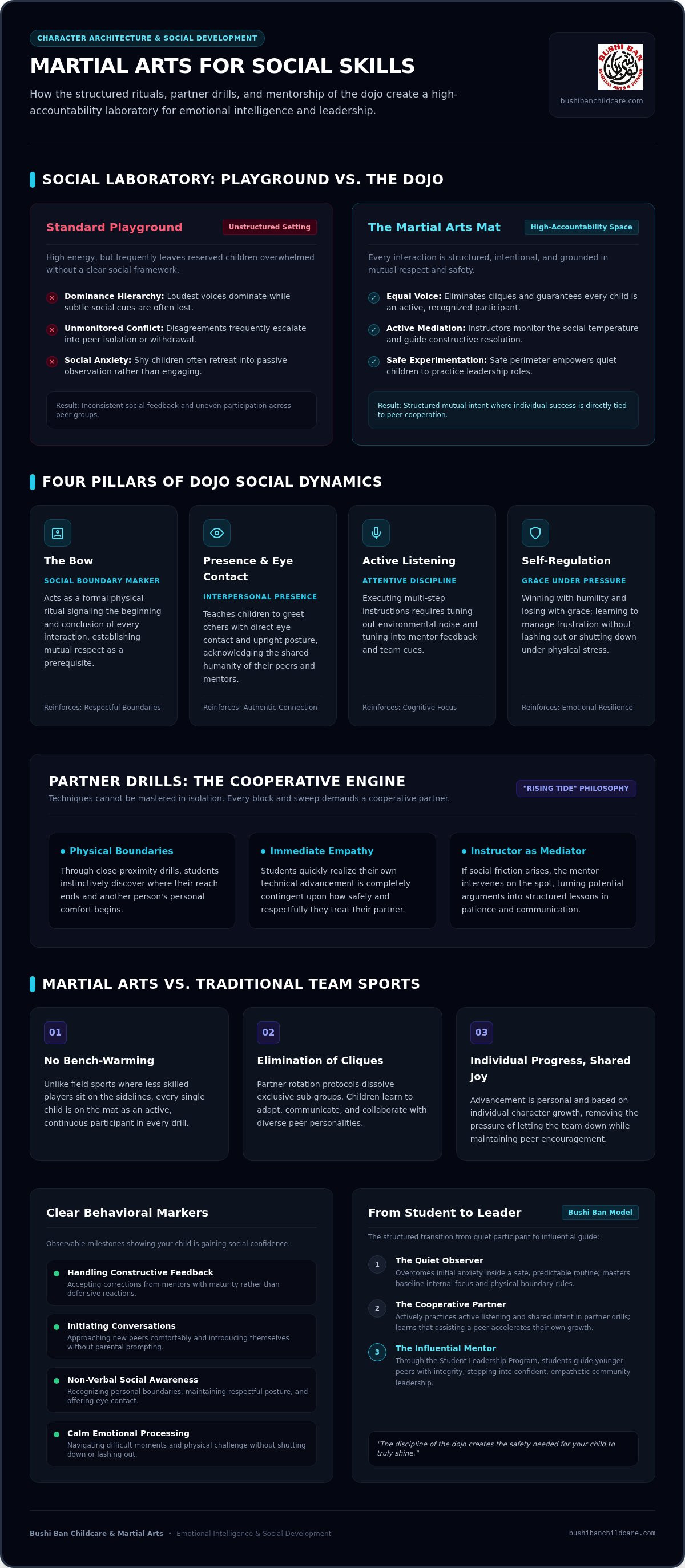
Social skills are often viewed as a simple byproduct of childhood, something kids just pick up while playing. However, true foundational social skills are much more complex. They involve a sophisticated blend of empathy, active listening, and constructive conflict resolution. While a playground offers high energy, it's often a chaotic environment where the loudest voices dominate and subtle social cues are lost. The dojo provides a necessary contrast. It's a high-accountability space where every interaction is intentional. By using martial arts for social skills, children learn that their actions have immediate effects on others, fostering a sense of responsibility that's rare in less structured settings.
In our classes, we treat respect as a primary language. It's not just a rule; it's the medium through which students and instructors communicate. This shared vocabulary of respect ensures that even when physical activity is intense, the social atmosphere remains supportive and safe. Students learn to speak this language through their posture, their tone, and their willingness to support their peers.
The Pillars of Dojo Social Dynamics
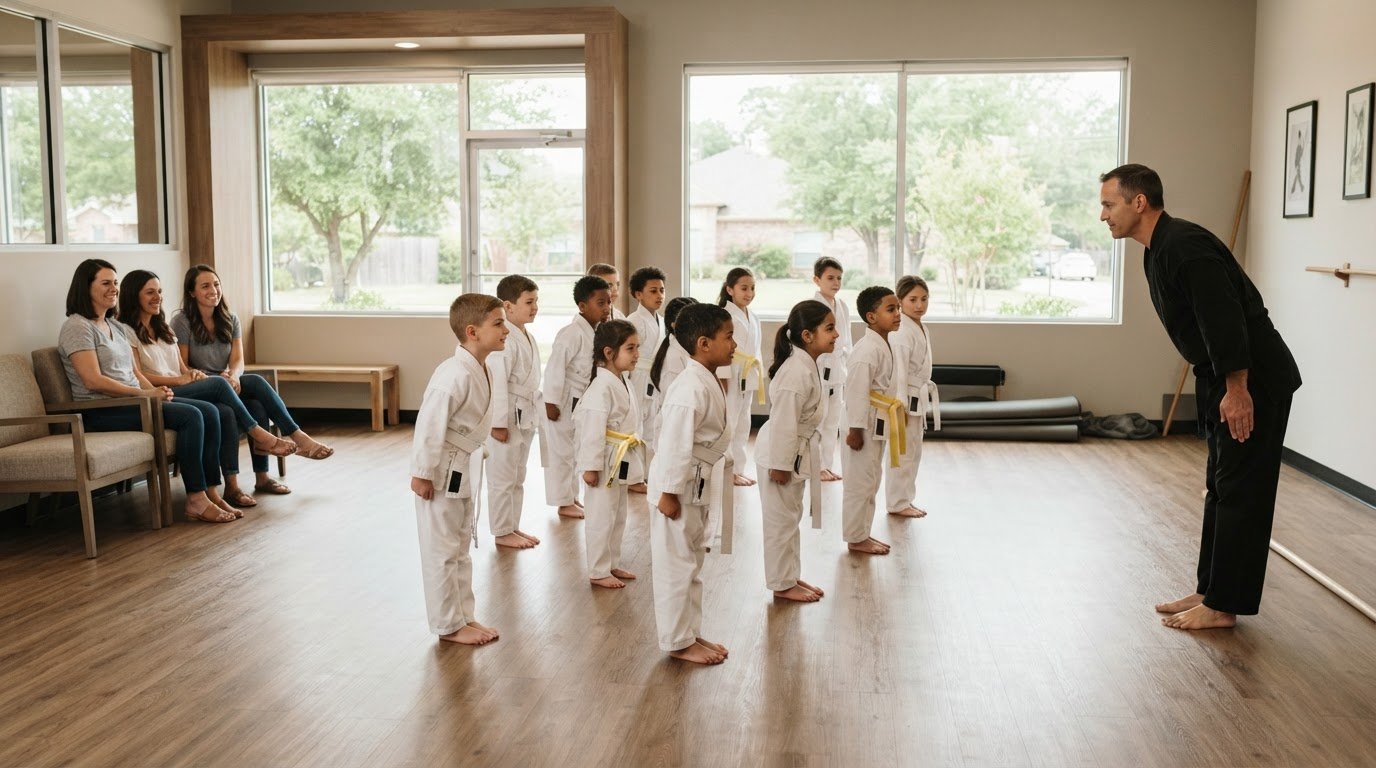
Presence begins with the eyes. We teach children that making eye contact and offering formal greetings isn't just about politeness. It's about acknowledging the humanity of the person in front of them. These pillars include:
The Bow: This physical ritual serves as a clear marker of social boundaries. It signals the start and end of an interaction, reminding students that mutual respect is the prerequisite for any partnership.
Active Listening: Success in the dojo requires following multi-step, complex instructions. This demands a high level of social awareness and the ability to tune out distractions to focus on the mentor's guidance.
Emotional Intelligence and Self-Regulation
Growth happens when things get difficult. Martial arts for social skills teaches children how to win with humility and lose with grace. When a child struggles with a technique, they aren't left to feel isolated. Instead, they manage that frustration within a supportive peer group that encourages perseverance. We define emotional regulation as the ability to stay calm and focused even when under social or physical pressure. This skill is vital. It allows children to process their feelings without lashing out or shutting down, a trait that serves them well in the classroom and at home.
How Martial Arts Training Functions as a Social Laboratory
Unlike the unstructured chaos of a school hallway, the dojo operates on a foundation of mutual intent. Every session relies on martial arts for focus and discipline to set a calm baseline, which is essential when teaching martial arts for social skills. Without this internal control, social harmony is impossible. The mat becomes a training ground where children practice interpersonal dynamics in real time. Instructors act as wise mentors, guiding these interactions to ensure every student feels safe and respected. They don't just teach kicks; they monitor the social temperature of the room and step in to turn minor disagreements into teaching moments. This structure provides a safety net that allows children to experiment with social roles they might be too shy to try elsewhere.
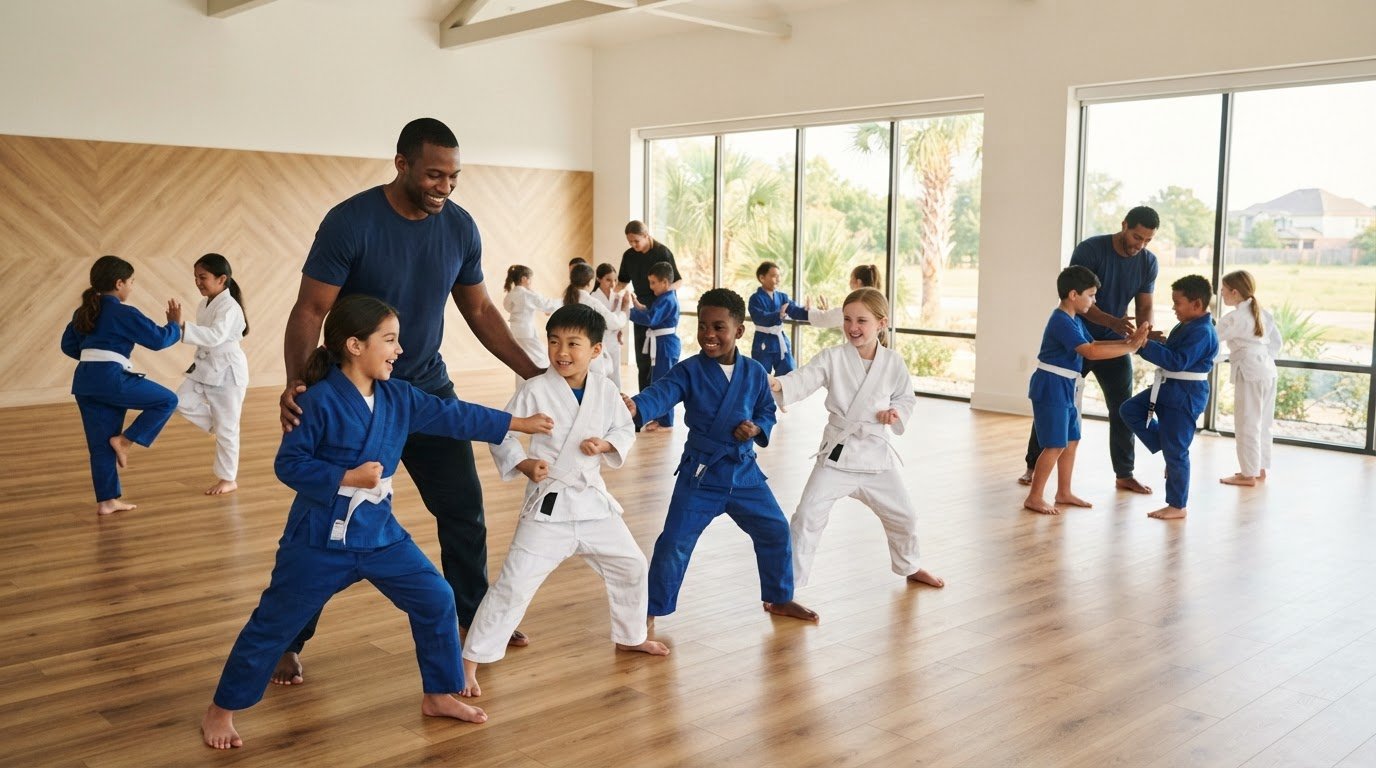
Partner drills are the heart of this laboratory. They serve as a forced exercise in cooperation because you simply can't master a sweep or a block alone. You need a partner who is willing to help you learn, which builds immediate empathy. This close proximity naturally teaches children about the benefits of martial arts for children, specifically regarding personal space and physical boundaries. They learn where their reach ends and another person's comfort begins. If social friction arises during a drill, the instructor steps in as a mediator. They turn a potential argument into a valuable lesson in non-verbal communication and patience. Children discover that their physical success is directly linked to how well they treat their training partner.
Cooperation Over Competition
We believe in a "rising tide" philosophy. When one student improves, the entire class level rises. This communal success replaces the "me-first" attitude often found in individualistic activities. Our belt system reinforces this by encouraging older students to mentor their younger peers. It's a cycle of growth where achievement is shared. If you want a community that prioritizes this development, our after-school programs are a perfect starting point.
Conflict Resolution Without Aggression
Martial arts for social skills isn't about starting fights. It's about ending them before they begin. We teach de-escalation as a core self-defense skill. Students learn to use "Words as Shields" to handle social friction or bullying without resorting to physical force. The dojo provides a safe space to practice standing your ground politely but firmly. This builds the confidence to set boundaries without being aggressive. It's about strength in composure.
Martial Arts vs. Team Sports: A Different Social Path
Many parents sign their kids up for soccer or baseball hoping for social growth. While team sports certainly have merits, they often create social cliques where the most athletic children bond and others are left on the periphery. Martial arts for social skills offers a different path. It's an individual journey taken within a supportive group. There's no pressure to keep up with a star player because the only person your child is competing against is their past self. This shifts the focus from external validation to internal growth. Scientific reviews highlight the social-psychological benefits of martial arts training, noting how it fosters emotional regulation and prosocial behavior more effectively than many hyper-competitive environments.
Eliminating the Bench-Warmer Effect
In the dojo, there are no bench-warmers. Every child is an active participant from the moment they bow onto the mat until the final meditation. This eliminates the social isolation that comes with sitting out during a big game. When you use martial arts for social skills development, you ensure every child is seen and heard. By removing the star player hierarchy, every child feels equally valued by the instructor. This environment prevents social comparison anxiety. When a child isn't worried about being the weakest link on a team, they're free to interact authentically with their peers. They build confidence by mastering techniques at their own pace, supported by a group that celebrates every small victory.
Year-Round Social Consistency
Seasonal sports often mean a child's social circle changes every few months. This constant turnover makes it hard to form deep connections. In contrast, martial arts provides a stable social group that can last for years. This consistency is vital for building tribal bonds, especially for families in Pasadena and Deer Park looking for a steady community. The shared challenges of belt testing and daily drills create a unique camaraderie. When kids participate in structured after school activities that span the entire year, they have the time and safety needed to form lifelong friendships. They don't just learn to kick and punch; they grow up together in an environment that prizes character over trophies.
Signs Your Child is Growing Socially in the Dojo
Parents often ask how they can tell if their child is truly benefiting from their time on the mat. While a new belt is a visible achievement, the most profound changes often happen quietly in how a child interacts with the world. You might notice an increased willingness to introduce themselves to new people or a sudden ease in group settings. This newfound comfort is a direct result of using martial arts for social skills. In the dojo, children are constantly required to engage with peers and instructors in a structured, respectful way. This practice removes the fear of the unknown, making social interaction a skill they can master rather than a source of anxiety.
Another key indicator is how they handle authority. In our program, children learn to receive constructive criticism from instructors without feeling defeated. They discover that "No" isn't a personal rejection but a guidepost for growth. This resilience is a hallmark of martial arts for behavioral improvement, where social maturity manifests as emotional stability. You may even see this at home when they proactively help a sibling or respond to your requests with a respectful "Yes, Ma'am" or "Yes, Sir."
The "Home and School" Carryover
The manners practiced in the dojo naturally find their way into the classrooms of La Porte schools. Teachers often report that martial arts students are more attentive and respectful to their peers. This isn't just about following rules; it's about a fundamental shift in how they value their social environment. Social growth in the dojo is a transferable life skill that prepares them for future success in any setting. If you're ready to see these changes in your own home, explore our after-school martial arts program today.
Building Confidence for Public Speaking
One of the most surprising social benefits is the development of a child's voice. We use the "Kiai," or spirited shout, as a tool for finding one's inner strength. It's hard to be a "wallflower" when you're encouraged to project your voice with confidence. Over time, students move from following the line to leading it. Demonstrating a move in front of the class becomes a moment of pride rather than a moment of fear. This progression is essential for building confidence through martial arts. By practicing leadership in a safe, supportive space, children gain the courage to speak up in school and lead among their friends.
From Student to Leader: The Bushi Ban Approach
The journey through our dojo reaches its peak when a student transitions from a learner to a mentor. This shift is the heart of our Student Leadership Program, which serves as the ultimate social milestone for our youth. In this phase, students don't just practice techniques; they learn to mentor younger white belts with patience and clarity. It's a profound developmental step to move from following orders to giving respectful, clear guidance. This transition helps children find their own authoritative voice while remaining deeply supportive of their peers, ensuring they understand that true strength lies in helping others rise.
Our instructors at the Pasadena and Deer Park locations place a heavy emphasis on public speaking and mentorship. We believe that martial arts for social skills should culminate in the ability to lead a group with confidence and integrity. When a child stands in front of a class to lead a warm-up, they're practicing much more than physical fitness. They're learning to project their voice, maintain eye contact, and command respect through their own disciplined example. These are the exact skills that allow them to thrive in school presentations and social circles outside the mats.
The Student Leadership Program
Advanced students in this track learn to assist instructors during class, which builds professional social skills most children don't encounter until their first job. They learn how to manage a group's energy, give feedback constructively, and maintain high standards. This process develops intense empathy. By teaching a move they once struggled with, they gain a firsthand understanding of another person's challenges. This leadership training prepares kids for the social complexities of middle school and beyond, giving them the confidence to stand out as positive influences. Key benefits include:
Peer Mentorship: Developing the patience to guide others through difficult tasks.
Organizational Skills: Learning to assist in class structure and flow.
Conflict Mediation: Helping younger students resolve minor disagreements with words.
Finding the Right Social Environment in Houston
For parents in the Houston area, choosing the right after-school program is about more than just the style of karate. It's about finding a community that prioritizes character development over trophies. Many traditional daycare options provide supervision, but they lack the structured mentorship that martial arts for social skills provides. Our program acts as a partner in your child's upbringing, ensuring they grow into leaders who are as kind as they are capable. We invite you to visit a class and see these dynamics in action. Watch how our junior leaders guide their peers and how the atmosphere of mutual respect transforms the way children communicate. Your child's path to leadership starts with a single bow.
Empowering the Next Generation of Leaders
Choosing the right environment for your child's social development is one of the most impactful decisions you'll make. We've seen how the dojo functions as a unique laboratory, replacing the chaos of the playground with structured, respectful interaction. Whether it's through partner cooperation or the steady consistency of a year-round tribe, martial arts for social skills provides a foundation that seasonal sports simply can't match. Your child learns to listen, lead, and empathize in ways that serve them long after they leave the mat.
At Bushi Ban, we've served the Houston area since 1980 with a steadfast focus on character development over mere combat. Our proven Student Leadership Program is designed to turn today's students into tomorrow's mentors. It's time to trade social anxiety for disciplined confidence. See how our Student Leadership Program builds social giants; visit Bushi Ban today! We look forward to welcoming your family into our community and watching your child thrive. Your journey toward a more confident, socially capable child starts with that very first bow on the mat.
Frequently Asked Questions
Will martial arts help my child with social anxiety?
Martial arts provides a predictable environment where children with social anxiety can practice interactions through structured rituals like bowing and partner drills. By using martial arts for social skills, kids learn to navigate physical boundaries and eye contact in a safe space. This gradual exposure helps them feel more comfortable in group settings. Over time, the supportive atmosphere of the dojo builds the confidence needed to engage with peers at school and in other social environments.
Does martial arts encourage aggressive behavior in social settings?
No, martial arts training actually reduces aggressive behavior by teaching children emotional regulation and self-discipline. Our curriculum focuses on character development and the warrior code, which prioritizes respect and non-violent conflict resolution. Students learn that their skills are for self-defense only and are taught to use "Words as Shields" first. This emphasis on restraint ensures that children become more composed and thoughtful in their social interactions rather than more aggressive.
How long does it take to see social improvements in my child?
While every child is different, many parents notice a shift in social confidence within 12 to 14 weeks of consistent training. Research shows that structured martial arts curricula can significantly increase social competence and reduce problem behaviors in this timeframe. You'll likely see small markers first, such as improved eye contact or a greater willingness to help siblings. These incremental gains build a strong foundation for long-term emotional intelligence and leadership capabilities beyond the mats.
Is martial arts better than team sports for a shy child?
Martial arts is often a better fit for shy children because it eliminates the "bench-warmer effect" found in many team sports. In the dojo, every child is an active participant who progresses at their own pace without the pressure of letting down a team. This individual-within-a-group dynamic allows shy children to build self-efficacy without being overshadowed by star players. It provides a low-pressure social environment where they can find their tribe and develop their voice.
What is the Student Leadership Program and how does it help social skills?
The Student Leadership Program is an advanced track where students transition from learners to mentors. This program is essential for developing high-level social skills because it requires students to practice public speaking and peer mentorship. By assisting instructors and guiding younger white belts, students learn to communicate with clarity and empathy. It prepares them for the social complexities of middle school by teaching them how to lead with integrity and support the growth of others.
Can martial arts help children with ADHD interact better with peers?
Yes, martial arts is highly effective for children with ADHD as it targets executive function and behavioral inhibition. The structured nature of the classes helps these students focus on specific tasks while interacting with peers in a high-accountability environment. Research has shown that using martial arts for social skills can lead to significant reductions in social communication deficits. It provides a screen-free space where children with ADHD can practice self-regulation and positive peer dynamics.
How do instructors handle social conflict within the class?
Our instructors act as social mediators who use every disagreement as a teaching moment. Rather than just stopping a conflict, they guide students through de-escalation and non-violent communication. We teach children to set boundaries politely and resolve friction using the same respect they show their mentors. This high-accountability environment ensures that social conflicts are handled with maturity, helping students learn that cooperation is the key to collective success within our dojo community.
Are these classes available for kids in Deer Park and La Porte?
Yes, Bushi Ban Child Care offers these specialized programs at our locations serving Pasadena, Deer Park, and La Porte. We provide daily structured after-school enrichment that focuses on character development and martial arts training. Our local programs are designed to be a partner in your child's upbringing, offering a safe and professional environment close to home. Families in these communities can easily access our classes to help their children build lasting friendships and leadership skills.
Comments