
Martial Arts for Better Behavior: Parent's Guide
The phone rings at 2:00 PM, and your heart sinks because you already know it's the school calling about another disruptive outburst. You've tried traditional sports and standard daycare, yet the evening "witching hour" still ends in a frustrated meltdown for the whole family. It's exhausting to feel like you're constantly reacting to behavior issues. You might be wondering if martial arts for behavioral improvement is the missing piece for your child's development. Most parents want their children to be confident and respectful, but sometimes a standard classroom doesn't provide the specific tools they need to master their own impulses.
We believe every child possesses incredible potential that just needs the right environment to flourish. Rather than just teaching how to fight, martial arts acts as a "behavioral laboratory" where children practice failing and recovering in a safe, structured setting. In this guide, you'll discover how training transforms impulse control and respect into lasting character traits. We will explore the specific ways programs like our Bushi Ban after-school sessions build emotional regulation and provide you with practical steps to bring those behavioral gains home for a more peaceful, motivated household.
Table of Contents
The Psychology of Martial Arts for Behavioral Improvement
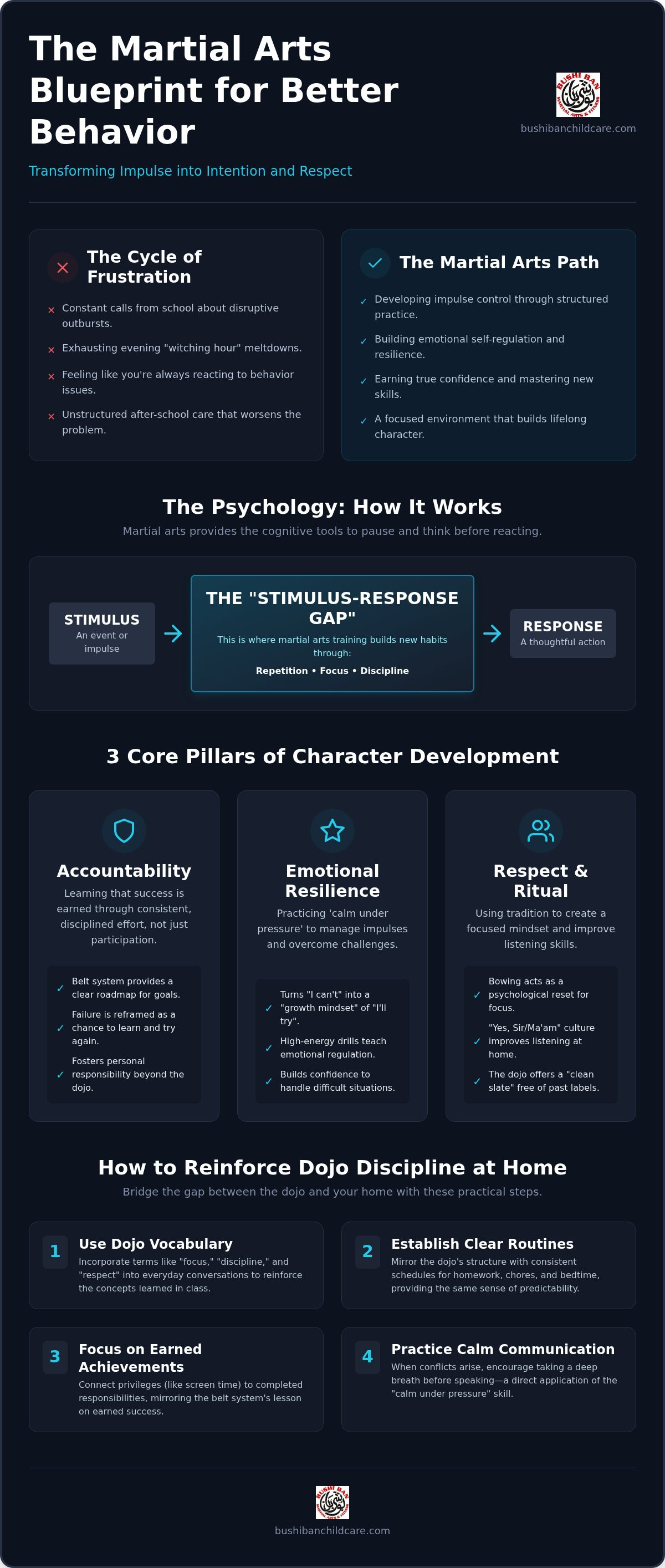
Martial arts is often misunderstood as a purely physical pursuit. In reality, it serves as a powerful mental laboratory for emotional and cognitive self-regulation. When children step onto the mat, they aren't just learning to kick; they're learning to govern their own minds. This is why martial arts for behavioral improvement is so effective. It addresses the "stimulus-response gap," which is that tiny window between an impulse and an action. Through kata training, children practice complex, repetitive movements that require intense concentration. This process teaches them to pause and process information before reacting, a skill that translates directly to the classroom and the dinner table.
Physical movement is the most direct route to a child's emotional brain. While traditional discipline often relies on verbal reasoning, martial arts engages the body to calm the nervous system. By mastering physical challenges, children develop a sense of agency that reduces the need for "acting out" to get attention. Contrary to the common aggression myth, training actually reduces bullying and outbursts. A child who feels capable and confident rarely feels the need to prove themselves through hostility or disruption. They learn that true power lies in restraint.
Rewiring Impulse Control Through Repetition
The structure of a martial arts class provides the same boundaries as a school day but does so through high-engagement activity. Neuroplasticity refers to the brain's ability to reorganize itself by forming new neural connections through repetitive, disciplined physical movement, which effectively hard-wires better behavioral habits. Every repetition of a block or a stance strengthens these pathways. We bridge the gap between physical skill and mental application through Mat Chats. During these brief sessions, instructors discuss values like patience and integrity, ensuring the lessons learned during sweat and effort stick for a lifetime.
The Role of Respect and Ritual
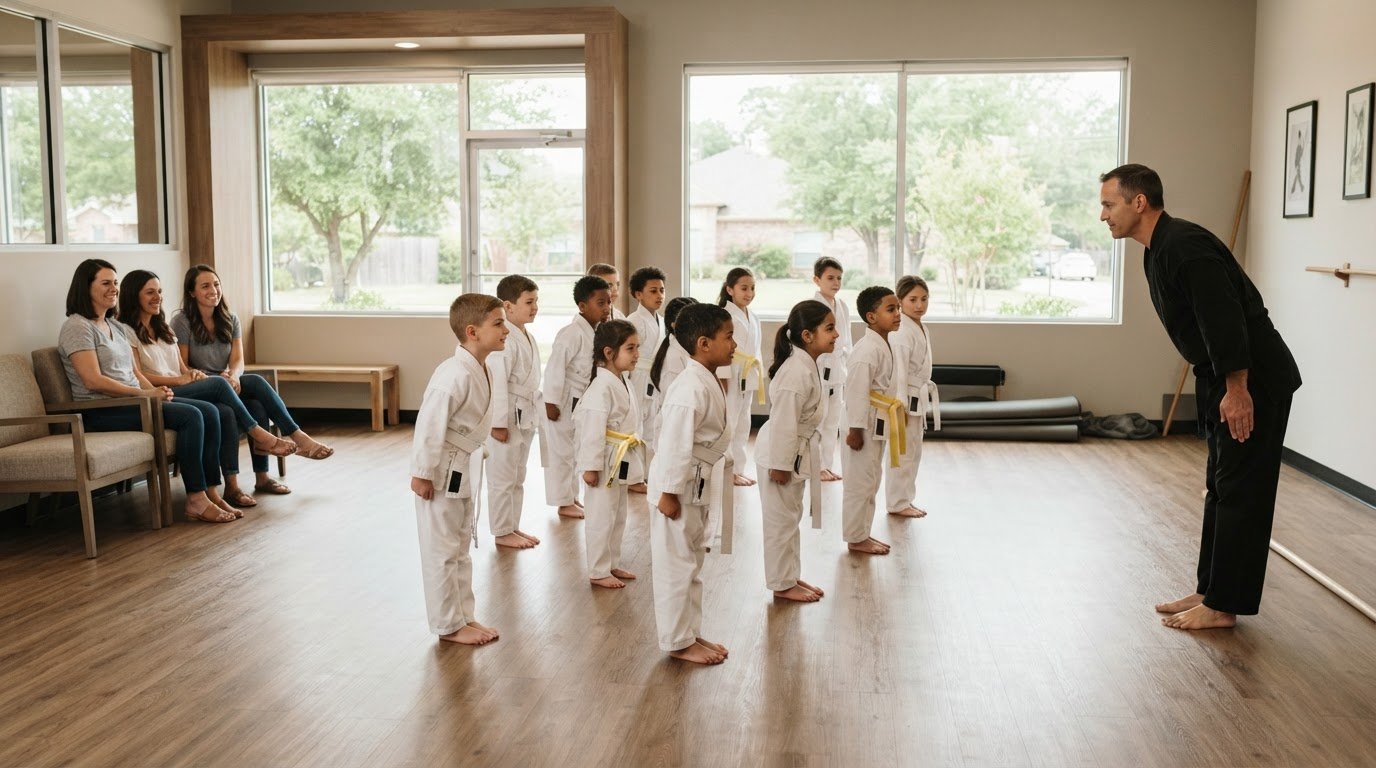
Tradition plays a vital role in shifting a child's mindset. The simple act of bowing isn't just a gesture; it's a psychological reset that signals the transition from a chaotic outside world to a space of focus and respect. Within the "Yes, Sir/Ma'am" culture, children learn to navigate hierarchy with grace, which naturally improves their listening skills at home. Perhaps most importantly, the dojo offers a clean slate. For a child who has been labeled a "troublemaker" at school or daycare, the dojo provides an environment where those labels don't exist, allowing them to rebuild their identity as a disciplined leader from day one.
3 Core Pillars of Character Development in the Dojo
Character development in the dojo isn't accidental. It's built on three specific pillars that transform how a child interacts with the world. When parents seek out martial arts for behavioral improvement, they're often looking for a way to replace frustration with focus. These pillars provide the architecture for that change, addressing the root causes of disruptive behavior by building a foundation of inner strength and outward respect.
Accountability: Beyond the Participation Trophy
In many youth activities, children receive a trophy just for showing up. The dojo is different. The belt system serves as a tangible roadmap for goal-setting where every stripe must be earned through consistent effort. This structure teaches children that success is a result of their own actions. If a child fails a stripe test, they don't feel resentment; they learn to analyze what they missed and try again. This accountability starts on the mat but quickly moves into the home. It's the difference between a child who needs constant reminders and one who starts taking initiative, like cleaning their room without being asked, because they understand their personal responsibility.
Emotional Resilience and the 'Growth Mindset'
Sparring and high-energy drills aren't about teaching children to fight. They're about practicing "calm under pressure." When a child faces a difficult physical challenge, they learn to breathe through the impulse to quit or melt down. Our instructors embody the parental role of a wise mentor, guiding students to turn "I can't" into "I haven't learned it yet." This targeted approach to martial arts for behavioral improvement ensures that failure is viewed as a lesson rather than a catastrophe. By mastering their physical movements, children gain a sense of mastery that effectively shields them against low self-esteem and the behavioral triggers that come with it.
The third pillar, Social Harmony, is anchored in our Student Leadership mindset. Children learn that their progress isn't just for themselves; it's a tool to help others. By mentoring younger students, they shift their identity from being "the disruptive kid" to being a respected guide. This sense of belonging and responsibility naturally reduces the friction that leads to outbursts at school or home. This holistic development is a hallmark of our After-School Martial Arts Program, where we prioritize the "Whole Child" over simple physical combat. When a child views themselves as a leader, they begin to act like one in every area of their life.
Martial Arts vs. Traditional Daycare for Behavior Support
Many parents view after-school care as a simple logistical necessity. However, the choice between traditional daycare and martial arts for behavioral improvement can significantly impact a child's evening demeanor and academic success. While daycare often focuses on basic supervision, the dojo provides a purpose-driven environment. Is your child simply passing time, or are they building the foundation for a successful future? The answer often lies in how they spend their afternoons.
The "Witching Hour," that critical window between 3 PM and 6 PM, is when many children experience a behavioral slump. After a long day of school-mandated focus, the sudden shift to unstructured "free play" in a daycare setting can actually exacerbate issues. Without clear boundaries, overstimulation often leads to peer conflict or emotional meltdowns. In contrast, a curriculum-based program uses this time to reinforce positive habits and channel that post-school energy into productive growth.
The Difference Between Supervision and Enrichment
In a typical daycare setting, children often adopt a "waiting" mindset, simply killing time until a parent arrives. This boredom frequently leads to acting out or disruptive behavior as they seek stimulation. A dojo environment replaces this passive waiting with active enrichment. Research suggests that after-school activities improve focus and grades by keeping the mind engaged during these peak fatigue hours. Instead of the chaotic social dynamics of a playground, students navigate a structured social hierarchy where they're encouraged to support one another, turning potential conflicts into lessons in cooperation.
Consistency: The Secret to Long-Term Behavioral Gains
Consistency is the bedrock of emotional stability. For an anxious child, the predictable daily routine of a martial arts class serves as a vital security blanket. They know exactly what to expect: the bow, the warm-up, and the lesson. This steady rhythm helps reset a child's energy levels after a long day of sitting at a school desk. By participating in our Student Leadership Program, they aren't just occupied; they're given a sense of purpose. They learn that their presence matters, which builds the self-esteem necessary for lasting martial arts for behavioral improvement. When you analyze the cost-to-value ratio, it's clear you aren't just paying for childcare. You're investing in life skills that traditional supervision simply can't provide.
How to Reinforce Dojo Discipline at Home
For training to be truly effective, the lessons learned on the mat must follow your child through the front door. We view parents as essential partners in this journey. Using martial arts for behavioral improvement works best when there is a consistent "bridge" between the dojo and your living room. Without this connection, a child might learn to be respectful only when an instructor is watching. By adopting a few simple strategies, you can ensure the discipline they practice during class becomes a permanent part of their character.
Speaking the Language of the Dojo
One of the most effective ways to trigger a mental reset is to use the same vocabulary we use in our Pasadena and Deer Park classes. When your child is distracted or becoming restless, simply asking, "What was your focus today?" can snap their attention back to the present moment. You can also use terms like "ready stance" to signal that it's time to listen to instructions. Adopting the phrase "Black Belt Excellence" as a household standard for everything from homework to making the bed sets a clear, aspirational bar for their behavior. It's not about being perfect; it's about giving their best effort in every task they tackle.
Creating a Home Reward System That Actually Works
You can amplify the impact of the belt system by linking home responsibilities to dojo progress. Many parents find success by requiring "home stripes," which are earned through chores or kindness, before a child is eligible for their next rank. This helps build confidence through martial arts by showing them that their efforts at home are just as valuable as their physical skills. Consider these practical steps for daily reinforcement:
The 5-Minute Mat Chat: Spend a few minutes at dinner discussing the character topic from class. This reinforces the mental lesson while the physical memory is still fresh.
Recognize 'Quiet Success': We often only notice behavior when it's disruptive. Start praising the "quiet successes," such as the absence of a tantrum or a child choosing to walk away from a conflict.
Goal-Tracking: Align their belt progress with a chart on the fridge. When they see that their behavior at home directly supports their goals at the dojo, their motivation skyrockets.
Intentional praise is the secret to long-term martial arts for behavioral improvement. By focusing on the effort they put into staying calm rather than just the final result, you're nurturing a growth mindset. If you are ready to see these changes in your own home, explore our Bushi Ban After School Program to start your child's journey toward lasting discipline and respect.
Bushi Ban: Leading the Way in Pasadena and Deer Park Behavioral Enrichment
Since 1980, Bushi Ban has been more than just a place to learn self-defense. Founded by Grandmaster Zulfi Ahmed, our philosophy is rooted in nurturing the "Whole Child" rather than focusing solely on physical combat. We understand that for parents in Houston, seeking out martial arts for behavioral improvement means finding a dedicated partner in their child's upbringing. Our Bushi Ban After School Program is specifically designed to fill the "after-school gap" where behavior often slips, providing a structured enrichment environment that traditional daycare simply cannot match.
A Community of Mentors in La Porte and Deer Park
Our instructors are more than just teachers; they're mentors who live in and understand our local community. We recognize the specific challenges children face within the Pasadena and Deer Park school districts. To make life easier for busy families, our transportation services ensure a seamless transition from the school classroom to our training floors. This consistency is vital for maintaining the behavioral gains discussed in previous sections. Local parents frequently report seeing significant shifts in their child's attitude within just 90 days of enrollment, often noting improved listening skills and a marked reduction in after-school meltdowns.
The Student Leadership Path
One of our most impactful offerings is the Student Leadership Program. This path isn't reserved only for children who are naturally outgoing. Instead, it's designed to turn behavioral challenges into opportunities for mentorship. We identify the unique potential in every child, teaching them a curriculum that includes public speaking, empathy, and personal initiative. When a child who once struggled with impulse control is given the responsibility of helping a younger student, their self-perception changes. They no longer see themselves as "disruptive"; they see themselves as indispensable leaders. This shift is the ultimate goal of martial arts for behavioral improvement.
Getting started is a deliberate and reassuring process for both the parent and the child. During your child's first week, they'll be introduced to our dojo rituals and vocabulary in a way that feels welcoming rather than overwhelming. They'll meet their mentors and begin to understand the "Yes, Sir/Ma'am" culture that fosters respect and clarity. For families in Pasadena and Deer Park TX, the next steps are simple. Join our community and watch your child transform into a confident, disciplined leader who takes initiative at home and excels in the classroom.
Empower Your Child’s Future Today
You now understand how structured training bridges the gap between impulse and action. By choosing martial arts for behavioral improvement over standard supervision, you're giving your child a roadmap for emotional resilience and self-regulation. We've explored how the "witching hour" can be transformed from a time of meltdowns into a period of growth and leadership. These lessons don't stay on the mat. They follow your child home, creating a more peaceful and respectful household for everyone.
Founded by Grandmaster Zulfi Ahmed, Bushi Ban has served the Houston area for over 40 years. Our specialized Student Leadership Program ensures every child has the opportunity to become a confident mentor. We're ready to partner with you in your child's journey toward excellence and achievement. Your child's potential is limitless when they have the right guidance and a supportive environment to flourish.
Enroll your child in the Bushi Ban After-School Program today and see the difference!
Frequently Asked Questions
How long does it take to see behavioral improvement in martial arts?
Most parents notice subtle shifts in listening and focus within the first 30 to 45 days. Significant behavioral changes typically manifest after 90 days of consistent training in our Bushi Ban After School Program. This timeline allows your child to internalize the dojo rituals and begin applying the "Yes, Sir/Ma'am" culture at home. Consistency is the key to seeing lasting results from martial arts for behavioral improvement.
Is martial arts good for children with ADHD or ODD?
Yes, the high structure and immediate feedback found in our classes are particularly beneficial for children with ADHD or ODD. Using martial arts for behavioral improvement provides a physical outlet for energy while demanding cognitive focus through repetitive drills. This combination helps strengthen executive function and impulse control. Our instructors provide the firm boundaries and positive reinforcement these children need to feel successful and regulated throughout the afternoon.
Will martial arts make my child more aggressive or likely to fight?
Actually, the opposite is true. Martial arts training emphasizes restraint and teaches children that physical force is a last resort. By building genuine confidence and emotional resilience, students feel less need to prove themselves through aggression or bullying. They learn to channel their energy into disciplined movements rather than outbursts. Our focus on character development ensures that students understand the responsibility that comes with their new skills.
What age is best to start martial arts for behavioral reasons?
Children can begin seeing benefits as early as age four or five, when they are first developing social skills and following group instructions. However, the elementary school years are often the most critical time for behavioral intervention. Starting during this window helps establish a strong foundation of discipline before the challenges of middle school. We tailor our curriculum to be age appropriate, ensuring every student feels supported regardless of their starting point.
How is Bushi Ban different from a regular karate school?
Bushi Ban differs by integrating character education into a comprehensive after-school enrichment model. Founded by Grandmaster Zulfi Ahmed, we prioritize the "Whole Child" through our Student Leadership Program. We act as a partner in your child's upbringing, focusing on life skills like public speaking and empathy. Our 40 year history in the Houston area reflects our commitment to holistic development rather than just teaching children how to kick and punch.
Can martial arts help with school grades as well as behavior?
There is a strong link between dojo discipline and academic success. The focus and listening skills practiced on the mat translate directly to better concentration during classroom lessons. Students learn the value of hard work and goal setting through the belt system, which often sparks a newfound initiative in their schoolwork. Many parents find that the improved self-regulation leads to better homework habits and higher test scores over time.
What if my child is shy or has social anxiety?
The dojo is a safe, supportive environment where shy children can build confidence at their own pace. Unlike team sports where they might feel overlooked, martial arts focuses on individual progress within a group setting. The predictable routines and clear expectations help reduce social anxiety by removing the guesswork from peer interactions. As they earn stripes and belts, their self-esteem grows, often leading to increased bravery in other social situations.
Do you offer transportation from local schools in Pasadena and Deer Park?
Yes, we provide reliable transportation from many local schools in the Pasadena, Deer Park, and La Porte areas. Our transport service is designed to bridge the "after-school gap" safely and efficiently. This allows your child to transition directly from their school day into our structured enrichment program without any logistical stress for you. It's an essential part of how we support busy families while maintaining behavioral consistency.

Comments